


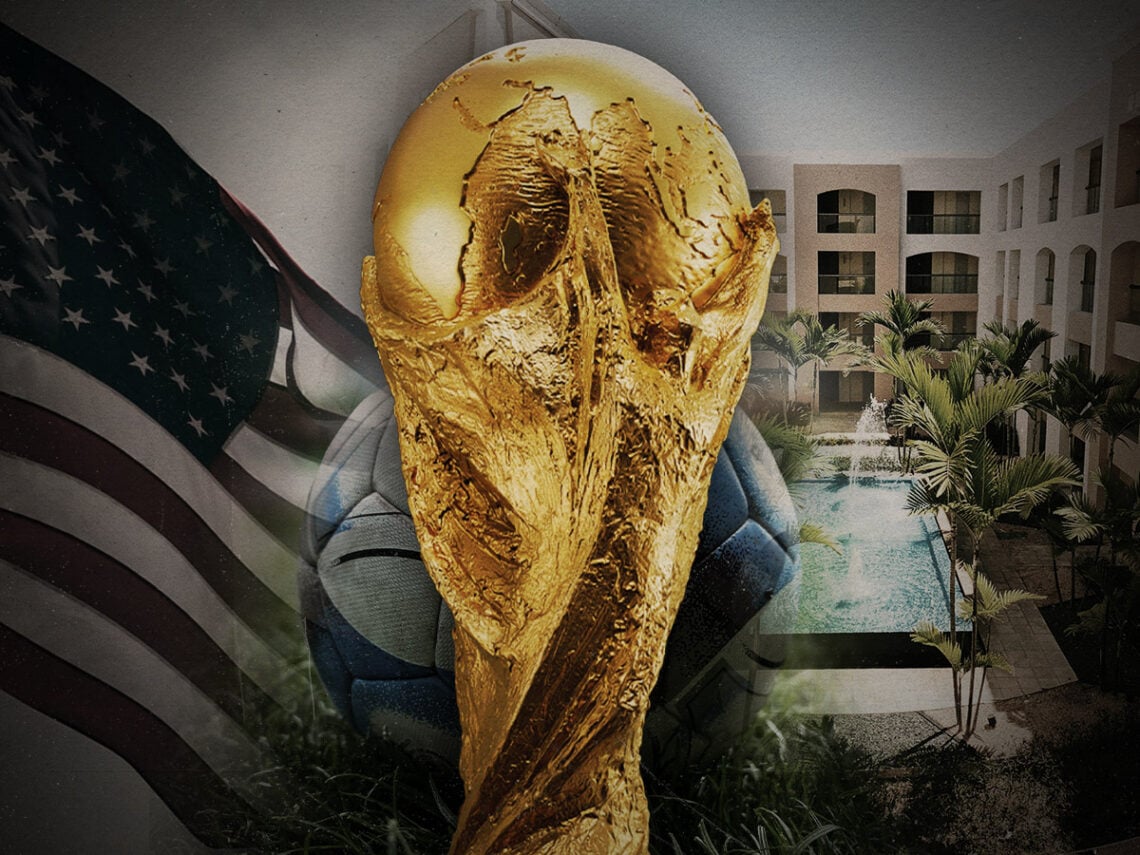
What is the FIFA hotel scandal and how does it impact the 2026 World Cup?

Every four years, the World Cup comes around, and it becomes a football summer, with World Cup fever spreading quicker than Hantavirus.
This year’s outing, spread across North America, with Canada, the United States and Mexico all hosting, is set to be the biggest and most expensive yet. It’s the biggest, quite literally, as the three countries combine to make this the largest World Cup ever in terms of square miles covered, but with an increase from 32 to 48 teams, it’s grown in size too.
Eye-watering costs for fans have been a subject of heated debate, and it turns out that FIFA itself helped to create an accommodation crisis that has further hurt supporters. With the curtain being raised on June 11th, we’re so close to kick-off, but after months of questions around costs for travelling fans, there is a growing controversy around FIFA’s planning and transparency, particularly relating to the travel industry.
We always knew that this World Cup was going to be an expensive one for any fans visiting the country, but those costs have spiralled. FIFA president Gianni Infantino promised that it would be affordable for fans and some travel costs would be subsidised, something which has turned out to not only be false, but comically so, with ticket costs substantially higher than those promised when the three countries won the rights to host this tournament.
Infantino himself promised that the tournament would be the equivalent of ‘104 Super Bowls’ with FIFA predicting a boost of over $17billion to America’s GDP and over 185,000 jobs created. This has resulted in a second gold rush across the United States, with hotels in cities from Philadelphia to Los Angeles looking to cash in on this influx of fans. The hotels’ improved infrastructure, on the back of these promises and projections, are eager to cater to tourists.
At every previous World Cup, you see hotels that have effectively been taken over by the federation. As a veteran of three tournaments, I’ve grown used to seeing the cities’ very best hotels block-booked by the organisation, with officials, sponsors, VIPs, referees and technical staff all put up in top-notch digs. It was always fun to walk past these places and see old footballers in the lobby, whether that was Ronaldo Nazario or Michel Salgado.
Initially, hotels were overjoyed with thousands of rooms booked across the three countries, and that’s before the real fans had even started to book themselves. Then came the bad news, as FIFA began to exercise its free cancellation clauses, much like I do on booking.com, except this was on a ginormous scale.
In March, all 16 host cities saw cancellations from football’s governing body, and we’re talking serious numbers; over 2,000 rooms were cancelled in Philadelphia and an estimated 15,000 in Vancouver. According to the American Hotel & Lodging Association, the largest hotel association in the USA, up to 70% of rooms initially block-booked by FIFA were cancelled.
The results have been catastrophic; any remaining rooms that these hotels did have were priced at levels to match this demand that no longer existed. Filling up these rooms at such high costs looks impossible. To make things worse, it appears that initial estimates on visitors arriving for the World Cup will be way, way off. Between outrageous hotel prices and the wider political atmosphere in the US, there seems to be a far smaller appetite than expected to visit the country. Add in the offensive ticket prices, as well as an unfolding story about FIFA potentially having shady practices around ticket sales, and it’s been a recipe for disinterest.
In May, an ALHA survey showed that across America’s 11 host cities, a staggering 80% of hotel bookings are running under initial forecasts, and in many cases not much higher than during any other June or July. This isn’t all the organisation’s fault, however; after all, the US dollar is doing well, and they can’t dictate the policy of the United States government, but it’s all creating a World Cup that is more costly than anybody initially expected, and that’s been exacerbated by their greed.
At its heart, this story teaches us two things. Firstly, it shows us the danger of projections and the complexity of hosting an event at such a scale. Secondly, it exposes FIFA for what they are, a grotesquely greedy organisation, taking advantage of the beautiful game to line its own pockets. For Gianni Infantino’s greed and lack of transparency to be so great that it makes people long for the days of former president Sepp Blatter takes some doing, but that’s the legacy that he’ll leave.
As for the tournament itself, FIFA will be hoping that it’s a great World Cup, and one which will stop people talking about the politics and question marks around their involvement, much like what we saw in Russia in 2018 and in Qatar in 2022.
