


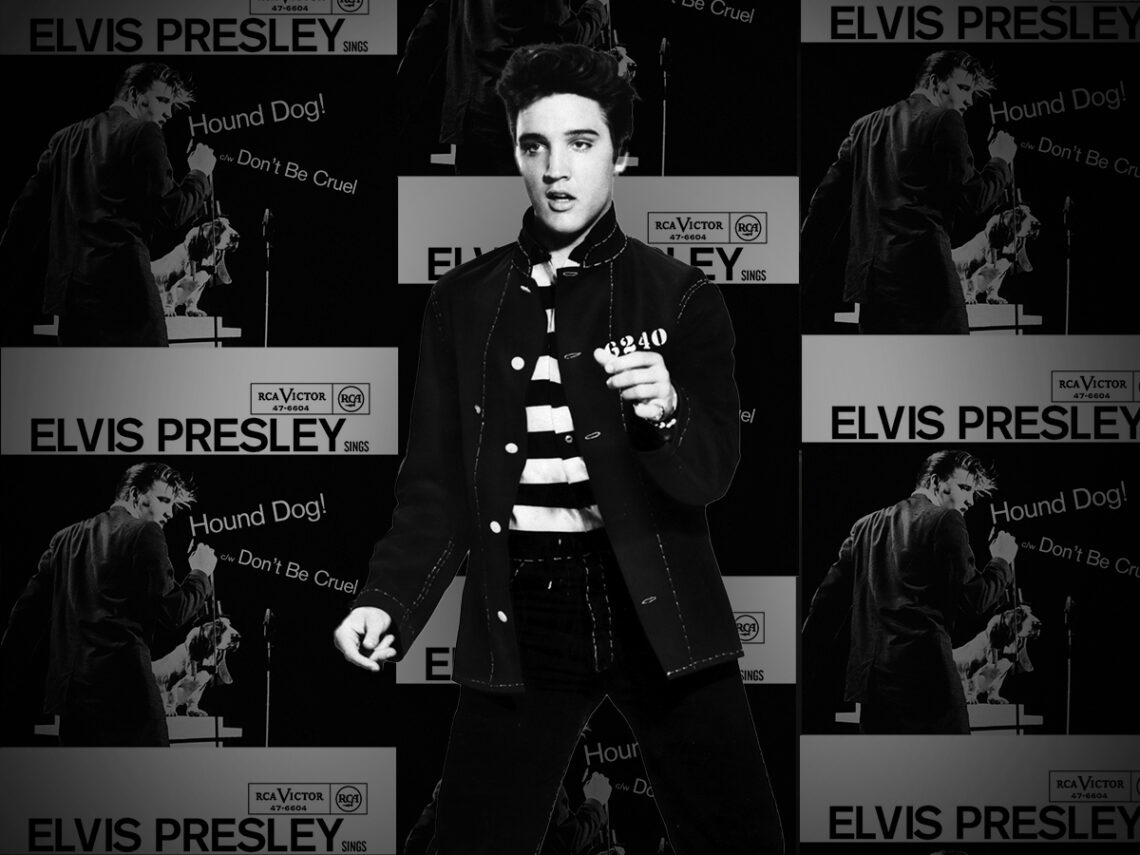
What is a Hound Dog, and how did one start a cultural revolution?

It’s likely the first number you cast your mind to when thinking of rock ‘n’ roll’s 1950s flashbang.
Dripping with swagger and strutting sexuality, 1956’s ‘Hound Dog’ pulled Elvis Presley from regional Memphis big name to national star when topping the US charts that year, dwelling in an electric marriage of R&B, country, and the nascent rock and roll sound, scoring that brand new and marketable demographic: the teenager.
Presley would become the ‘King’ in earnest there and then, helped by the earlier ‘Heartbreak Hotel’ and hurtling to icon status once ‘Blue Suede Shoes’ followed. Such a swift rise to fame would trigger the discourse around his appropriation of the Black man’s music from then on, Ray Charles and Little Richard expressing frustration at Presley’s glide into chart domination without the prejudicial obstructions his Black peers had to navigate across the 1950s.
No one had more to say on Presley’s rock and roll stature than Willie Mae ‘Big Mama’ Thornton. A bawdy comedian as well as gifted with an intimidatingly growling blues bellow and in need of a hit, 19-year-old songwriters Jerry Leiber and Mike Stoller were tasked with penning a single befitting her big character. Such a force of nature, it didn’t take the pair long.
“We saw Big Mama, and she knocked me cold,” Lieber told Rolling Stone in 1990. “She looked like the biggest, baddest, saltiest chick you would ever see. And she was mean, a ‘lady bear’, as they used to call ’em. She must have been 350 pounds, and she had all these scars all over her face.”
Looking to the Southern blues tradition and blue-collar Black slang, Lieber and Stoller would dream up the rock gem that would later upend culture once the King got his hands on the 12-bar-blues classic.
So, what exactly is a Hound Dog?
The titular “hound dog” was in fact a reference to a freeloading man who seeks romantic partnership for the material and financial benefits over any sincere companionship, a leech Thornton held zero time for: “You ain’t nothin’ but a hound dog / Quit snoopin’ ’round my door / You can wag your tail / But I ain’t gonna feed you no more.”
Eventually released in 1953, Thornton’s ‘Hound Dog’ oozed a coarser level of innuendo behind its sly lyrics that the Memphis country boy never quite bottled despite his notoriety, lyrically revelling in its allusions to gigolo favours and sexual undercurrents that were part and parcel of Thornton’s stage act. This was scrubbed out by the later Freddie Bell and the Bellboys version, the single that Presley was taking notes from when cutting his definitive take.
The fact was, Freddie Bell and the Bellboys’ lyrical revisions literally placed ‘Hound Dog’ to be about an actual dog, expunging all of Thornton’s racy bite from the number. Striving to return to just a little of the original’s grit, Presley brought just enough ambiguity to the song when eventually recorded, not that anyone who witnessed his appearance on Steve Allen’s Tonight Show would have known, a red-faced Presley performing the number to a Basset Hound in tops and tails. Legend has it that Presley’s fury at the embarrassing stunt was what fuelled ‘Hound Dog’s fire in the belly when recording the next day.
‘Hound Dog’ would storm the charts and define the rock and roll revolution, while Thornton received a cheque for $500 and died penniless in her 50s. It took decades before ‘Hound Dog’s true burnishing became widely recognised among popular music as the King’s legend became cemented, a fact always known by Black music lovers since day one.
