


What is ‘furry music’?

The human practice of anthropomorphising animals is as old as time. Ever since the discovery of the over 35,000-year-old Löwenmensch figurine in south Germany‘s Swabian Jura caves, a UNESCO World Heritage Site for its source of Upper Palaeolithic art, it’s been established that religious and cultural expression via zoomorphism and animalistic worship has a long and ubiquitous feature in humanity’s development. Animals, too, have become socially coded across the centuries, imbued with values and traits encompassing the human condition’s vast, universal terrain, be it a lion’s courage, an asses foolishness, or a fox’s cunning.
With such a storied and documented history of spiritual kinship with animals, the maligned scrutiny of the furry community seems like another inexplicable manifestation of the conservative persecution complex. Gleefully perpetuating erroneous accounts of schoolchildren identifying as cats and using litterboxes in the classroom, a culture war-intoxicated press looking for their next manufactured ‘story’ have centred furries firmly in their sensationalist crosshairs, framing folk who enjoy dressing up as cartoon animals as wreckers of Western civilisation along with pronouns and recycling.
Long viewed as a fetish rather than a hobby or lifestyle, Renison University College at the University of Waterloo professor Dr Sharon Robert set the record straight to Vice in 2016: “You have a group of people who are largely male and young. I think you’re going to find that any large group that is male and young, they’re going to include sex as part of their life, their activity.”
Dr Roberts added: “We sell sports cars by putting scantily clad women on them… Everybody uses sex in a way to sell products. You can, of course, find sexuality in the furry fandom, but it’s not different from the cover of Cosmopolitan; it just has ears and a tail on it. We’ve done studies of porn in the furry fandom… It turns out furries think other furries like porn more than they actually do.”
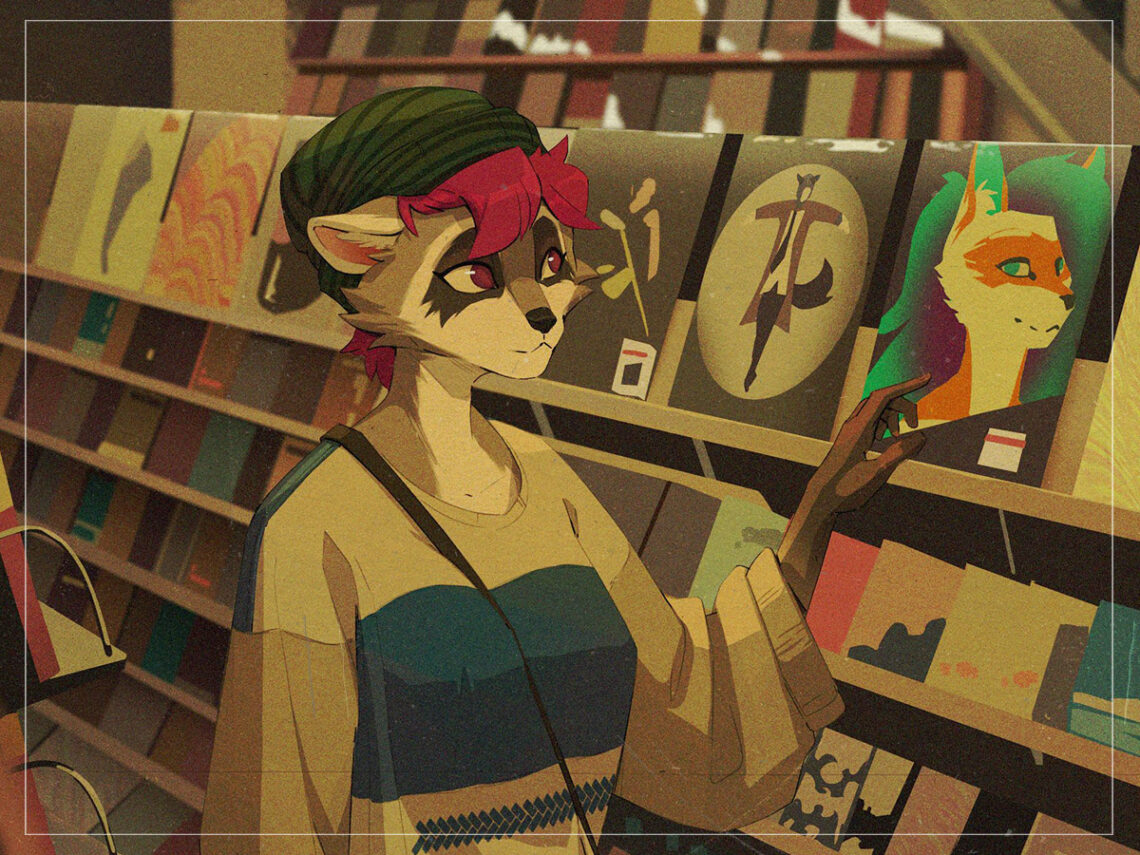
A brief peruse among the many releases of furry music on Bandcamp further illustrates a level of sex consistent with hip-hop or classic rock. While there are album covers of doe-eyed marsupials in lingerie pawing their lips suggestively or a red panda arching their back with its arse on display, furry expression is pursued across all manner of creative ways, such as abstract art, mournful nature scapes, and plenty of sugary, bursts of cartoon joy.
Furry music’s sonic spectrum is as diverse as its visual aesthetic. While broadly held together with a glittery whip of hyperpop and whiffs of vaporwave sonics, there’s Pent Up Pup’s filthy indie skulk, ivycomb’s electro-emo, or the experimental ambient of Patricia Taxxon. Arguably one of the community’s leading artists, Taxxon has been steadily releasing a string of Bandcamp albums exploring the various dimensions of her ‘fursona’ with help from furry artist TwistCMYK.
Exploring a creative interaction between queerness, neurodiversity, and furry escapism, Taxxon illuminated what guides her personal approach to electronica to the Andrej Markov blog in 2022: “I think I have a particular niche making very autistic music. That’s sort of where I’ve gotten, making music that tickles your brain and feels a bit like stimming.”
Forming one strand of the multi-faceted lifestyle, furry music is less pinned down as a genre and reliant on the context of the art, costumes, and conventions that give it meaning. When asked about furry fandom’s fundamental appeal, Dr Robert surmised: “…friendship. It’s a place for social support, moral support, emotional support. It’s a place where shy and introverted people can engage with others who are like them in a safe environment that lets them have the benefits translate into their everyday lives.”
Concluding, “Shy and introverted people engage in conversations, and it’s almost like they’re able to practice those kinds of interactions in a safe way that make them stronger in their everyday lives.”
