


Do films give us a better understanding of neurodivergence?

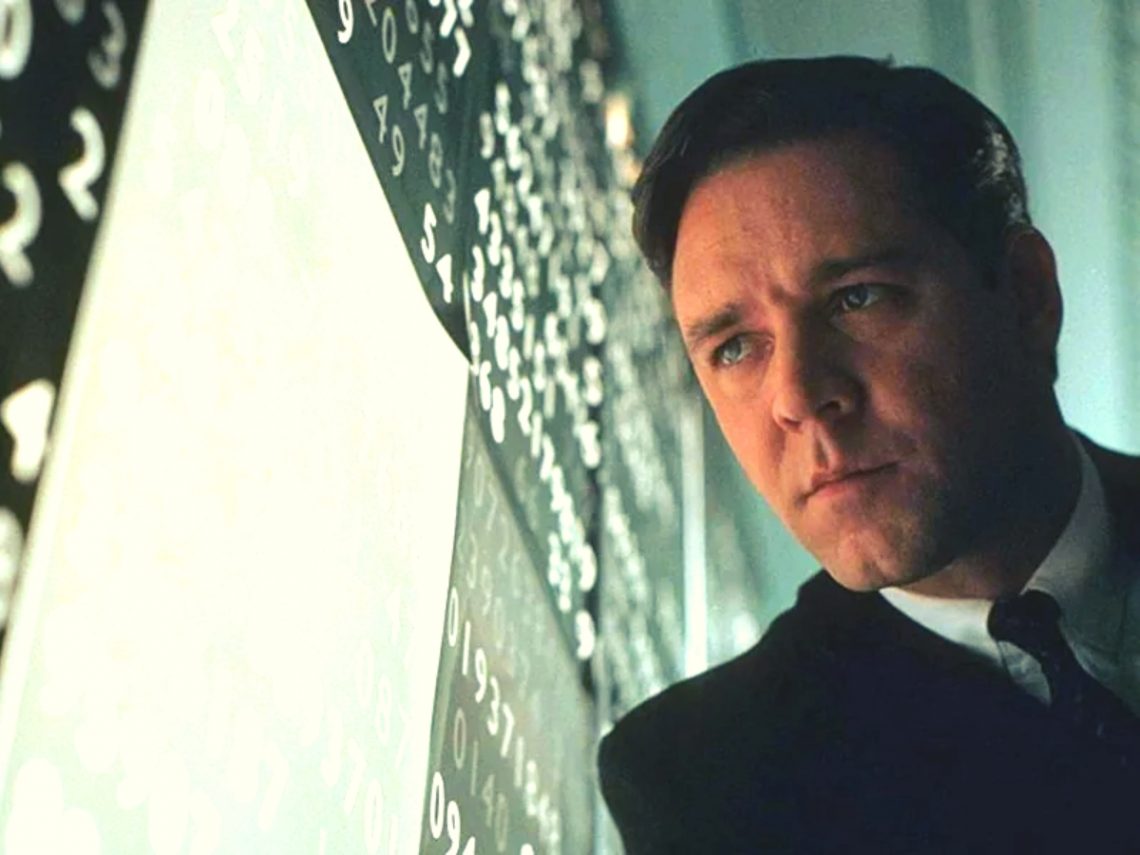
It has been 23 years since Ron Howard’s biographic drama A Beautiful Mind was released. Akiva Goldsman wrote the film and was influenced by the 1998 biography of John Nash of the same name, written by Sylvia Nasar. As for Nash himself, he was an extraordinary mathematician who made several highly-important contributions to game theory, algebra, geometry and partial differences.
However, by 1959, Nash had begun to experience signs of mental illness and received treatment in several psychiatric hospitals. He was eventually treated for schizophrenia. A Beautiful Mind (both the film and biography) explore Nash’s early days at Princeton University, the beginnings of his neurodivergence and the consequences of it on his personal relationships.
The most remarkable thing about Ron Howard’s film is that it gives us a better understanding of neurological behaviours that stray from the norm. Through A Beautiful Mind, we are afforded the chance to attune ourselves to the expectations and requirements of those with mental ailments.
Particularly in the instance of A Beautiful Mind, we become better attuned to the plight of Nash and (more importantly perhaps) his family and friends. And maybe the crucial way in which we come to understand Nash’s condition better is through that same exposure to his particular set of circumstances.
As the American philosopher Martha Nussbaum once noted, when we explore the finer details of artistic works, we fine-tune our understanding of their contents; we “discern, acutely and responsively, the salient features of one’s particular situation. This ability is at the core of what practical wisdom is [and is] an ethically valuable activity in its own right.”
A Beautiful Mind is, of course, not the only film that examines the consequences of mental health and neurodivergence, and they too, of course, ought to be heralded in the fact that they provide us with a more rounded outlook on frames of mind that frequently differ from our own.
Amongst those – to name but one – is Perfect Blue, which examines the schizophrenic paranoia as a result of the intense pressures of fame. Satoshi Kon’s film also profoundly influenced Darren Aronofsky’s White Swan, and both films are brilliant instances of us getting to know what it is like to live in a never-ending sense of claustrophobia induced by the high pressures of celebrity status.
Others include Martin Scorsese’s Taxi Driver, Shane Meadows’ Dead Man’s Shoes and Mary Harron’s American Psycho – all of which appeared on our recent list of the best mental health examinations in cinema, amongst several other wonderful cinematic works. The point remains that it is because of the medium of cinema that we can digest the critical issues of neurodivergence, which may become of essential benefit in our later lives should any of our loved ones (or, indeed, even ourselves) begin to experience such ailments.
Through those works of art, we are placed in tricky moral scenarios and, with that practice, become more finely tuned moral beings. As Nussbaum notes, through literary (and by proxy, cinematic) works, we become “more responsive to our own life’s adventure.”
So, do films give us a better understanding of neurodivergence? It would be difficult to claim that they do not. After all, how else are we to get close to those with specific mental ailments and – in some ways – spend intimate time with them and their families? That is what films afford us the opportunity to do.
It is through exceptional pieces of art – in this instance, through the medium of cinema – that we are placed in moral scenarios that stray from the everyday occurrences of our normal lives. In addition, we come into close contact with those whose neural makeup is divergent from our own, which can only be a positive thing in light of making a more empathetic society.
With that in mind, cinema is an essential part of the process of better understanding ourselves, the world and those that we share it with, regardless of their genetic and neural background. Film is truly a gift that keeps on giving, refining our moral judgment and making us better people all around.
