


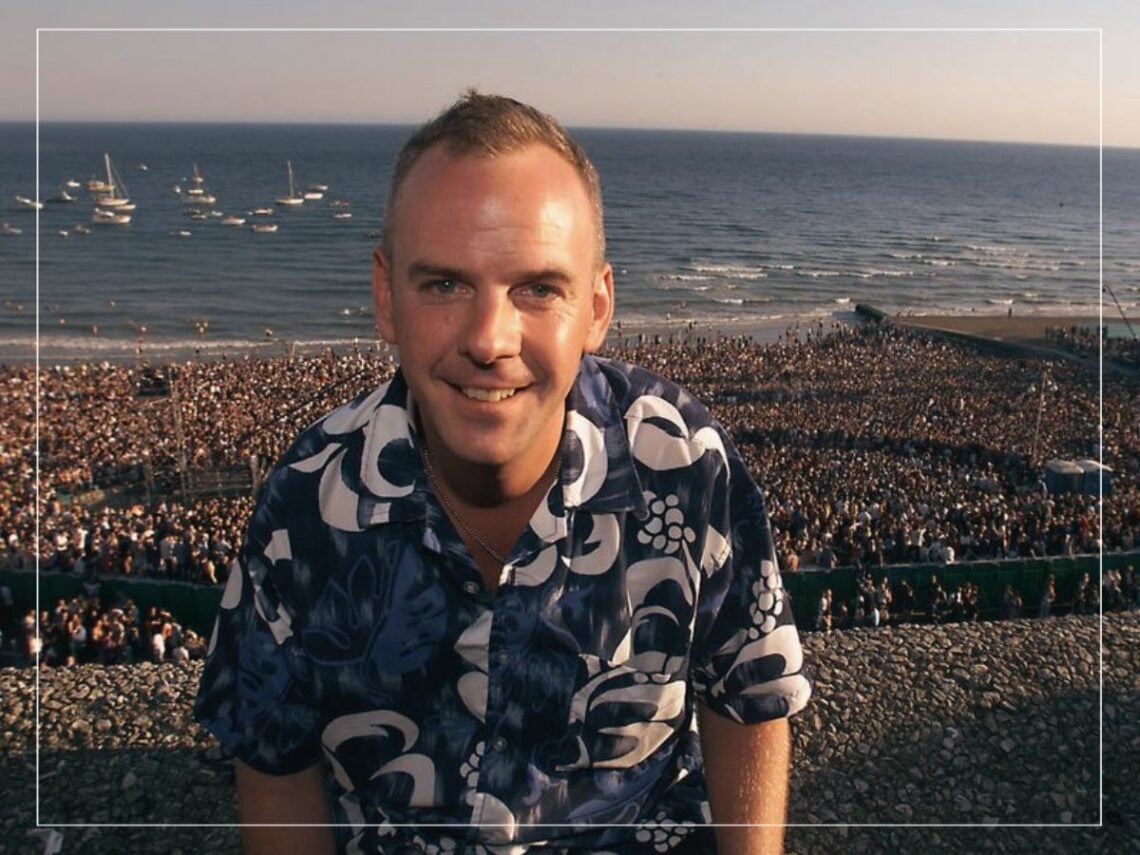
Check it out now: What is a ‘Rockerfeller Skank’?

It’s fair to say that no song summons the spirit of 1990s rave culture sharper than Fatboy Slim’s floor-filling classic, ‘Rockerfeller Skank’. You can practically taste the memories on your tongue within the first few bars alone.
More commonly known to casual dancefloor fillers as “Funk Soul Brother”, ‘The Rockafeller Skank’ is probably British big beat pioneer Fatboy Slim’s signature tune. It also demonstrates the hive mind behind his creations more than any other track he put together. It is evocative, infectious, and it still sounds cutting edge decades on from its 1998 release.
In a 2016 interview with the Dutch TV show Top 2000 a gogo, the DJing artist whose real name is Norman Cook revealed a partial list of the samples that went into the song. He also demonstrated the extent to which he deconstructed each sample into fractions of a second of sound and reconfigured them using a primitive computer-driven mixer.
“Everything is based around an old sequencing system called Creator,” he explained, claiming he’d drawn inspiration for his sampling technique from the ‘70s music of his teenage years. “The whole punk rock ethos was do it yourself; you don’t have to be a great musician.” That ws a liberating mindset for artists like DJ Shadow, The Avalanches, and Fatboy Slim who all prided themselves on a form of creative collage making.
Cook couldn’t even reveal the full list of tracks sampled on ‘The Rockafeller Skank’ for legal reasons, but modern technology allows us to break apart what he put together and provide a pretty clear indication of the components he used. The ‘60s blue-eyed soul single ‘Do You Love Me’ by Brian Poole and the Tremeloes forms the basis of half the beat, while Cook adds the other half in himself.
Then there are surf-guitar samples of ‘I Fought the Law’ and Duane Eddy’s TV show theme ‘Peter Gunn’. And a fat drum and bass line from reggae group JJ Allstars’ song ‘Soup’, as well as the basic backing track from late ‘60s proto-funk record ‘Sliced Tomatoes’ by Just Brothers, which centres on a simple yet colourful rhythm guitar pattern that’s probably the most recognisable element of Cook’s song.
The song’s vocal refrain, “Right about now, funk soul brother”, is made up of a spliced-up rap intro by Lord Finesse for the Vinyl Dogs track ‘Vinyl Dogs Vibe’. The rapper later expressed regret about signing off on the sample of his voice without pushing for royalties, telling New York’s 247HH, “That’s like retirement money.” But Cook managed to keep sole credit for the part and did so by disguising the “funk soul brother” hook beneath a completely unrelated song title.
So, what does the title mean?
Given that ‘The Rockafeller Skank’ draws heavily on a ska reggae song for the bassline at the heart of its beat, it’s only fitting that Cook alludes to the genre in the title for his single. The “skank” is a dance invented in the dance halls of Jamaica during the late ‘50s and early ‘60s, which was popularised by Caribbean communities in London when ska music evolved in the years that followed.
It has since become the signature dance of offshoot genres as diverse as ska-punk and drum-and-bass. Fatboy Slim is obviously paying homage to the diversification of the skank when he names a song that samples at least five different genres after the dance. The skank, in some ways, had become a way of life.
The “Rockafeller” in the title is a more obscure reference, but appears to be related to a common slang term for something grandiose, luxurious or extravagant, coined by classic ‘90s sitcom Seinfeld in the years before Cook created his song. The Seinfeld joke in turn refers to John D Rockefeller, a financier who has frequently been called the richest person in history.
And so, because Cook wanted to boast about his song’s danceability in the manner of a hyperbolic hip-hop brag, but with his tongue firmly in his cheek, he apparently chose the most over-the-top term he could think of. What’s bigger, richer and more ridiculous than Rockefeller?
It trips off the tongue nicely as well, which always helps with a song title. Cook didn’t spell it the same way as the famous family name, but that seems to be simply a nifty trick to avoid any legal hassle. It was an age when capitalism was in bloom and this opulent anthem perfectly captures that essence. Could there ever be a more apt encapsulation of the hedonistic rave scene of the shell suit age? Check it out now.
