


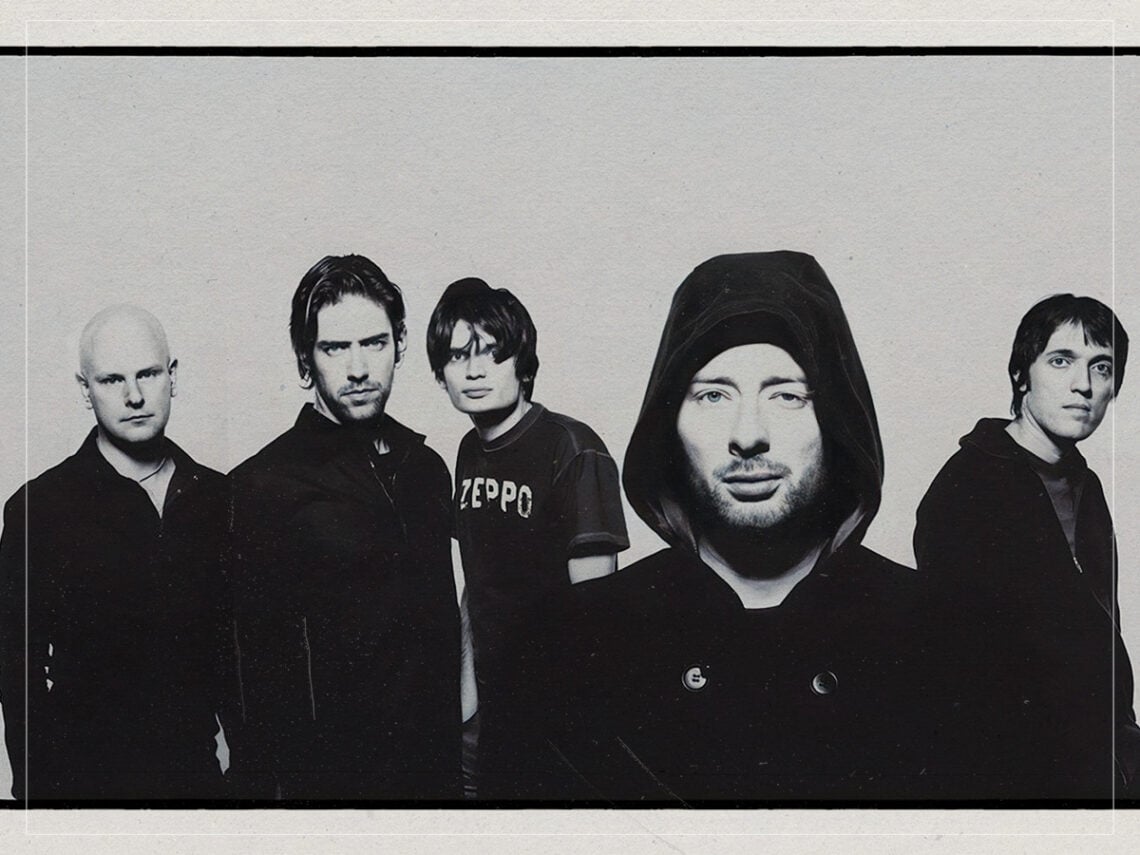
What is a Radiohead?

You won’t catch them admitting it, but Radiohead really owe their entire career to David Byrne.
That’s a smug little nugget of knowledge you can keep in your back pocket the next time the need for music trivia comes around, but it’s also a hilarious image: the pretentious Oxford rock band, broiling and moody, having to submit in mercy to Byrne’s musical metropolitan carnival of life. There aren’t many artists more different from each other.
But then, when you actually think about it, we’ve taken a lot of things for granted. For example, what exactly is a ‘Radiohead’? All sorts of conjured images come to mind – a person with a radio for brains, or someone who is just so obsessed with the wireless that they can’t ever think of anything else.
As it turns out, we have the Talking Heads to thank for that rather garbled expression. Their 1986 tune ‘Radio Head’ was what prompted Thom Yorke and Co to change their name; a great thing because their original moniker of On A Friday was, quite frankly, terrible. But in typical Talking Heads fashion, the tune was just as bizarre as it seems.
Focused on the concept of tuning into another person’s wavelength and their hellbent need to constantly absorb everything good in the world, it was a song resonantly upbeat when you consider the melancholy undertones which Radiohead embodies more often than not. It doesn’t seem like something the doom-laden rockers would have picked themselves.
How did Talking Heads’ ‘Radio Head’ inspire Radiohead?
It was after the band were signed to EMI in 1991 that a name change was less than subtly suggested, since early reviews had indicated that though they were a breath of fresh air in the British music scene, they would always be curtailed by their calendar-based title. Since it was the record label’s idea, however, you can’t judge how on board the band actually were.
But whether by force or by choice, Yorke explained that the song ‘Radio Head’ becoming the name he lived and died by “sums up all these things about receiving stuff… It’s about the way you take information in, the way you respond to the environment you’re put in.” Emerging from the ashes of the Britpop era, it was certainly clear that Radiohead’s existence was a response to something monumental.
Yet in digging deeper beneath the surface, the technological inferences that can be taken from the concept of processing information actually lay quite the foundation for some of the seminal records they would go on to create, namely in something like OK Computer. Surely Byrne’s kaleidoscopic mind could never have predicted giving rise to that.
In essence, a Radiohead is a response to a changing, internet age where information is everywhere and goodness can be hard to find. It’s eerily resonant to the situation we find ourselves in now in 2026, let alone in 1986. David Byrne was the original visionary for that message, but it was Thom Yorke and Co who became enlisted as the departers.
