


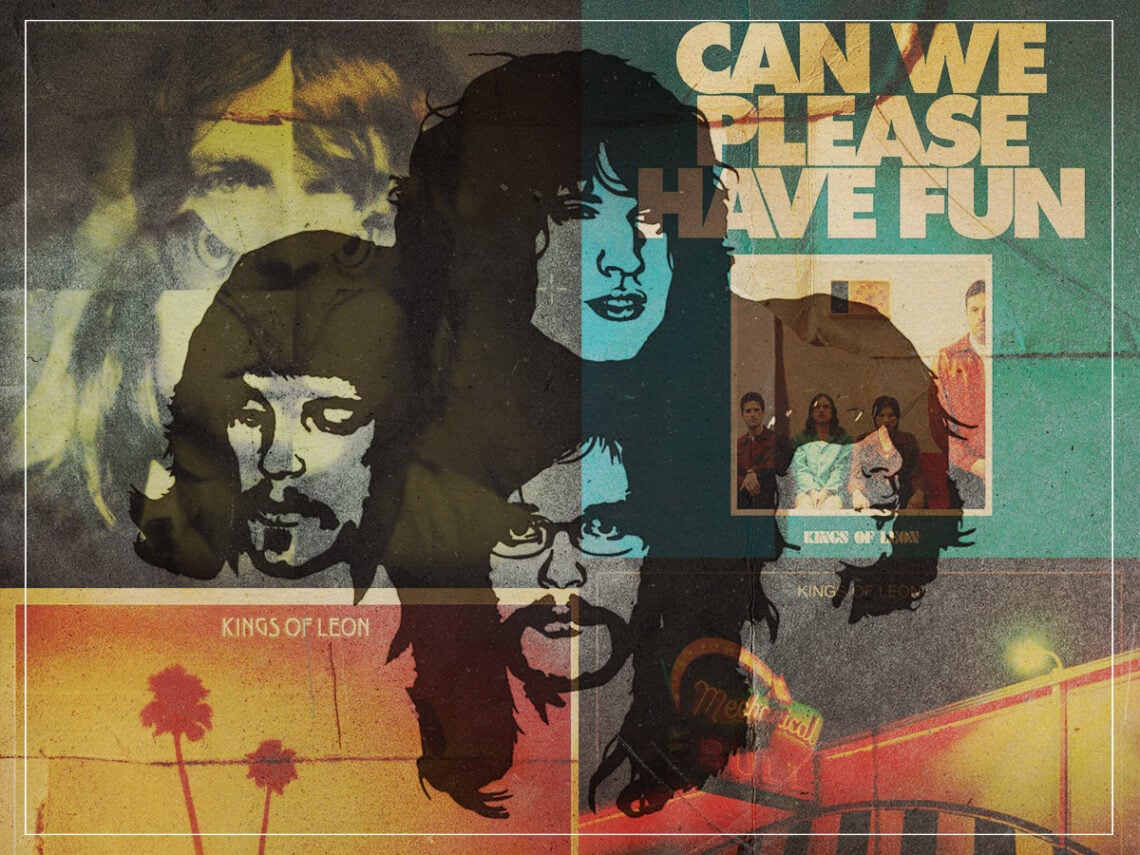
What happened to Kings of Leon?

With Youth and Young Manhood and Aha Shake Heartbreak under their belt by 2004, you could argue the case that Kings of Leon began the 21st century better than any other band. These were not just era-defining records that captured the raucous spirit of the indie generation now somewhat stilted by the gloss of nostalgia, they were records full of subversion.
For one, you couldn’t understand a word of the entirely idiosyncratic vocal yelping of Caleb Followill, but whatever it was he was squealing was effectively emotionally penetrating. Secondly, they somehow managed to meld the gospel tones of their rural Pentecostal upbringing into a sound that was also fiercely undiluted indie. They were also one of the few bands who weren’t afraid to pair roaring rock ‘n’ roll cuts with softer, crooned, romantic balladry. And a slightly sweet shoegaze cushion honeyed the whole picture.
They followed this timeless one-two punch with Because of the Times, another solid offering with superb singles like ‘On Call’, and tracks like ‘Charmer’ that was divisive by nature but certainly showed no signs of a switch towards commercial safety. Even the now-maligned Only by the Night contained some creditable tracks that upheld the band’s singular sound, but there were two that did the damage. ‘Sex on Fire’ and ‘Use Somebody’ caused a commercial boom from which the band have never creatively recovered.
Bands will always be fighting a losing battle when they go mainstream. As much as the idea of making millions of dollars and going around the world filling stadiums sounds enticing, there are just as many people that you’re going to piss off along the way for betraying what made you sound unique in the first place. While most can at least look back on the old records fondly, Kings of Leon are one of the few bands where every new record undermines their classics. In fact, their second chapter has cast a shadow so long that their former glory now fails to gleam through for many, recalibrating Youth and Young Manhood and Aha Shake Heartbreak as ‘surely not quite as good as I once thought’.
Sadly, most people now know the band for their toothless versions of rock ‘n’ roll, rendering a reconciliation of the time when the Followill brothers were one of the greatest up-and-coming voices an almost embarrassing view to prescribe to. The band were once dubbed ‘the southern Strokes’, and even that was grossly unfair, but patches of Because of the Times signalled that something different lay ahead.
While it’s one thing to experiment on half of an album, Only by the Night was the moment the band jumped head-first into being one of the biggest pop-rock acts of the time. And for a minute, it briefly worked. It was a commercial smash, and suddenly, they were certified headliners. Although they sounded absolutely nothing like themselves, a song like ‘Use Somebody’ should at least be applauded for its monster hook. If you want to write for mainstream radio, then they did effectively crack the formula in one. In an odd way, this ironically showcased their strength as songwriters but also hoisted them with their own cheesy petard in the process.

With each subsequent album, the band seemed to be on a downward trajectory, not just in regard to artistic returns but also literally in terms of the pacing. There were still some decent jams on Come Around Sundown or Mechanical Bull, but the amount of downtempo, hit-by-numbers slogs that you have to sit through sounds like the band were trying to make some rock ‘n’ roll-style ASMR for people to fall asleep to. They went from the buoyant backing of indie kids’ drunken road trips to the soundtrack of a golfer’s drive to the mall.
The most egregious example is probably Walls, where the band turned in some of the most tedious, lifeless songs they ever committed to tape. While there’s the ongoing question in rock history about whether it’s worse to be bad or boring, nowhere has the tired argument made more sense than on this album, turning every song into the musical equivalent of NyQuil.
This seemingly intoxicated the group themselves. For an extended period there were tales of the band brandishing audiences “boring” when ‘bored’ might have been more accurate. Gigs were abandoned after members stormed off stage. Covert admissions that they were tired of the whole thing became apparent.
This tempestuousness extended to the studio. They made When You See Yourself available only for fans to purchase through cryptocurrency; is there any clearer way to signify yourselves as a purely commercial entity than that? Even though the album did seem mildly better than the previous one, nobody seemed to care because nobody could even hear it. The band were seemingly lost in a sea of bad decisions, disorientated by a wave of success that severed the anchor to their roots and left them rudderless.
Their latest release, Can We Please Have Fun, confirmed this even further. They ditched mainstream pop-rock tropes and actually tried to apply themselves in a manner aligned to the present post-punk boom. The results were fair, but incongruous. It was like your father trying on the latest young fashion trend, oddly pulling it off to an extent, but never convincingly enough for it to be ‘clothing’ rather than a ‘costume’.
Even this latest venture was moot, proving the extent of the problem. If you’re not a die-hard fan, most people probably didn’t even realise that the newest version of the band was actually a surprisingly decent attempt to reinvent themselves as alternative again. Proving that presently, perhaps the biggest problem they face is the longevity of the band’s mainstream phase and the sheer pervasiveness of their millstone: ‘Sex on Fire’. It is the albatross they lent into too far to ever escape from. Now, the new album title Can We Please Have Fun is like a wry wink of the band recognising their own arc, but all semblance of fun seemed to be snuffed out of them years ago.

In the middle of this downfall was the documentary Talihina Sky, an odd mix of an origin story returning to the band’s country roots and awkward banter about drinking wine with a four-figure price tag. This documentary came out in 2011, and although it was rightfully snubbed as an odd mishmash of material, in retrospect, it almost seems like an admission. As was evidenced by their return home, the band had to not only overcome abject poverty, but stern questions over the virtues of rock ‘n’ roll from their deeply religious community. With that in mind, perhaps two masterpieces and a very good segue record on the path to settling down and shaping a new life is enough?
Of course, you can look at the decline as a band who sold their soul and, to coin a phrase from Peep Show, became bullshitters turning wank into cash. The soul-selling, comically, quite literally coming after touring with U2. Or you can see them as a band who overcame impossible odds to reach heights that defined an era before finding themselves swayed by the lavishes of their own unlikely success – admitting that they were drunk “98% of the time” while recording Only by the Night – even proving themselves competent while peddling corny commercial crap. However, whichever way you look at Kings of Leon, you shouldn’t let it impact your judgement or enjoyment of two undeniably great records.
The narrative behind the whys and wherefores of their change in style seems evident. In fact, in a KROQ interview back in 2009, Caleb Followill was frank about the matter, explaining, “Things have always been crazy for us outside of America. So, we’re used to the craziness [brought on by the success of ‘Sex on Fire’], but I actually never thought we’d be big in America. It’s kind of… bittersweet.”
He went on to explain that “the sweet is probably the money [laughs]. No, the good thing is when we come home we don’t have to tell [friends and family] stories of what it’s like, because now they can actually see what’s going on in our careers. But the bitter is obviously that there are going to be people out there that expect this type of music from us on the next album, and that’s not what they’re going to get.” Sadly, after that interview, the shadow of ‘Sex on Fire’ continued to extend, meaning that a minor change was tantamount to more of the same for the old fans now turning their backs.
At the crux of this is also the increased cynicism that the internet has created when it comes to music criticism. In a buzzing crowd, it would be hard for even the most staunch critic of their middling days to deny that they’re not still at least talented musicians and a tight band. But many cultural commentators are very distanced from this humanising equaliser making it easier to fling shit at the shoddier offerings that have followed their glory days from afar without much subjectivity. This has tainted the group as a whole.
However, this viewpoint runs both ways, and perhaps the band have decided, ‘Ah fuck it, we offered up two great records that were bashed by some snobs anyway, I’m battered and beleaguered by tirelessly working for those great days, so if we get to the studio and find ourselves short of ideas, why don’t we at least have a great time, cook up something that’ll sell, throw in the odd jam like ‘Don’t Matter’ just for us, and take the spoils back to the families we’ve now all started, getting out on the road for a holiday when we can, knowing we’ve still got ‘The Bucket’ and ‘California Waiting’ firmly up our sleeves’.
For fans, that conceit is far from great and runs counter to artistic idealism – and you wish they’d returned to progressive creativity as wealthy men before things went beyond the pale – but at least you can empathise with it. Besides, they’re far from in the minority when it comes to bands losing their way after two or three records; at least Kings of Leon would argue that they’re one of the few who headlined stadiums and built mansions for their families in the process.
