


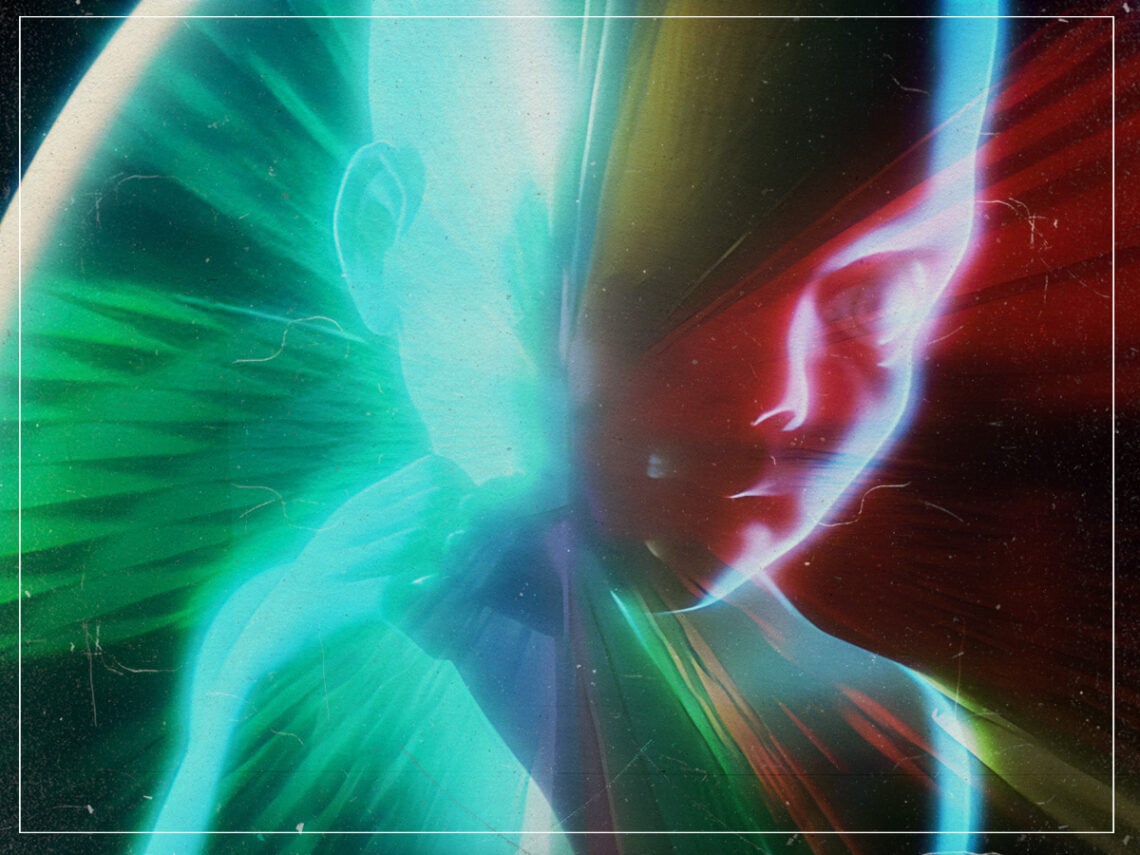
Star Child: What does the “baby” mean at the end of ‘2001: A Space Odyssey’?

As far as science fiction cinema goes, it doesn’t get more significant than the astonishing Stanley Kubrick movie 2001: A Space Odyssey, released in 1968. A true masterpiece from beginning to end, written in collaboration with the legendary sci-fi author Arthur C. Clarke, 2001, starring Keir Dullea and Gary Lockwood, featured careful astronomical accuracy and pioneering special effects.
2001 is absolutely rife with symbolism and possible interpretations of its narrative, but perhaps the most significant (and yet perplexing) moment is the arrival of the “baby” known as Star Child at the film’s conclusion. Star Child arrives on screen at the end of astronaut Dave Bowman’s long evolutionary journey beyond the infinite, a newborn child glowing in the endless skies of space. But what exactly does its emergence mean?
Firstly, it’s worth drawing attention to the fact that it’s likely that Star Child is representative of the next stage in human evolution. After all, most of the film charts the evolutionary process of humanity, from bone-wielding apes to technology-creating spare farers. As Dave goes where no human has ever gone before, guided by the strange black monoliths that show up whenever an evolutionary jump occurs, he leaps forward into a new kind of physical existence, as represented by the Star Child.
The monolith was there when the apes first picked up the bones as weapons, and another was discovered underneath the moon when a strange signal was sent out pointing towards Jupiter (Dave’s intended destination). There’s also a monolith present at Jupiter, which serves as the trigger for the final jump in intelligence and evolution.
The fact that the symbol Kubrick and Clarke used is a baby bears significance, too, though. It invokes a deep sense of the unknown, a blank slate of innocence and purity hanging there in deep space. Equally, there is something of an unsettling nature to Star Child as it gazes out past the stars in awe, mystery and wonder, a strange image befitting of the even stranger journey Dave had just made through time and space.
But there’s still that familiarity in a human baby that makes audiences perhaps feel a sense of calm and the need to protect Star Child out there drifting cold in space. The transformation back into an infantile version of humanity suggests that Star Child’s journey may not yet be over, and there is, in fact, more to learn and more evolutionary steps to be made.
On the other hand, Star Child is the first iteration of humankind without technology, which had hitherto been shown to be something of a necessary hindrance. First, the apes had weapons that helped them evolve, but this invariably caused violence. Then, space-faring humans had technology to help them navigate the stars, but HAL-2000 malfunctioned and nearly brought an end to humanity’s journey towards its newest evolutionary step.
Star Child, on the other hand, is depicted without any technology, which might suggest that it is free from its dangerous allures. However, another meaning could be that Star Child represents the final symbiosis of technology and humanity, where they are indistinguishable from one another and essential to the other’s existence.
It’s almost certain that Star Child is a representation of the possibility of the transformative power of humanity through a rebirth into new evolutionary frontiers. There’s an ambiguity for sure, but that only prompts, as is often the case with Kubrick’s films, the audience to consult their own ideas and form their own beliefs about its meaning.
Existence and consciousness are at the forefront of 2001, and the “baby” at the conclusion of the film is the perfect metaphor for the metaphysical transcendence of humanity. Hanging there in the sky with its wide newborn eyes, Star Child provokes the mystery of our strange existence in planes beyond our reckoning, a reminder to always sceptically question our usual understanding.
