


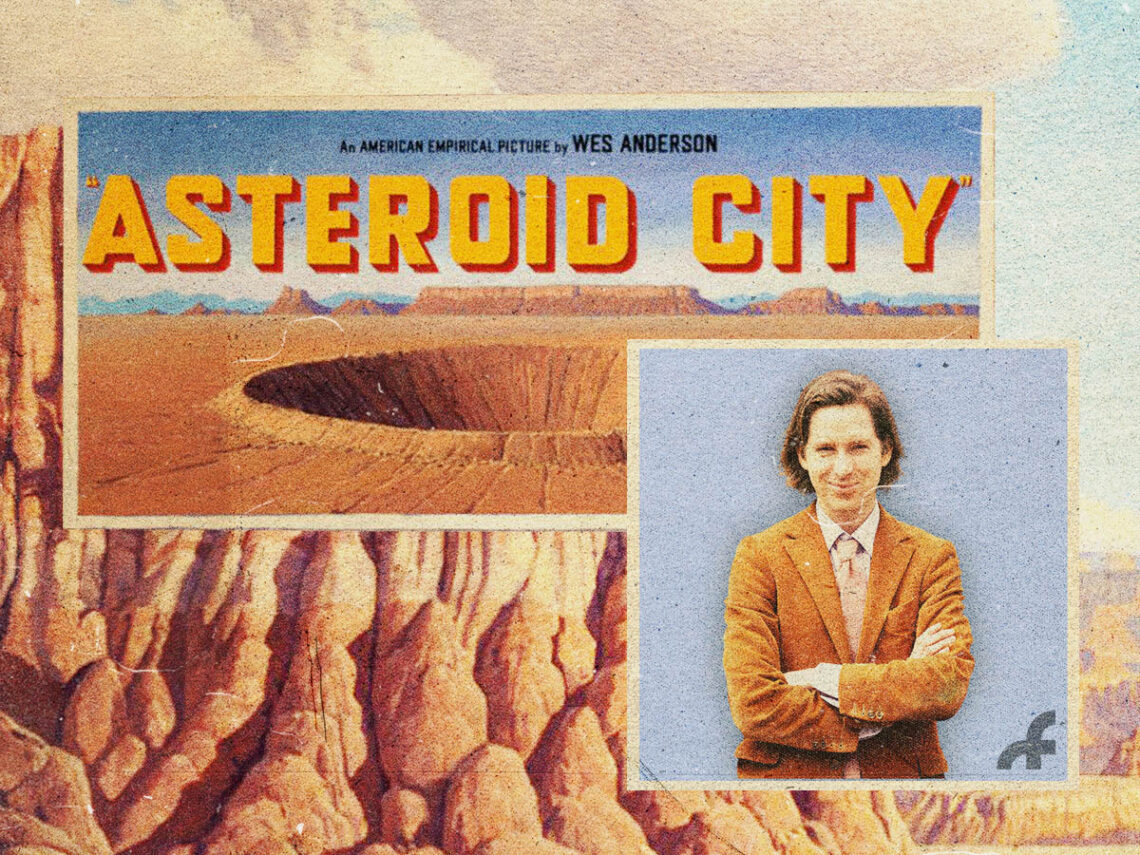
‘Asteroid City’ movie review: Wes Anderson’s unadulterated fun in retro Americana

Wes Anderson is probably the only director who was able to redefine the term ‘auteur’ in contemporary Hollywood. In a cinematic landscape with such towering mountains as Quentin Tarantino, Sofia Coppola, Paul Thomas Anderson and the Coen brothers, it is genuinely astonishing that none come remotely close to Wes Anderson in terms of such a distinct aesthetic, tone and brand. Asteroid City, it goes without saying, continues this trend.
Of course, that is not necessarily a good thing. With ultimate distinction comes ultimate imitability. You could argue that the less ready-made your cinematic style is for viral ‘accidental Wes Anderson’ trends on social media, the better. Perhaps Anderson disagrees; brands are profitable, after all. But, if it’s that easy to break down a director’s entire catalogue of work into several components that any Tom, Dick and Sally can whip up and or riff on, then there is a heavy implication that the work isn’t that… well, complex.
Beyond The Simpsons à la ‘Balenciaga’, the most-watched YouTube AI mashups involve Anderson’s style being applied to various franchises, such as Harry Potter, Star Wars and The Lord of the Rings. Even before this recent technological development, regular live-action sketches like ‘Wes Anderson’s Star Wars Audition Tape’ for Conan O’Brien and ‘What if Wes Anderson Directed X-Men’ were emblematic of how influential the director’s visual touch was.
The concentrated mix of pastel colours, costumes, photography, sets, performances and symmetrical cinematography yielded something that was unmistakenly ‘Wes Anderson’. It was also relentless and, for many, including myself, creatively bankrupt. From The Grand Budapest Hotel onwards, it felt as if the formula had been fed into a computer which could then, jerking and bleeping, spit out infinite variations of those components in different skins, times and settings – much like a device that might be seen in… one of Anderson’s own films. Good god, it’s getting all too meta.
The Anderson fatigue was real, but looking online, you wouldn’t find any sign of it. For me, Isle of Dogs and The French Dispatch came and went, both painfully meticulous and featuring a rich array of A-lister talent who all sounded exactly the same and had no discernible traits except that they were deadpan and slightly arch. So when the trailer for Asteroid City debuted, I let the rigid, uniform and saturated imagery cascade past me with glazed eyes and little to no enthusiasm or feeling whatsoever.
Imagine the surprise, then, when upon leaving the theatre screen on a weekday evening after watching Asteroid City, I discovered I had genuine tears in my eyes. The film is a triumph, an undisputed and categorically sound masterpiece which somehow won over a sceptic despite, or perhaps because of, the cynicism I brought into the cinema with me. It felt like reuniting with a delightful old friend even though I’d seen them in 2021 and 2018, and both times couldn’t wait to get rid of them.
Probably the biggest reason Asteroid City has such a tremendous impact and sense of rejuvenation is in its setting. Applying the traditional Anderson lens to the Nevada desert feels refreshing and new, but applying it specifically to a predetermined aesthetic creates an entirely new Anderson experience. The retro Americana energy that thrums throughout the film holds it up with something forceful enough to counterbalance the overbearing weight of the director’s style.
It feels like a tribute being made to, or a collaboration with, another aesthetic rather than the usual bombardment of Anderson. He acknowledges other styles and makes room for them, and the result is so much sweeter. The actors, diverse and talented as they are, all adhere to the delivery of the regular brand of staggered and impassive dialogue, but this time they’re doing it in toe-to-toe denim and against the contrast of blue sky and mustard mountains, so it’s fun to watch again. Scarlett Johansson, Jason Schwartzman and Edward Norton are the highlights of the huge ensemble, and the introductions of newcomers Jake Ryan and Grace Edwards are particularly welcome.
The story itself is the classic quirky and convoluted fare, but a narrative twist/plot technique that won’t be spoiled here elevates it to something unusually emotive and intriguing. Since Fantastic Mr. Fox, Anderson has engineered his films so that he never actually has to deliver the emotional payload, which is a total cop-out, but Asteroid City punches you in the gut on a fair few occasions. It’s also hysterically funny, and there are a few genuinely surprising cameos by actors who are difficult to recognise, which makes it all the more enjoyable once the realisation is made.
The colourist gets a main credit along with Anderson and the principle crew, which is a very admirable nod to how important the palette plays in his films, particularly this one. In terms of production design, everything is exquisite as usual, but not in a sickly sweet way, because the Isle of Dogs director, along with his supremely talented designers, has somehow managed to bridge the gap between stop-motion and live-action. It genuinely feels like a mixture of both; in fact, there is one scene that I’m sure is a hybrid. There are moments where the real live vistas are breathtaking (it was shot in Spain) and other moments where I marvelled at the painted background of skies and plastic cacti. But I never quite knew when the transition happened.
Such is the genius on a design level of this film; it makes all the previous films feel like a warm-up or a beta test. As if doing Grand Budapest Hotel, Isle of Dogs, The French Dispatch and even Fantastic Mr. Fox was the trial run for this ultra-honed, beautifully refined piece of extraordinary cinema. The final hurrah is the run time. Anderson, perhaps in protest at other filmmakers’ hubris, ensures that he tells the story he needs to get told in one hour and 45 minutes. In 2023, can you imagine such a thing?
Asteroid City feels expansive in its sprawling ensemble cast, narrative structure and philosophical themes, but it’s all wrapped up neatly and tidily within two hours, a proud demonstration of the economy of cinema. Ultimately, the film is a heartfelt, engaging and surprisingly compelling success story that heralds a return to form from an auteur director who has gained a new sense of modesty and humility. As someone who vehemently resisted his previous outings, I’m incredibly excited about what he’ll give us next.
