


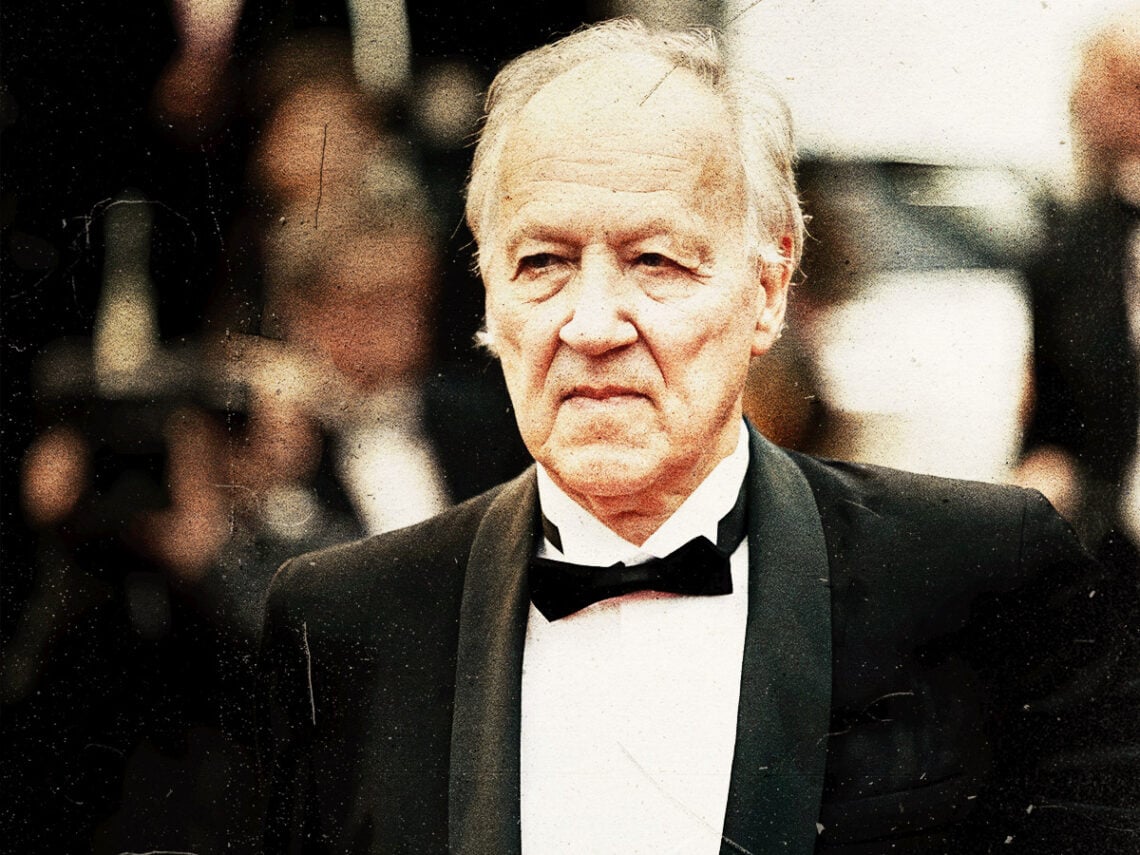
The Werner Herzog movie destined for immortality, according to Werner Herzog

Werner Herzog, the man who will eat his shoe in front of an audience to settle a bet and continue an interview despite getting shot with an air rifle mid-sentence, has been more than happy to commentate on his vast filmography over the years. In fact, he frequently talks about his movies as if he were merely the conduit through which something much greater and more urgent than himself could be channelled.
Critics have been drawing parallels between the filmmaker and the larger-than-life subjects he is so drawn to since at least his third film, Aguirre, Wrath of God. Shot on location in the Peruvian rain forest, it follows the story of a Spanish conquistador leading an ever more weary and ragged group of soldiers to the mythical city of El Dorado. During the journey, the conquistador grows increasingly maniacal, eventually descending into a state of madness.
The production was so plagued with hardship and drama that it led to a documentary that is at least as engrossing and philosophical as Herzog’s fictional film. It also established him as the pre-eminent storyteller of men who have grandiose plans to achieve absurd and usually goals. Their journeys almost always fail and frequently push them to the brink of madness and beyond.
In Fitzcarraldo, a fiction film, a rubber baron tries to move a steamship over the Andes. In Grizzly Man, a documentary, an out of work actor and amateur conservationist tries to live alone with grizzly bears on a remote island. Herzog connects these stories to his own brand of spiritual transcendence, or what he calls “ecstatic truth”, in which documentary and fiction are blurred and his filmmaking process often mirrors the journey of the protagonist.
This artistic approach to documentary and documentary-style approach to fiction has gained Herzog legions of fans, but he still believes that at least one of his films is underrated. When asked if the success of Grizzly Man was a win for art house cinema in its battle against mainstream Hollywood, the director was characteristically blunt.
“That success doesn’t really matter,” he said. “White Diamond will outlive Grizzly Man. It’s a much stronger film. You see something like Aguirre, The Wrath Of God – which I made at the beginning of the seventies – no one was interested in it, no one wanted to see the film. Today, it’s a classic, in a way. And so it found its audience, and so it will prove with White Diamond. It’s one of the best movies that I’ve made, and it will outlive Grizzly Man. It has more depth than Grizzly Man, and it will have a longer life.”
Released in 2004, White Diamond centres on a British aeronautical engineer who designs and plans to fly a helium-filled airship over the natural beauty of Guyana. It is in keeping with many of his other films that Herzog highlights the grandeur of nature and the ecstasy of obsession, creating an existential treatise that veers away from the engineer and toward Herzog’s own philosophies.
Despite what the director says, White Diamond was met with warm reviews from most critics, though some pointed out that it was even more subjective and Herzog-oriented than Grizzly Man. Time will tell whether he is correct in believing, with his characteristic impatience for modesty, that it will become a timeless classic.
