


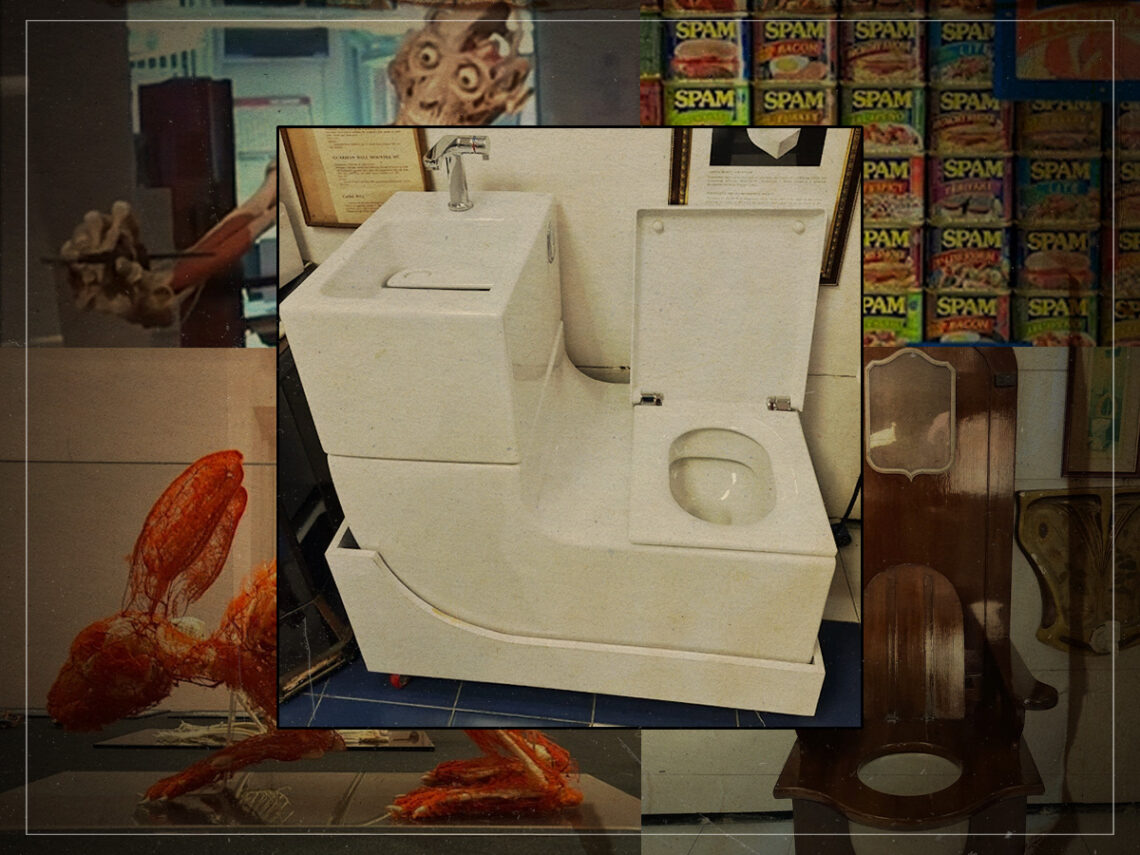
Bizarre experiences: the world’s weirdest museums that are actually worth the visit

If you traverse down an internet rabbit hole, you’ll come to find there’s a museum for pretty much everything on the planet, and this article will give you some proof of that. But why, you may ask.
Well, I’ve come to the conclusion that humans have a profound need for comforting moments of nostalgia, and this can manifest in several ways: collecting objects, having a local spot you visit regularly, even though you know everything about it and should try something new (this can be a holiday, restaurant, anything really…), or having a passion for something very specific (and for some slightly weird).
It’s no surprise, then, that museums have popped up around the world with their entire collections dedicated to one specific random thing. Just recently, an Australian woman won the Guinness World Records for the greatest minion collection in her own home.
In a world saturated with rapidly turning trends, new quirky pockets (sometimes downright fetishes) of pop culture are developing to slow down and nurture a lasting curiosity. People are jumping on board because they don’t know what to expect and are filled with intrigue. These spaces tap into our love of novelty and remind us that the world is far weirder, funnier, and more fascinating than we sometimes give it credit for, so let’s take a cheeky tour through three of the weirdest museums the world has to offer.
Three of the world’s wackiest museums
Plastinarium – Guben, Germany
In Guben, Germany, the Plastinarium is not your average science centre. This science museum isn’t for the squeamish or faint of heart, but it will be a medical student’s greatest delight. Opened in 2015, this one-of-a-kind attraction invites visitors to get under the skin (literally) and witness the cutting-edge world of anatomical preservation.
Here, ‘plastination’ technicians, sometimes nicknamed “the body whisperers”, can be seen hard at work, transforming donated corpses into durable, lifelike teaching specimens. Thanks to Gunther von Hagens, the inventor of plastination, anatomy students no longer have to deal with messy, smelly cadavers. Instead, they can handle preserved tissues that look as fresh as the day they were frozen in time.
True to being a museum, the Plastinarium dives deep into the history of anatomical study, from breakthroughs made by Renaissance masters like Leonardo da Vinci to the modern advancements in silicone plastination. You can even trace the journey from early preservation techniques, such as paraffin embedding and resin blocks, right up to von Hagens’ groundbreaking methods, publicly acclaimed in 1977.
With over 16,500 specimens on display, the place offers a rare, close-up look at human anatomy that’s both fascinating and intense. For more sensitive visitors, it might be wise to visit on an empty stomach.
Spam Museum – Minnesota, USA
Yes, you read that right, a whole establishment dedicated to Spam, but it’s not the electronic kind. Minnesota’s Spam Museum is a celebration of something many young people today have only known as their junk email folder. But long before the word meant dodgy messages about fat-burning miracle teas, it was a cultural icon: an overly salty, pre-cooked, canned meat extravaganza that was a staple in the larder and a recurring guest on middle-class family dinner tables.
But this establishment looks at so much more than what’s in the tin; it chronicles the cultural importance of this infamous once pop culture punchline as a vital source of nutrients during difficult times, like World War II.
The museum, which covers 16,500 square feet, pays tribute to Spam’s journey since its debut by Hormel Foods in 1937. Visitors can stroll past walls stacked with over 3,300 Spam cans (and observe the evolution of its marketing and design), explore interactive exhibits, and watch Spam’s many cameos in pop culture, from World War II food staple to Monty Python’s ‘Spamalot’.
Sulabh International Museum of Toilets – New Delhi, India
At first glance, the idea of a museum dedicated to toilets might sound, well, a bit shitty (pun intended). But the Sulabh International Museum of Toilets in New Delhi offers a surprisingly fascinating journey into the evolution of sanitation, a topic we rarely think or know much about, but is one on which our lives desperately depend.
Founded in 1992 by renowned social reformer Dr Bindeshwar Pathak, the museum emerged from his groundbreaking work on sanitation reform in India, one of the most populous countries in the world with a major hygiene and sanitation issue. With awards like the Stockholm Water Prize under his belt, Dr Pathak knew the value of highlighting how access to clean toilets has shaped human health and development.
The exhibits take visitors on a 5,000-year journey through the history of sanitation, from ancient ‘privies’ and ornate chamber pots to elaborate bidets and modern ‘water closets’. There’s even a quirky collection of poems celebrating the humble toilet, proof that humans have always found ways to laugh about life’s most basic needs.
Beyond the lightheartedness, the museum delivers a powerful reminder: access to proper sanitation is something many of us take for granted, whereas it remains a global challenge.
