


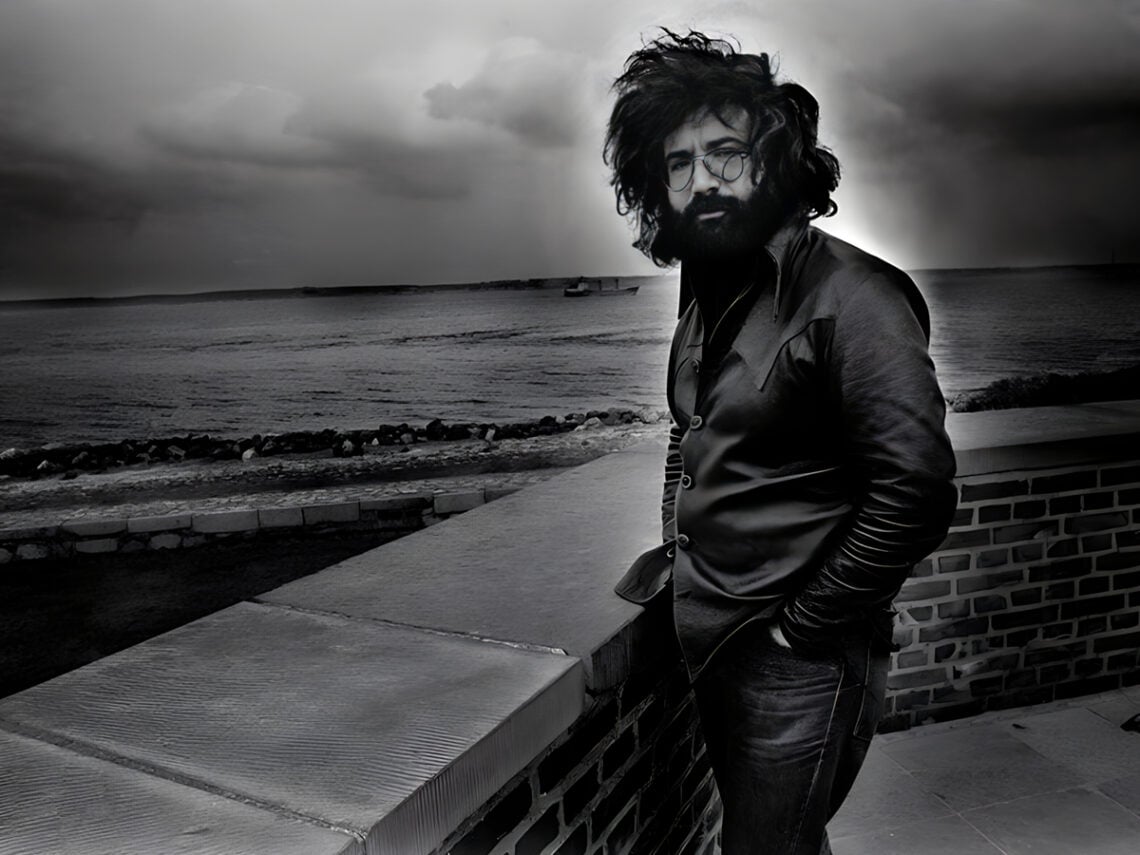
Why were Jerry Garcia’s ashes spread in India?

The hippy dream was never built to last. The core message, that peace and love could make the world a better place, was just too pure to exist in a world as chaotic and uncaring as ours. A world where it often feels like your success is proportionate to the cruelty you display to your fellow man. While the hippy dream couldn’t last, though, the hippy movement did. While that may sound like a contradiction, the two are very different things. For a case in point, look at the history of tie-dye totems and Jam-band overlords of the Grateful Dead, more specifically, their frontman, Jerry Garcia.
From their very formation, The Dead were Cali to their core. Hailing from Palo-Alto, they came to prominence in the San Francisco Bay rock scene just as that was becoming the center of the pop-cultural universe. As a small, Bay area counter-culture scene became the Summer of Love, the house that Jerry Garcia and Bob Weir built were at the very centre of it. Growing from folk-rock also-rans into, arguably, the biggest cult band of all time.
For the three decades they were active, Garcia and Weir were the band’s chief creative force. Garcia, the folksy old soul in a young man’s body, whose spellbinding guitar playing powered the band’s sound. Weir was the voice of youth, a bluesman charging what could have otherwise been sleepy folk-rock with sheer force. It makes sense that, after Garcia passed away in 1995 at the tender age of 53, Weir turned The Dead into a seemingly endless amount of touring and recording projects.
All of which are keen to draw a respectful line between them and what Garcia achieved. None of them are actually called “The Grateful Dead” for example. Perhaps that respect is an act of mea culpa, stemming from something Weir did in the immediate aftermath of Garcia’s death that flies in the face of respecting, ironically enough, the dead. Garcia’s death, while tragic, wasn’t exactly unforeseen. The man’s health problems and drug addiction had come to a head, and a will had been written with his input.
In it, he’d specified that his ashes were to be scattered in his beloved San Francisco, off the Golden Gate Bridge. In the end, half of his remains were scattered there, in accordance of his recorded wishes. The other half were taken to India, where Weir scattered them in the Ganges river in Rishikesh. Garcia had never been to India and had expressed no real interest in doing so, and his family were outraged at Weir, who cooked up the idea along with Garcia’s widow, Deborah Koons, for going against his wishes so blatantly.
Annabelle Garcia, Jerry’s daughter, said to the San Francisco Gate that this act “was all done 100 per cent without our knowledge. It is gut-churning, to say the least.” Carolyn Garcia, Jerry’s ex-wife, also told The Gate, “There was no reason on Earth to take Jerry’s ashes to India, a country he’d never been to, and dump them into the most polluted river on the face of the Earth.”
Weir himself paints the decision as one done relatively on a whim but with the band’s blessing. He told The Gate that “It came to me in a flash, in between being awake and asleep.” Considering this was The Grateful Dead, you can intuit for yourself what state he may have been in when he made the decision. However, for all his harrumphing about wanting the occasion to be private, he and Koons did bring a film crew to document the occasion. The whole sorry situation is on YouTube for all to see.
Perhaps this is the most fitting way for Garcia to have gone. A man so identified with the hippy movement leaves the earth and does so with a storm of petulant in-fighting and warring over who has the most right to his legacy. Something pure is taken from us, and all that’s left is the branding. At least we still have the music.
