


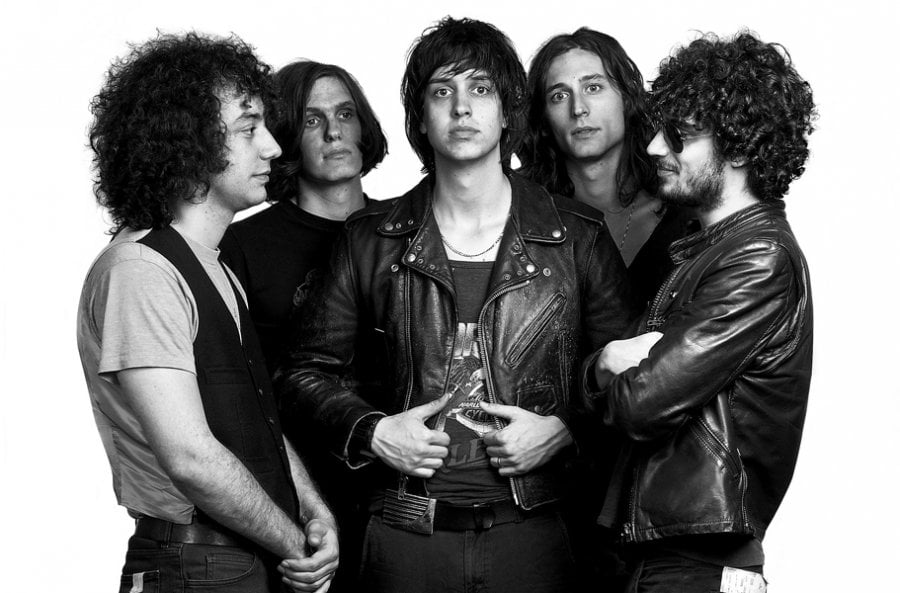
Watch The Strokes play ‘Gratisfaction’ in 2011

The 2010s were a particularly difficult period for The Strokes. New York’s favourite band to rise out of the garage rock revival of the early 2000s had some stumbling blocks throughout their first decade of existence, but they managed to keep it together and release three albums that helped cement them as one of the world’s biggest bands. Then came the real problems.
After working nearly nonstop for a decade, The Strokes took a hiatus in 2007. The group came back together, but work was stalled on what would eventually become 2011’s Angles when Albert Hammond, Jr. entered drug rehabilitation that year. When the band eventually returned to work, Julian Casablancas appeared disengaged and missed a number of rehearsals and recording sessions.
“I won’t do the next album if we make it like this,” Nick Valensi told Pitchfork in 2011. “No way. It was awful– just awful. Working in a fractured way, not having a singer there. I’d show up certain days and do guitar takes by myself, just me and the engineer.”
Casablancas hit back at the notion that he didn’t show up for sessions. “The funny thing about Angles is there was all that weird talk about recording it separately,” he told Rolling Stone in 2014. “We just had dinner in L.A., and we were all talking about it. And they forget that we sat in a room in a studio and were writing songs forever.”
“That’s where we did the whole record. All the parts, the songs, in a room, together,” he added. “We recorded them with two mics, and that was the foundation, and then we were going to go track the official recording. That’s when they went and recorded stuff, and when the ‘Julian wasn’t there,’ BS or whatever [started]. That was just because, logistically, we’d never done a record like that”.
Around the same time that The Strokes were trying to get Angles done, Casablancas was reoccupied working on his solo debut, Phrazes for the Young. The reality of the situation remains a bit murky, but there’s probably truth to both sides of the story. The band probably did record most of the basic DNA of Angles together, and Casablancas was probably absent for overdubs as he focused on his own album.
The results were surprisingly solid. Although Angles gets bogged down by its reputation, it does contain some canon Strokes songs like ‘Under Cover of Darkness’ and ‘Taken for a Fool’. Its deep cuts are also fascinating, whether it’s the electro-funk of ‘Machu Picchu’ or the new wave drive of ‘Life is Simple in the Moonlight’. The album also has ‘Gratisfaction’, a peppy track about losing the love you thought you found in someone.
The music couldn’t save The Strokes from the collision course they had set for themselves. Despite still headlining festivals worldwide, it was clear that the band had many problems they needed to work through. They seemed confused at every turn, like when they showed up to Ellen to perform ‘Gratisfaction’. The Strokes and light daytime television? Hardly the combination anybody is looking for.
As Casablancas pulled the band closer to electronica and experimentation, the group’s working relationship fizzled, and The Strokes entered another hiatus after 2012’s Comedown Machine saw no promotional appearances or tours of any kind. Casablancas worked with his new band, The Voidz, while the other members focused on their own projects. With the exception of live performances and the Past Present Future EP from 2016, The Strokes were creatively absent for most of the 2010s until returning with 2020’s The New Abnormal.
Watch The Strokes perform ‘Gratisfaction’ in 2011 down below.
