


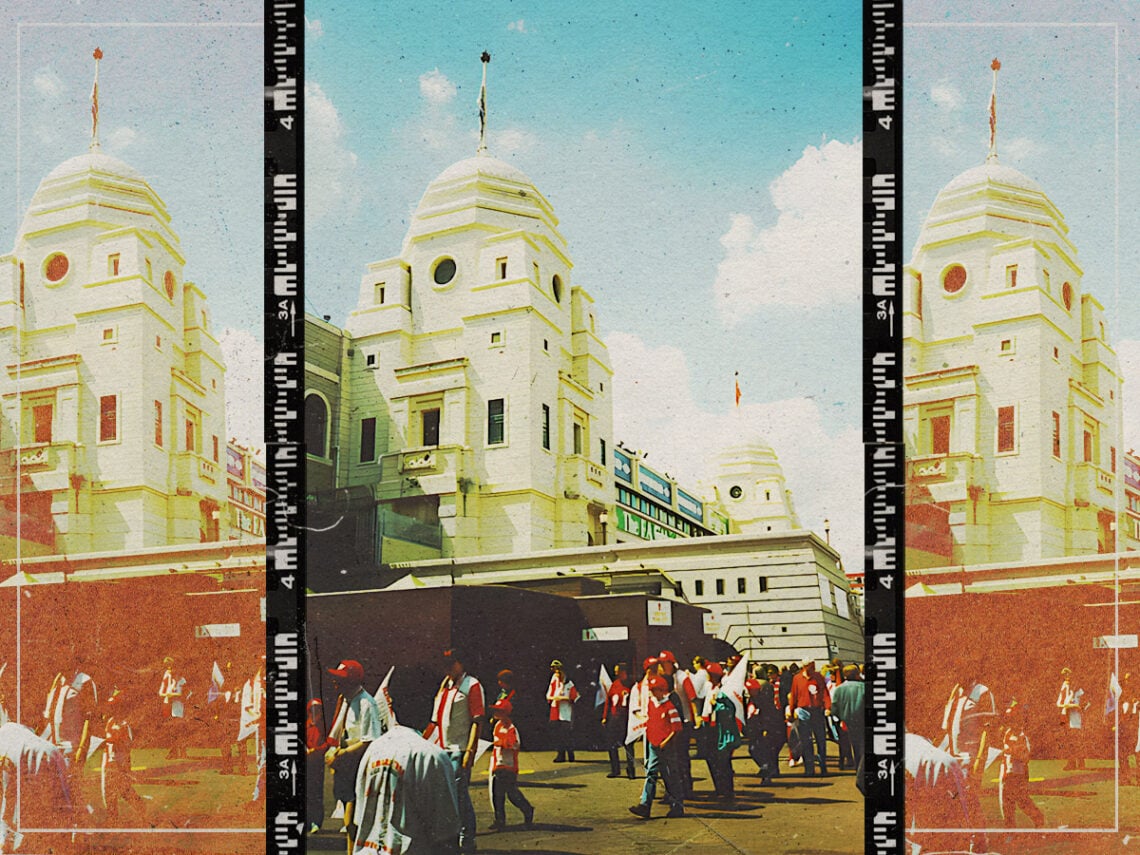
Watch rare footage of the first-ever show at Wembley stadium

The original Wembley stadium was finished on April 28th, 1923, as a sporting venue. It’s unclear whether there were ever plans to hold gigs there, but given the first show was in 1972, some five decades after it originally opened, it’s not unfair to suggest music was never really considered in the original plans.
Still, music always finds a way of weaving itself into most corners of our lives, and as a result, Wembley these days is just as much a concert venue as it is a sports stadium. Recent bands to play the new Wembley include the likes of Blur, Harry Styles and Beyoncé, with legends like Bruce Springsteen, Taylor Swift, and Green Day all locked in for 2024. But who was first?
The first ever gig held at Wembley was on August 5th, 1972. From the late 1960s to the early ’70s, there was a massive revival of music that had been popular in the ’50s. Many modern musicians had started borrowing from their style, and with that, a tour of legendary musicians from the ’50s took the US by storm before heading to Europe. When the show came to the UK, where else was there for such acts to play other than Wembley? So, with that, thousands of fans flocked to the stadium for a night of rock ‘n’ roll.
Some names to take to the stage that night included Bo Diddley, Jerry Lee Lewis, Little Richard, and Bill Haley. Chuck Berry closed the gig with an extended performance. His single’ My Ding-a-Ling’ was enjoying massive success in both the UK and the US, so he played this to the approval of the thousands in attendance.
It was an excellent combination of American and British artists. Several bands, such as The Platters, The Drifters and The Coasters, were not able to perform thanks to issues with their work permits, and as such, it was left to British rock ‘n’ rollers like The Houseshakers, Joe Brown and Screaming Lord Sutch to help out. The band Wizzard, who had only formed a few weeks ago, also performed.
The gig was an incredibly fitting way for Wembley to begin hosting music. Many bands who played were dubbed as ‘legacy’ acts, artists who were pioneers and who had subsequently made way for a new wave of artists. They were also playing with those new artists they had helped pave the way for.
That celebration of the old and new was the best way to break into a stage that would eventually represent artists from all parts of the world and of various genres. It’s hard to find a large stadium with as much history in it, and with the first gig just over 50 years ago, it’s exciting to think about what the next 50 could look like.
