


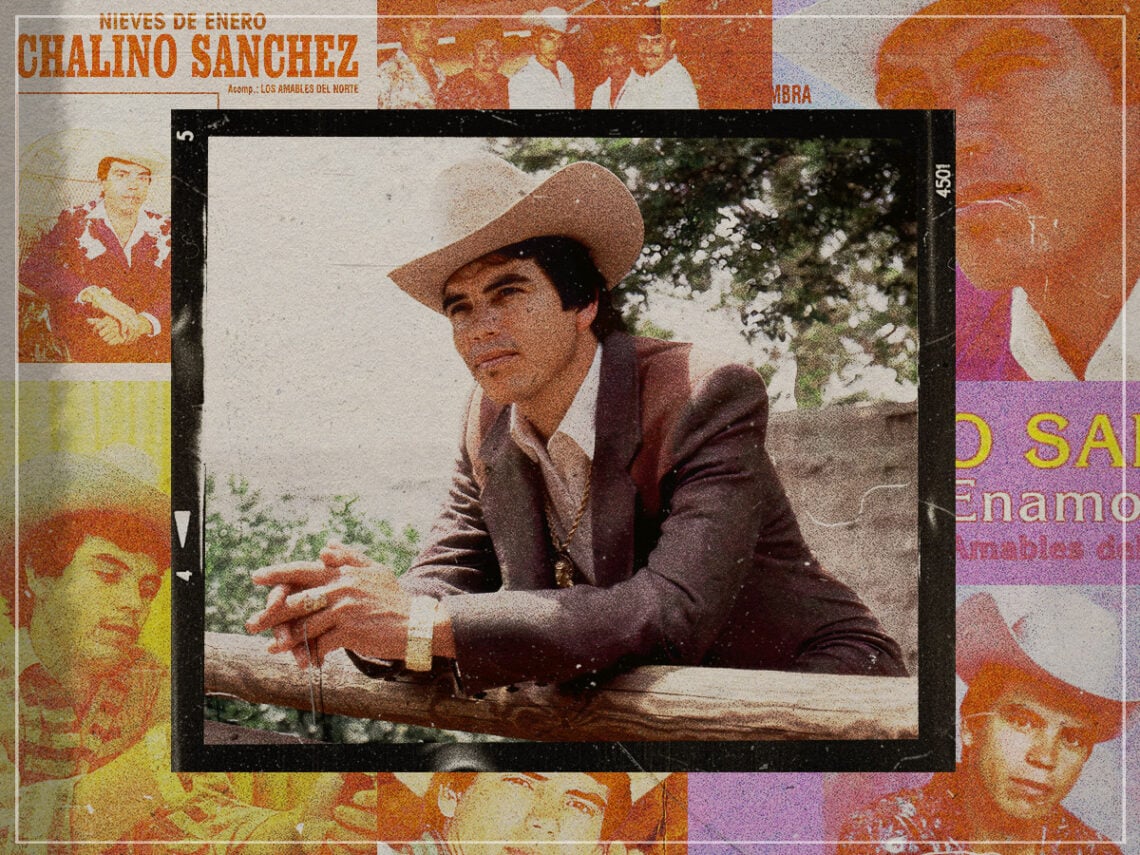
An Onstage Death Threat: The moment a mobster informs Chalino Sanchez this performance will be his last

Although he found fame as a singer-songwriter of the Mexican narcocorrido subgenre, Chalino Sanchez grew up in a dangerous culture of gang violence that ultimately claimed his life and dictated his immortal legacy. Throughout his rise to fame, he reflected on his surroundings in his music, often glorifying the lifestyles of drug traffickers.
Sanchez gained a significant following in the 1980s and early 1990s due to his gritty, authentic style. Faithful to his musical authenticity, he was embroiled in the drug trafficking underworld throughout his life and, as legend has it, shot and murdered a man responsible for raping his sister in the mid-1970s.
In the 1980s, he moved to Los Angeles to find a new life, living with his aunt in Inglewood. However, he soon fell in with the US drug distribution operations rife in the city and found himself in prison for a term in 1984. It was here that he began to write his own songs, building a rapport among fellow inmates thanks to his enveloping knack for storytelling and silky vocals.
Upon his release, Sanchez made earnest steps towards a career as a touring and recording artist, performing gigs across California and laying down his first cassette in 1989. Moving into the ’90s, he entered his most successful run fronting Los Amables del Norte, earning a state-wide reputation as Rey de Los Corridos (King of the Corridos), one of Mexico’s finest musical exports.
Unfortunately, Sanchez’s gun-toting criminal days were not behind him at this point. On January 24th, 1992, drug-addled outlaw Eduardo Gallegos wielded his gun to attack Sanchez during his performance at the Plaza Los Arcos restaurant and nightclub in Coachella, California. The hardened performer reacted quicksmart, unbuckling his own firearm for a bloody exchange of fire in which several punters took bullets, including Claudio Rene Carranza. Sanchez accidentally struck the 20-year-old in the femoral artery, leading to a death by blood loss.
Both miraculously survived their wounds, with Gallegos subsequently sentenced to 20 years to life in prison and Sanchez released without any charges. The incident resounded across national news channels, elevating Sanchez’s record sales and radio airtime, but sadly, his days were numbered.
On May 15th, four months after the Coachella attack, Sanchez stood onstage, performing a set at the Salón Bugambilias in Culiacán, Mexico. As seen in the video below, he was handed a note from a member of the audience. He was clearly shaken by what he read but brushed it off to launch into the next song.
Sanchez played on and left the club later that evening, accompanied by his two brothers, a cousin, and a group of young women. During their late-night journey home, the group was pulled over by a convoy of armed men driving black vehicles. Identifying themselves as state police, the men claimed their boss wished to speak with Sanchez. He complied and entered one of their vehicles, leaving his entourage to go on without him.
At dawn the following day, two farmers discovered Sanchez’s lifeless body in an irrigation canal near Highway 15, near the Los Laureles neighbourhood in Culiacán. His eyes were covered, and his wrists bore raw ligature marks. The fatal blow, however, was evident in two unmistakable gunshot wounds to the back of the head.
Naturally, this sequence of events has been shrouded in mystery and controversy ever since. It is widely believed that the note handed to Sanchez at the Salón Bugambilias was a death threat that informed him he would be killed after the next song. In a miraculous show of composure and commitment to the craft, Sanchez played on, ready to accept his fate or go out in a blaze of gunfire.
Watch stage-side footage of the moment Chalino Sanchez supposedly learned of his own demise in the video below.
