


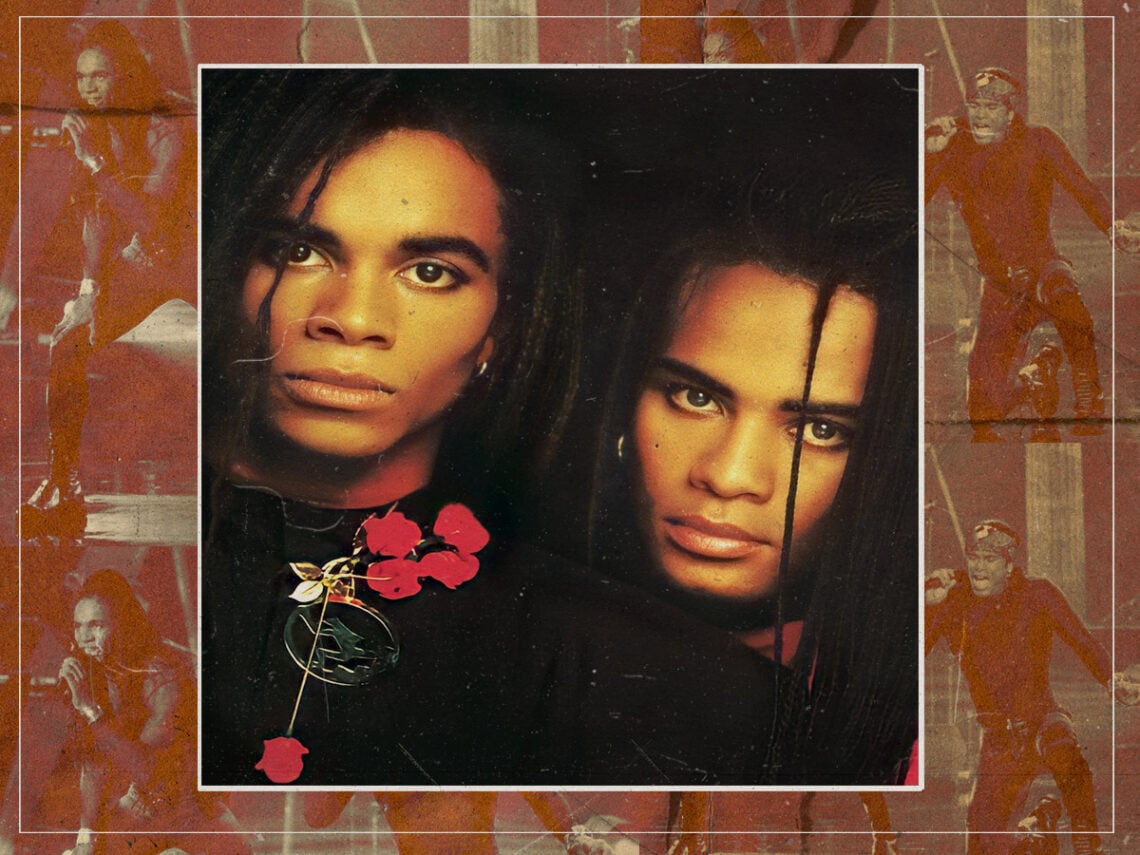
Was the Milli Vanilli fiasco actually visionary?

Perhaps the ultimate irony of the irony-soaked 1990s was that, above all else, what everyone was looking for was sincerity. Something “real” or “legit” that people could actually believe in. Considering that most icons of the decade where history ended wouldn’t have been caught dead saying anything they actually meant, this is somewhat confusing. In public, the likes of Kurt Cobain, Beck and even the Gallagher brothers, to an extent, seemed to live off the mantra of “nothing matters, so take the piss wherever possible”.
However, all of them have moments in their music where the façade drops, and you find yourself confronting the real humans behind the slouching, shrugging antipathy. Perhaps that was why the fall of Milli Vanilli was as spectacular as it was. For those who don’t know, Milli Vanilli were one of the biggest capital P-pop acts in the world for a brief period in the late 1980s and early ’90s.
Looking at their downfall today raises some questions about authenticity that are just as relevant today as they were in 1990. The sad irony of the matter is that compared to most pop acts at the time, Milli Vanilli were, for lack of a better term, legit. For starters, the duo wasn’t brought together by a record label. Rob Pilatus and Fabrice Morvan met in Munich at a dance seminar, hit it off and attempted to find work as backing singers.
When that didn’t go according to plan, they decided to start their own group. Their music, recorded for a self-released album that sold a few thousand copies, brought them national attention and into the studio of producer Frank Farian. If you know how this story ends, you’ll understand why I’ve overused the word “irony” in this article—there really isn’t another word for it.
How did Milli Vanilli become the laughingstock of the 1990s?
Farian had a song called ‘Girl You Know It’s True’ that he believed the band could turn into a hit. Somehow, he was both right and wrong at the same time. On the one hand, the song became a colossal success in Europe and America. On the other, neither Pilatus nor Morvan’s voices were on the record. Now, in the wild world of ’90s Europop (which this technically was), this wasn’t exactly unheard of. House tracks were often fronted by dancers and video models who had nothing to do with the powerhouse vocals behind them. This case, however, was somewhat different.
Pilatus and Morvan’s incredible look were powering the single’s growth just as much as the song was. This, plus the sheer scale the track was hitting, meant that they couldn’t just put another set of good-looking dancers in a follow-up video or TV appearance. The duo were now the faces of the project. And literally nothing else. The red flags were first unfurled when they had to start doing interviews, and it became very clear that their English was nowhere near as fluent as it sounded on record. Things would get so much worse, though.
After their backing track skipped at a concert in Connecticut, the cat was well and truly out of the bag that Milli Vanilli weren’t the singers they painted themselves as. This prompted Charles Shaw, the singer who actually sang ‘Girl You Know It’s True’, to threaten the band’s management, saying he’d go public if they didn’t admit it first.
Eventually, the jig was fully up, and Pilatus confirmed the whole charade with a reporter from the LA Times. In February 1990, Milli Vanilli won the Grammy for best new artist. In December 1990, they were dropped from their label in disgrace. The story goes on much, much further from there, including Rob Pilatus’ tragic death in 1998. However, on a fundamental level, did the band deserve that level of backlash?
No less an authority than The Strokes’ Julian Casablancas, who covered ‘Girl You Know It’s True’ with his solo band The Voidz, asked whether this was exactly what pop was meant to be. After all, not too long after Milli Vanilli’s heyday, Damon Albarn would see huge success with the entirely fictional band Gorillaz. If he could do that, why couldn’t Milli Vanilli’s team of producers do the same with Morvan and Pilatus if they’d just come along a few years later?
I suppose we’ll never know for sure. However, it would sure be nice to imagine a scenario where those two lads, who only wanted to make music together as a way of rising above the poverty they grew up in, could be viewed as pioneers and not the jokes they spent three decades as.
