


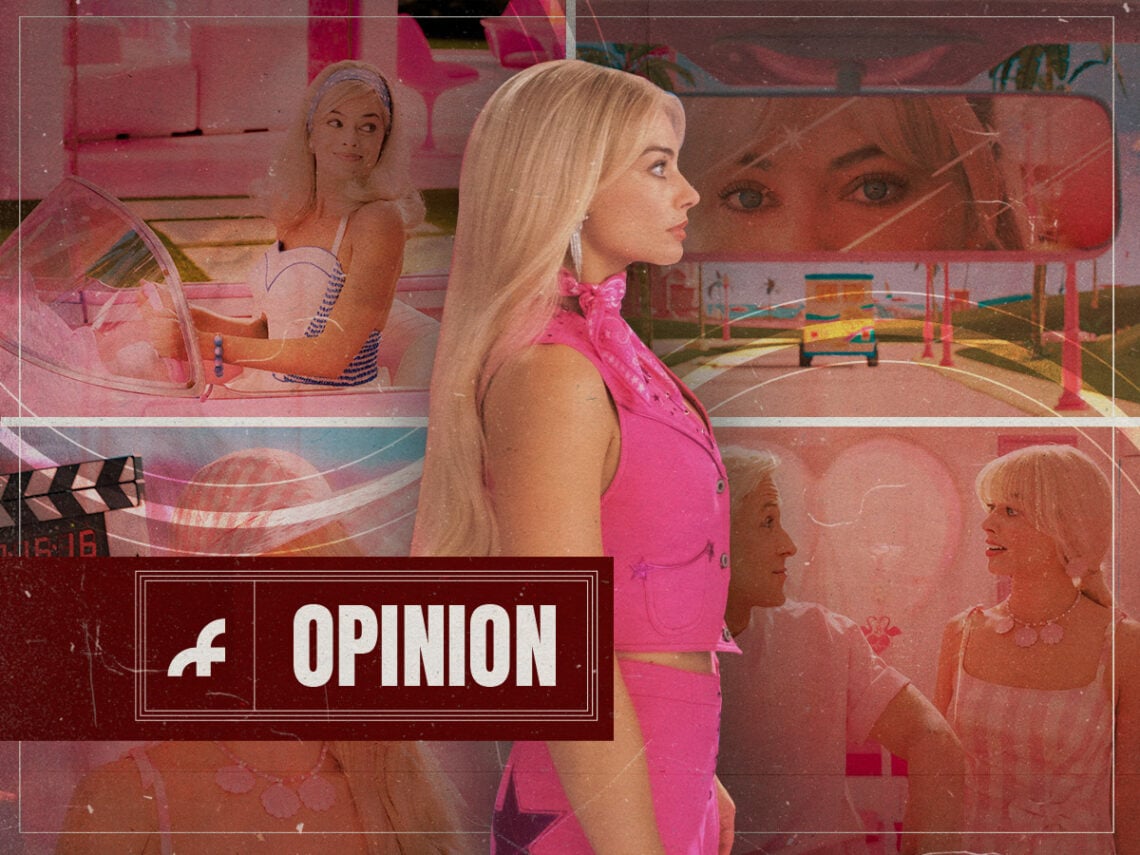
Was Margot Robbie too pink for the Oscars?

There is a point during one of Margot Robbie’s most moving moments in Barbie that it all gets very meta. “Note to the filmmakers: Margot Robbie is the wrong person to cast if you want to make this point,” the narrator’s voice says during a freeze frame as the aesthetic beauty of Barbie is probed at. And as Robbie is snubbed for the 2024 Oscars, it suddenly seems prophetic.
Despite being one of the biggest films of recent years and picking up a nomination for the coveted ‘Best Picture’ category, Robbie was notably missing from the ‘Best Leading Actress’ crowd. Co-stars Ryan Gosling and America Ferrera both gained nods for ‘Best Supporting Actor’ and ‘Best Supporting Actress’, but the decision not to honour Robbie feels symptomatic of something darker and deeper.
“I’m Stereotypical Barbie. I’m like the Barbie you think of when someone says, ‘Think of a Barbie’. That’s me,” Robbie’s incarnation says in the film. The second you look at the actor, you see the doll. The famed Australian has the blonde hair, the beautiful smile, the kind of effortless charisma and symmetrical face to perfectly align with the role. Throughout the film’s release cycle, she embodied this even further as she wore human-sized replicas of iconic Barbie doll outfits.
Robbie’s effortless and seemingly natural take on the role is exactly why when Gerwig wrote the script, there was never a second of doubt that Robbie, who was the producer of the film, would play the character, writing lines in the earliest draft for ‘Barbie Margot’. There couldn’t have been a more perfect casting, but Margot Robbie seems to be dismissed as an actor because of this.
It’s as though people can’t differentiate between Margot and Barbie because when you look at them, they’re one and the same. Despite revealing the intensive accent training and the years of character development she did to prepare for the role, there is something about her portrayal of Barbie that institutions like the Academy Awards seem unable to take seriously.
When Austin Butler played Elvis and embodied the role so heavily that it fully changed his accent, he swept the awards. No one is claiming Cillian Murphy played J. Robert Oppenheimer too well or is still treating him like a physicist. Robbie herself seemed to be briefly taken seriously during her I, Tonya awards circuit, but despite leading the way in Barbie not only in the titular role but across production, her efforts are going unnoticed.
It’s not a Barbie-wide problem. Ryan Gosling, for his comedic role as Ken, has picked up nominations for ‘Best Supporting Actor’ at the Golden Globes and now the Oscars. He’s even beat out real musicians to win awards for the film’s melodramatic dance number, ‘I’m Just Ken’. The Oscars also recognised America Ferrera’s role of Gloria in the ‘Best Supporting Actress’ category. However, neither of these roles would be possible or anywhere near as good if Robbie’s central and perfected performance didn’t anchor them.
Perhaps the crux of the issue is that Barbie as a role isn’t deemed as serious. Despite the character grappling with huge questions of womanhood, identity and purpose, on the surface, she is always simply ‘Stereotypical Barbie’ with pink outfits and perfect hair. The role, while having some emotional moments, is largely a comedic one in a film that is, for the most part, a feel-good hoot.
Unlike Emma Stone’s role in Poor Things, which is also comedic yet saw her bag a ‘Best Actress’ nomination, there is no dark grit to cling to in Barbie. The closest thing the film gets to real emotional drama is when Ferrera delivers an impassioned speech on the contradictions and double standards women face.
As Ferrera gets nominated but Robbie gets snubbed, it begs the question of whether women’s roles need to be dark or subversive to be recognised. And if this is the case, why can’t ‘girlie’, light or celebratory stories specifically about womanhood and girlhood be considered as worthy or as cinematic as their peers? Why does there need to be darkness or trauma in a female-centric story to make it worthy of accolades?
Throughout the film, Robbie’s role as Barbie feels strangely prophetic of this dismissal of her skill. Barbie grapples with her lack of purpose, despairing that she’s not “smart enough to be interesting”. She can’t do surgery, sit on the Supreme Court or perform any kind of empowering or subversive task that other Barbies can. She is simply ‘Stereotypical Barbie’, and as she’s humanised, she feels not “good enough” or pretty enough to even be that anymore.
As Robbie is snubbed despite being the entire driving force behind the film and putting in an effortlessly moving performance, one that perfectly fulfils the billing, full of unspoken feelings, incredible comedic timing and an embodiment of her character so thorough it seems to be all-consuming, it feels like she was simply too pink for the cinephiles. Just like her character, she is too Barbie to be taken seriously or to be considered as anything more than a pretty face.
