


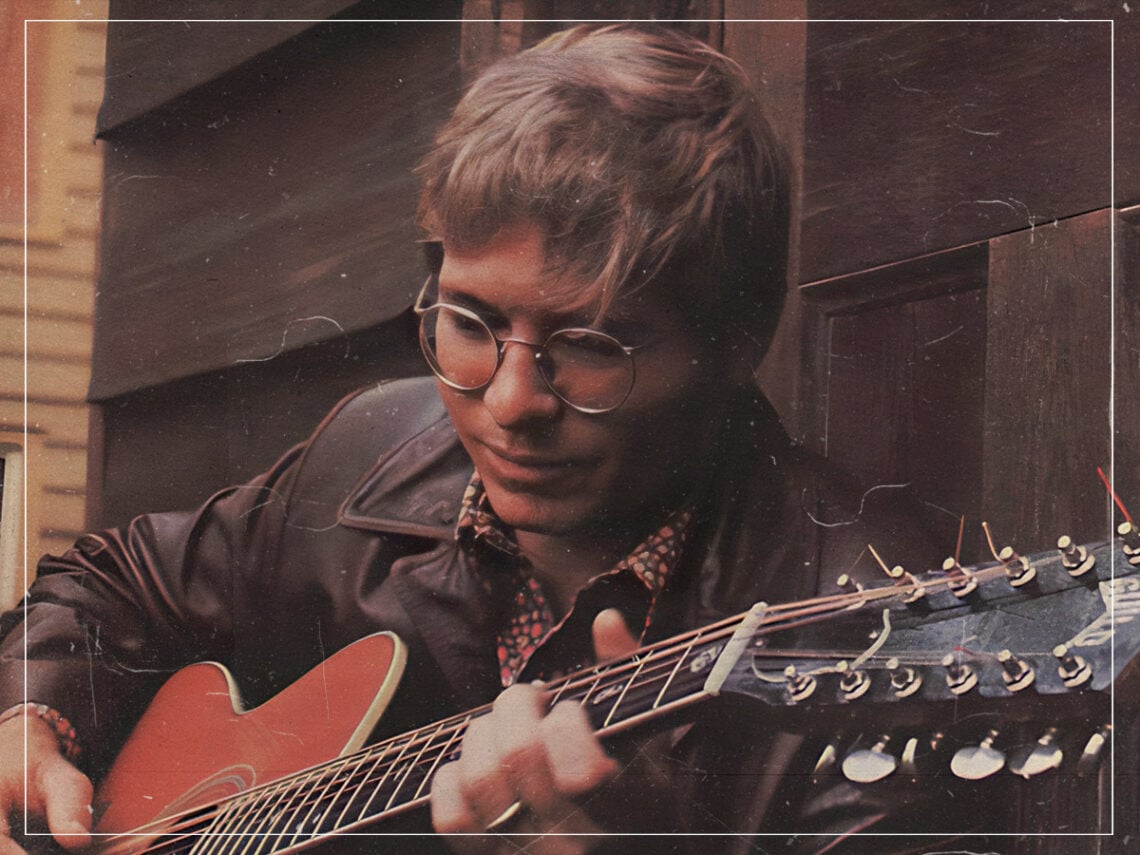
Was John Denver really a threat to US national security?

In the world of country and folk, it’s probably John Denver’s sunny and warmly humanist anthems that are more immediately recognised features of the American songbook.
While the likes of Johnny Cash or Bob Dylan tower in their respective fields with the former’s rebellious, Americana edge and the latter’s literate examination of the human condition, Denver reached for a more universal channel of life’s joys, from the simple splendour of nature to the fostering of brotherhood amid the world’s tumult.
Numbers such as ‘Take Me Home, Country Roads’, ‘Annie’s Song’, and ‘Sunshine on My Shoulders’ warmed the cockles of the many fans he garnered during his 1970s heyday, if rankling the genres’ purists who took objection to his perceived lack of lyrical grit or songwriting complexity. Denver also carved a second career for himself as a TV and film entertainer, hosting his own variety show for BBC, appearing on The Muppet Show and several Jim Henson spin-offs, and co-starring with George Burns in 1977’s religious comedy Oh, God!.
Such a wholesome career doesn’t immediately seem to warrant a national security file, yet as revealed in 2011, the FBI had built up a 33-page dossier from 1977 to 1990 profiling Denver’s political activity and personal troubles. As well as probing into his drug use – a subject he would cover candidly in 1994’s Take Me Home autobiography, in addition to marital infidelity and domestic violence – the file also explores the disturbing case of a “female speaking German and English” calling Denver for 17 days straight around 1979 alleging her mother’s boyfriend was “coming to Los Angeles” to kill the country star.
It’s Denver’s participation in a 1971 anti-war rally that promoted the FBI’s filing. Playing at the ‘Dump the War Rally’ in Minnesota’s Metropolitan Sports Center along with Peter, Paul and Mary, such minor political activity was deemed subversive enough for a paranoid Richard Nixon and J Edgar Hoover presidential/FBI double-act to pay close attention to any further action on Denver’s part that could be interpreted as provocative.
There was nothing militant about the country star, but he certainly was an outspoken figure, throwing himself behind numerous environmental and poverty-alleviating charity efforts, and becoming close friends with Democrat President Jimmy Carter.
The FBI has a long and ignoble history of keeping archives on all kinds of musicians and celebrities. Most famously, the Nixon administration had amassed 300 pages to deport John Lennon due to his public excoriation of the Vietnam War, plus his alignment with the political Left of the day.
Following Nixon’s resignation, the FBI would keep slimmer files on artists simply due to police bust-ups or minor infractions, or should the subject have been the recipient of a possible crime. Jimi Hendrix, Kurt Cobain, The Notorious BIG, Whitney Houston, and even The Monkees’ Micky Dolenz had federal time and money poured into their lives.
Denver was no real threat to the US state, just an entertainer spouting incredibly moderate views on ecological issues and philanthropy deemed dangerous by a hysterical national security charged with hair-trigger contempt for anybody left of Carter. Denver would continue to follow his principles, critiquing Ronald Reagan in 1986’s ‘Let Us Begin (What Are We Making Weapons For?)’, and one of the first Western stars to play the USSR and the People’s Republic of China before dying in an aviation accident in 1997.
