


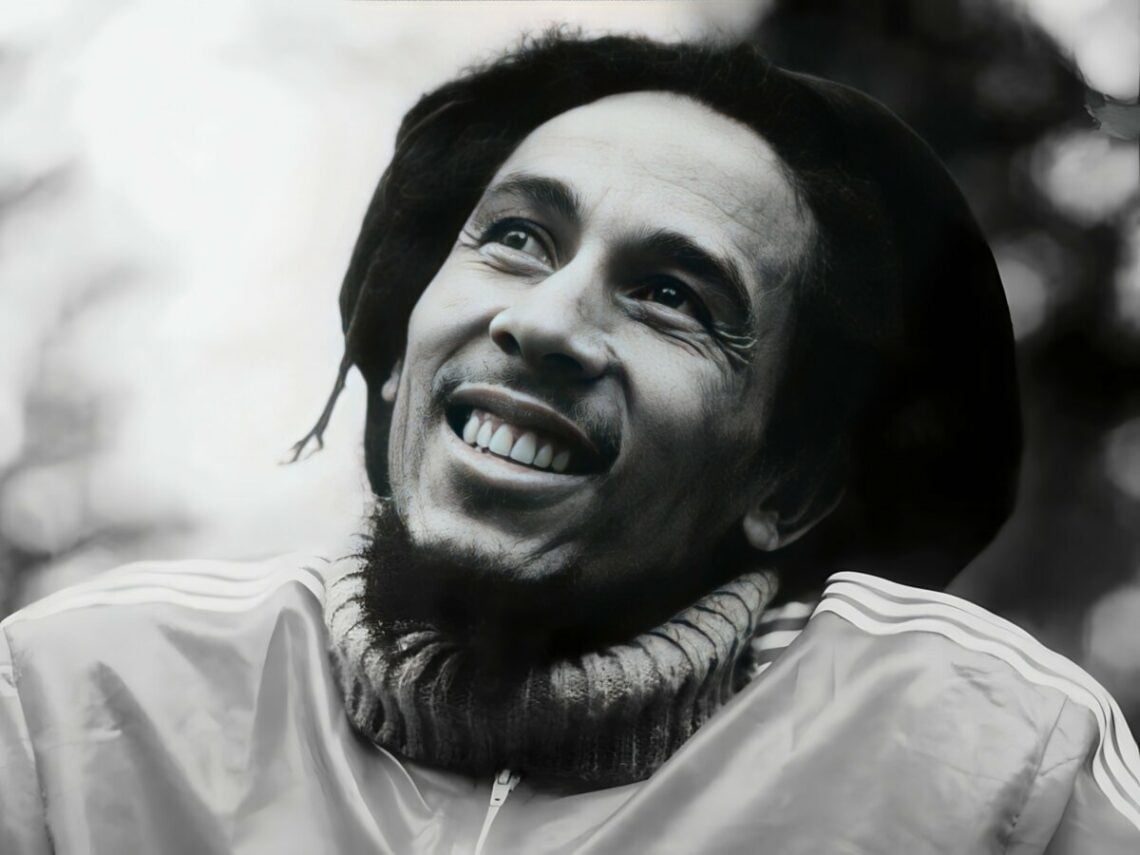
Was Bob Marley assassinated?

Not only was Bob Marley a pioneering figure in reggae and ska music, as well as Black artistry more generally, but he was also a leading countercultural icon of the 1970s. Works like ‘Redemption Song’, which was inspired by the words of Black civil rights founding father Marcus Garvey, in turn, raised the sights of a whole generation of young Black people facing oppression across the world.
Marley wasn’t shy about sharing his opinions on the world outside of his music, either. As he saw it, “Everything is political”. Although he pointed out that he would “never be a politician or even think political,” that didn’t change the fact that he inspired millions of people seeking political change.
That made him a potential threat to the established order. Both in his home country of Jamaica and for the government of its much larger neighbour, the United States, another place where Marley’s calls of “one love” and to “emancipate yourselves from mental slavery” were gaining an echo.
In an attempt to try and eliminate this threat, seven gunmen attacked Marley’s home in Jamaica’s capital, Kingston, on December 3rd, 1976. Marley was due to perform a concert two days later calling for peace, as gang violence with the involvement of Jamaica’s main political parties threatened to overtake the city. Seeing peaceful reconciliation as the way forward, he refused to pledge his allegiance to one political party or the other.
As a result, Lester ‘Jim Brown’ Coke, a drug lord and bodyguard of Jamaica Labour Party (JLP) leader Edward Seaga, led a group of assailants to Marley’s house. Marley, his wife, his manager and a member of his entourage were all shot.
“What’s wrong with you, my brothers?”
Miraculously, no one died, and unbelievably, Marley went on to perform with The Wailers at the December 5th concert as planned. He begged the 80,000-strong audience, “Why can’t we love another? What’s wrong with you, my brothers?”
There is no doubt, however, that this was an assassination attempt with a political motive behind it. Acclaimed Marley biographer Timothy White wrote in his book Catch A Fire that he was told about the CIA’s involvement in the operation. Opposing JLP and People’s National Party (PNP) officials both told him that Carl Byah ‘Mitchell’, another of the gunmen, was contracted directly by the CIA to carry out the assassination.
No one was ever prosecuted for the shooting. As Marley later said himself, he knew who the gunmen were, but “nobody ever called the police. If you understand, it’s one of them things”.
This 1976 incident has led many to believe that the CIA and/or malevolent forces in Jamaican politics were somehow behind Bob Marley’s death in 1981. However, there is no solid evidence to back up these conspiracy theories whatsoever.
As music historian Ed Ward has explained on AXS TV, “The CIA wouldn’t do it. They had better things to worry about in those days.”
Marley tragically died aged just 36 of a particularly aggressive form of skin cancer that quickly spread to his brain. He also refused his doctor’s advice for treating the initial location of the cancer in his toe, and the alternative medicine he used during the last year of his life failed to stop the progression of the disease.
Regardless of his death, Marley remains one of the foremost symbols of Black power and the pan-African movement globally. People around the world will always see him as a great artist who promoted freedom, humanity, and social justice.
