


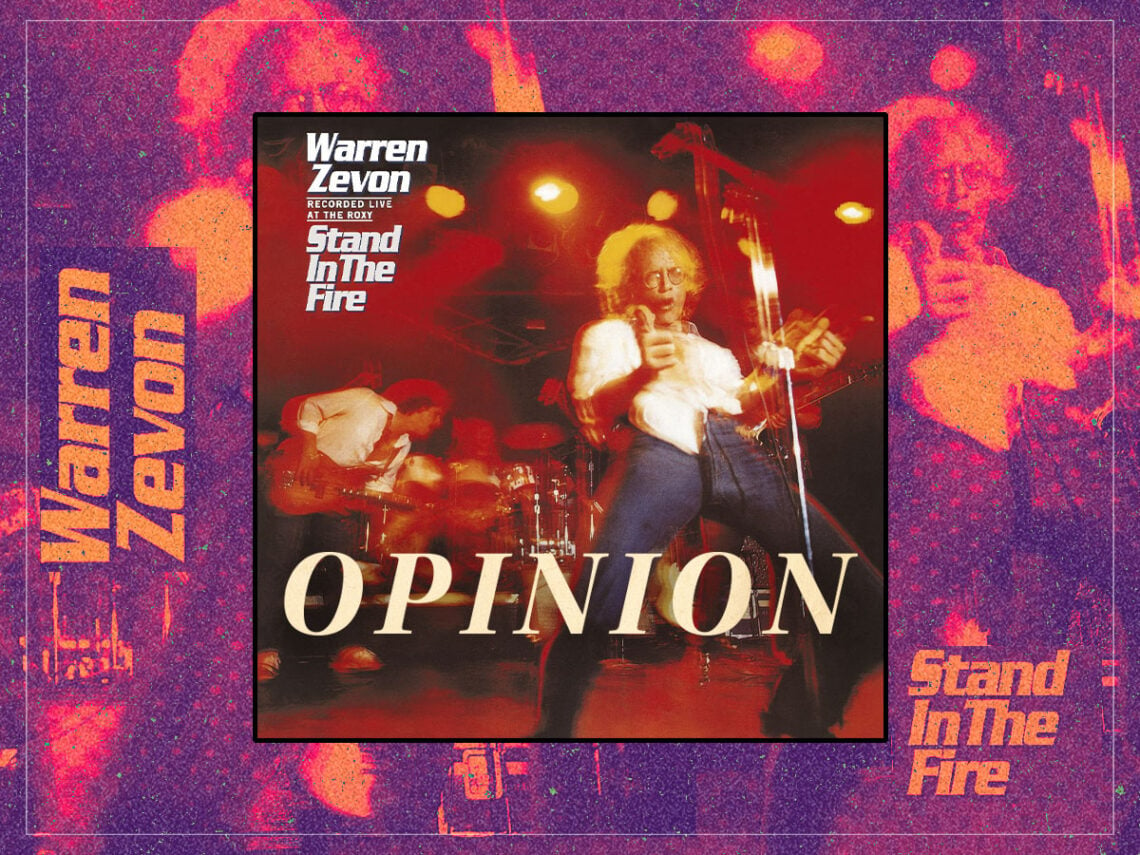
Hear Me Out: ‘Stand in the Fire’ by Warren Zevon is the best live album of the rock era

What was the last good live album that came out? The last truly great live record? It’s been a while since there have been any stone-cold classics. Maybe The War on Drugs’ 2020 release, from a year when live music was a distant memory, Live Drugs? Before that, you have to go back a long way. With the easy access to the concert experience that the proliferation of fan-shot videos that YouTube allows, maybe the music industry feels like we don’t need live albums to transport us into the crowd of our favourite bands any more.
In the early 2000s, the format was just barely, to borrow a song title from The War on Drugs, holding on. Green Day’s 2005 live LP Bullet in a Bible excellently documented the renewed excitement and buzz surrounding the band following the release of their best studio album, American Idiot, while in the same year Wilco’s Kicking Television, Live in Chicago expertly captured the transcendent experience of seeing Wilco sing all their best songs in concert, and had the added excitement of being the bands first release with Nels Cline tearing it up on guitar.
Early on the first song, ‘Misunderstood’, Jeff Tweedy is met with huge cheers of approval from the crowd when he sings that “you still love rock and roll”. One of the things we all love the most about rock and roll is the shock and thrill of life that it can inspire. Rock and roll was meant to be played loud and meant to be played live, so it’s a shame that so few live records are being released, especially in a time when an increasing number of fans are being priced out of experiencing their favourite bands performing live.
It wasn’t always like that. Live albums used to be just as important as their studio counterparts, and maybe even more so, in an artist’s discography. More often than not, a live album would capture an additional element of magic, genius, spontaneity and creativity that would have otherwise been lost to time and to memory, caused by an artist’s interaction with their audience, their band and whatever happened to be in the air that night. You only need to listen to Muddy Waters’ Live at Newport (1960), James Brown’s Live at the Apollo (1963), Johnny Cash At Folsom Prison (1968), Aretha Franklin’s Aretha Live at Fillmore West or Elvis’ Aloha from Hawaii via Satellite (1973) to know what I mean.
And in the rock scene, it was no different. You’ll hear people claim that The Who’s Live at Leeds is the greatest concert album ever, while some might say that it’s The Rolling Stones’ Get Yer Ya-Ya’s Out (which, if we’re being honest, is not even the best Rolling Stones live album). All your favourite bands released live albums featuring all your favourites of their songs, plus the deep cuts they insisted on playing as well, whether it was Led Zeppelin’s The Song Remains the Same or Dylan’s Hard Rain or all the various iterations of “live at Budokan” from any world-tour stop in Tokyo.
But, for my money, the greatest live album from the rock era is one that doesn’t usually even make it onto the standard lists of best live albums of all time.
From an inauspicious opening, the title track doesn’t let on what is about to hit you on the rest of Warren Zevon’s 1980 Stand in the Fire. The first song feels more like playing with safety matches than standing in the fire, but as soon as the spark catches, the rest of the record is red hot.

The show really kicks into gear from the second song, ‘Jeannie Needs a Shooter’, and never lets up from there. Though it’s not a fast piece of music, everything coalesces together to create a perfect storm of danger, rebellion, power and control, sensitivity, virtuosity and intensity. In short, all the ingredients for a great rock and roll performance. Zevon’s baritone voice, simultaneously earthy and otherworldly, is all-enveloping. The story of the song, a dark murder ballad in the vein of ‘El Paso’, is laced and dripping with uncertainty, threats and jeopardy, but Zevon is in control the entire time.
Next up is another dark and dangerous riot in ‘Excitable Boy’. Behind Zevon’s exemplary piano playing—would you believe he was trained on the instrument by Igor Stravinsky?—is a crack band of virtuosos. David Landau completely tears it up on guitar. Roberto Piñón and Marty Stinger are funky and tight on bass and drums, respectively. As the band plays on and each really begins to lock in together, they clearly begin to feed off of each other’s playing and push one another on to further heights. The song really takes off halfway through, with Zevon breaking into a yell and letting loose on the keys. Some of the best playing all across the album actually comes in the space between the playing, with the band perfectly in sync and in step for every breakdown, turnaround and restart, keeping the music alive, exciting and fresh all over the performance.
Zevon had already written most of his best songs by 1980, and this record captures the best versions of most of them in one place. There is a relentless pace to the quality here. Not only in the quality of the songs, but also in the pacing and sequencing of the show, the chatter between the music, the performance from both Zevon and his band and the appreciation from the audience.
‘Mohammed’s Radio’ is the kind of thing that the Eagles could only have ever dreamed of putting together, and in fact, some of the Eagles performed behind Zevon on the song’s studio counterpart, but he soars here without them. Another of his best songs to get an early airing on the record is ‘Werewolves of London’, and again, this version makes the studio recording sound tame by comparison. This version is dripping with blood, dripping with danger. Zevon is both languid and frenzied in his delivery, with his exemplary machine-gun-fire delivery on lines like “you hear him howlin’ around your kitchen door, you better not let him in / Little old lady got mutilated late last night, Brian de Palma again”.
Full of searing solos and wild ad-libs and alternate lyrics, this song and performance so perfectly prove just why live albums are so great. There are moments in this version that were so specific to this one performance, that were so unique to the one night they were captured, that we wouldn’t have any knowledge of how great the show was without the recording.
And the rest of the album is bursting with similar moments. ‘Lawyers, Guns and Money’ is blistering. It’s outrageous and enormous and frightening and hilarious. ‘Poor, Poor Pitiful Me’ is a riot and a runaway train of a performance. ‘I’ll Sleep When I’m Dead’ is a terrifying and powerful masterclass in letting loose and living large, in rock and roll excess and never letting up for a second. ‘Bo Diddley’s a Gunslinger’ picks up where ‘Jeannie Needs a Shooter’ left off and closes the original album on the same note as the song that set the whole thing on fire in the first place.
On the 2007 remaster of the album, the night isn’t done just yet. Zevon asks “whaddaya wanna hear?” and after a cacophonous and incomprehensible response from the audience, he shows that he knows exactly what they want without even needing to ask, and that he’s the keeper of the keys who’s guaranteed to please, with ‘When Johnny Strikes Up the Band’. It’s a masterclass in working a crowd, putting over your songs and completely losing yourself to the spirit of the music. Zevon entirely disappears into the songs and into the stories he’s telling, becoming one with each of them in turn, acting out and singing from within the heart and soul of every song and putting on one of the greatest performances that any front man has ever given in the process.
From there, he kicks into ‘Play It All Night Long’. Like so much of the material performed here, this is the kind of lyric that only Warren Zevon would write (he’s certainly the only writer I can think of who has put the word ‘Brucellosis” into one of his songs), and this album is one that only he could have made. He was a wild, reckless, dangerous character, an excitable boy through and through, but when he channelled all of those troubling characteristics into his art, and especially into his performances, as he does here, there was nobody better. He was an outlaw, that’s for sure, and more of an outlaw than you ever were, but when he really struck up the band, there’s no better live album to play all night long than this one.
