


‘Waltz of the 101st Lightborne’: Joanna Newsom’s sci-fi epic of time and love

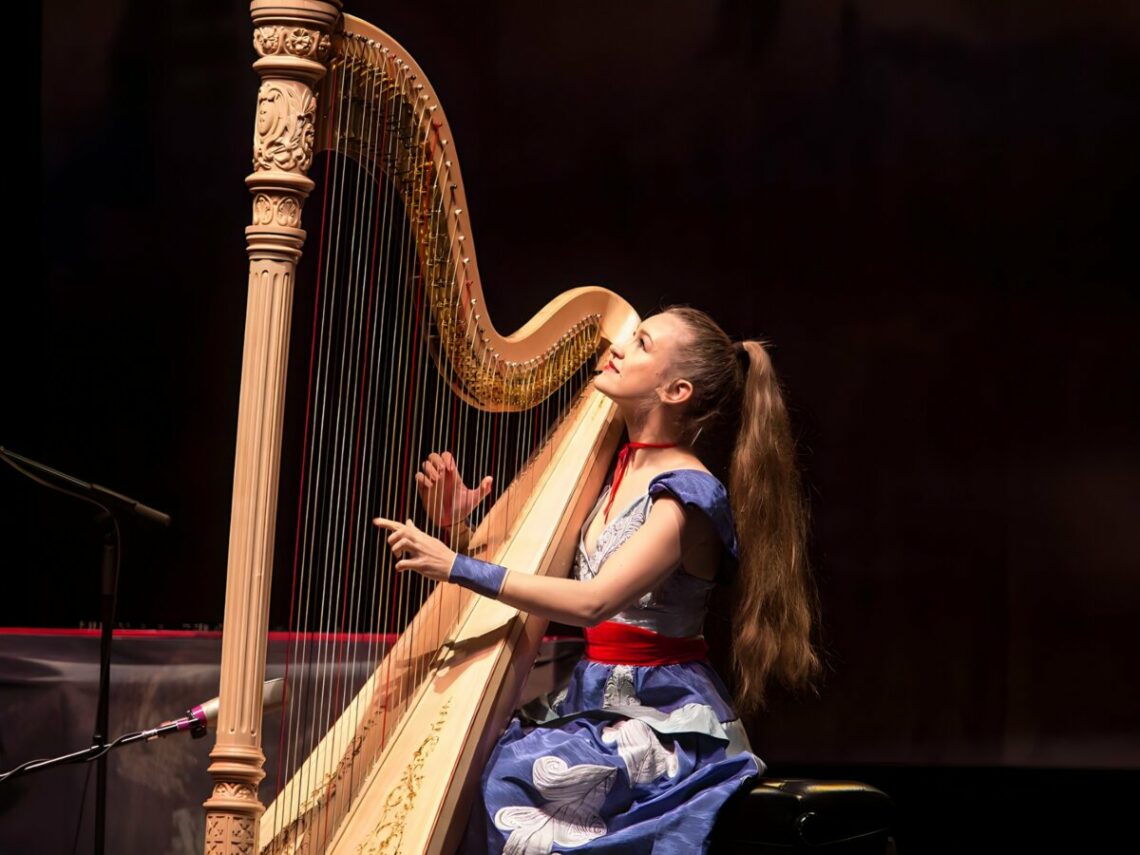
If I were to describe a song about an intergalactic time war, one with lyrics like: “Where in the hell are the rest of your fellow 101 Lightborne Elite? Stormed in the New Highland Light Infantry”, what genre would you think it was? You’d almost certainly visualise an epic power metal banger stuffed with solos, sky-scraping vocals and riffs for the day. Well, you’d at least be right about the sky-scraping vocals part. This is no Bruce Dickinson, though. Instead, the unmistakable soprano of Joanna Newsom leads this gentle, plaintive chamber-folk number.
Sure, it’s out of the leftfield, but that’s the definition of Newsom’s career. This is a woman who became one of the leading lights of 21st-century folk music by playing the harp and singing like an adorable cartoon frog, and those are arguably the least esoteric parts of her music career. Not for nothing does her debut album, The Milk-Eyed Mender, contain lyrics such as, “Catenaries and dirigibles/ Brace and buoy the living room/ A loom of metal, warp-woof-wimble/ And a thimblesworth of milky moon”.
Yet, making a song like the ‘Waltz of the 101st Lightborne’ is out there, even for her. Especially when, despite the song featuring on a concept album, the rest of the album has nothing to do with the story of a time-bending colonial war folding in on itself. The album, as Newsome explained to Uncut, was inspired by how her (at the time) recent marriage had invited death into her life: “Because there is someone you can’t bear to lose. When it registers as true, it’s like a little shade of grief comes in when love is its most real version. Then it contains death inside of it, and then that death contains love inside of it.”
Infusing an epic like ‘…101st’ into a single song is a bold move, but so is undertaking world tours with a harp, and this unique singer-songwriter does both with ease. The song itself is less about any particular battle contested by the titular squadron because Newsom casts herself as one of their sweethearts in the ballad, waiting for her beloved to return. However, the war has become something cosmic, and her love will not return, not due to death, but a fate much worse.
This war never can end: “When I woke, he was gone and the war had begun / In eternal return and repeat… Make it stop, my love / We were wrong to try / Never saw what we could unravel in travelling light / Nor how the trip debrides Like a stack of slides / All we saw was that time is taller than space is wide.” These concepts are headier and more involved than most sci-fi novels, but Newsom thankfully elaborates on this in a conversation with The Fader.
Discussing the record, she says, “With ‘Waltz of the 101st Lightborne’, I’m contrasting this British Isles sea shanty with a narrative in which I’m talking about colonising alternate iterations of the terrestrial position in the multiverse. Colonizing time sideways, front and back, travelling in four directions through time.”
This unearths what the song is actually about, which is the sheer terror of finding the person you love with a voice at the back of your mind telling you that your time will be up one day. Like some inversion of a wartime bride, waiting in agony not for your love to come home but for the inevitable moment when your happiness dissipates.
