


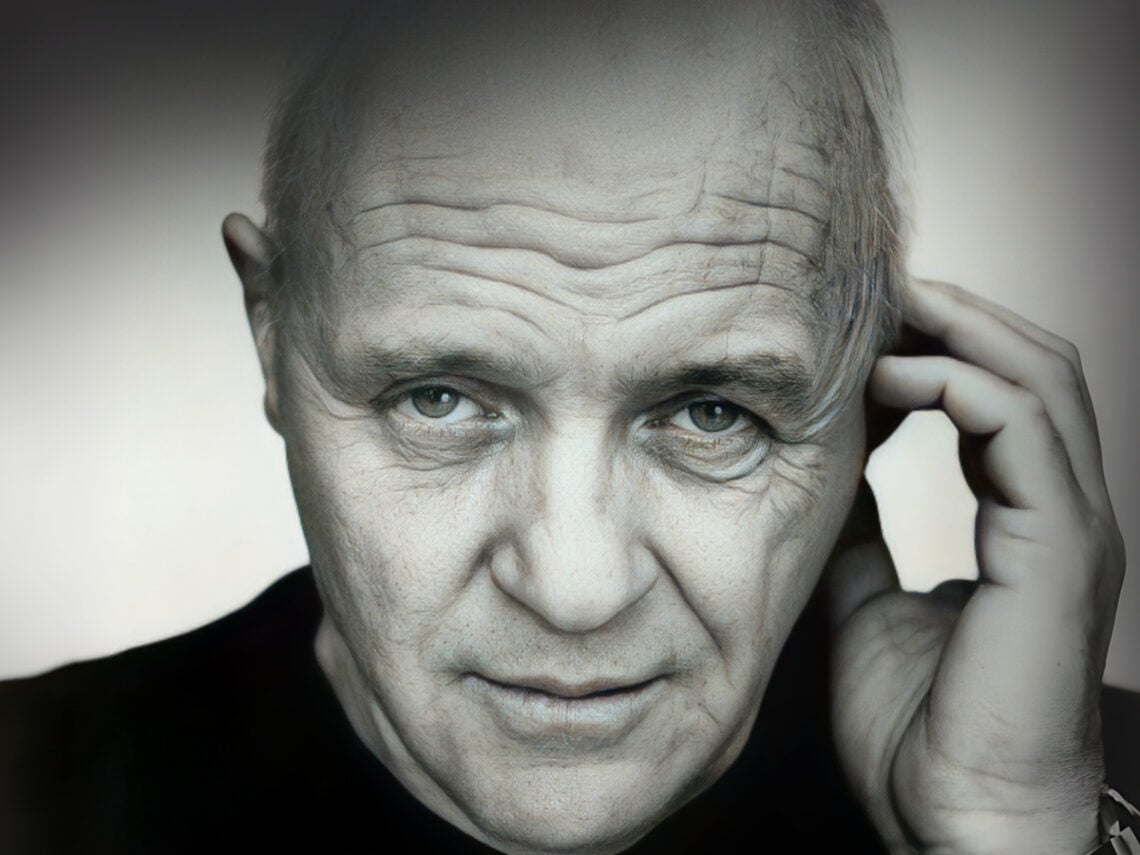
The walkout that almost ruined Anthony Hopkins’ career: “I had to get the hell out of there”

From the second he started treading the boards in the early 1960s, Anthony Hopkins was singled out as having the potential to become one of his generation’s finest actors. If there was one thing that could have stopped him from realising that promise, it was Anthony Hopkins.
By his own admission, the future two-time Academy Award winner and legend of stage and screen was a miserable, moody, and antagonistic bastard for the first decade and a half of his professional life. Hopkins wasn’t only his own worst enemy; he made a few nemeses along the way, too.
He discovered early on that if there was a director he didn’t get along with, he wouldn’t bow to their creative vision and performative demands. Instead, if they treated him like shit, he’d treat them like shit right back, and by the time he upped sticks and moved to Hollywood, there were quite a few names on his list of people he never wanted to work with ever again.
Hopkins was caught in the middle of a constant conflict, and his long-running battle with alcoholism hardly helped matters. He loved acting and wanted nothing more than to succeed in his chosen vocation, but the obvious downside was that he abhorred actors and the machinations of the business with a furious passion.
The final straw that broke the tightly wound and constantly simmering camel’s back was a 1972 run of William Shakespeare’s Macbeth at The Old Vic. Midway through a stretch of shows, Hopkins walked out and never returned to the Scottish play, and it would be the last time he set foot in that particular theatre for over ten years.
Understandably, he was persona non grata in London’s theatrical circles. One of the worst things an actor can do is leave their director, castmates, and colleagues high and dry by abandoning them without warning, and Hopkins confessed to Playboy that even though he didn’t regret it, he was concerned for his future.
“Unfortunately, I left a lot of people in the lurch,” he said. “But I just had to get the hell out of there. I would have gone under if I’d stayed. At the time, I thought, ‘My god, I’m a terrible, irresponsible wreck, and I’ve just destroyed my career’. It was quite a cold, calculated thing.”
He was “being groomed to lead the company” but after realising he “just wasn’t fit for it, not intellectually, emotionally, or physically,” the only thing he could do, from his perspective at least, was fuck off. “I had painted myself into a corner,” he shared. “I had to make a break with myself and with the past.”
It wasn’t an entirely impulsive decision, though. Hopkins had eyes on cracking America, and after his actions guaranteed that he wouldn’t be welcomed back onto the stage in the United Kingdom, he soon made his first appearance in an American project in April 1974 in the miniseries QB VII, which drew massive ratings and won seven Primetime Emmys from 14 nominations.
He’d shot himself in the foot theatrically, but the next chapter in his career was just beginning.
