


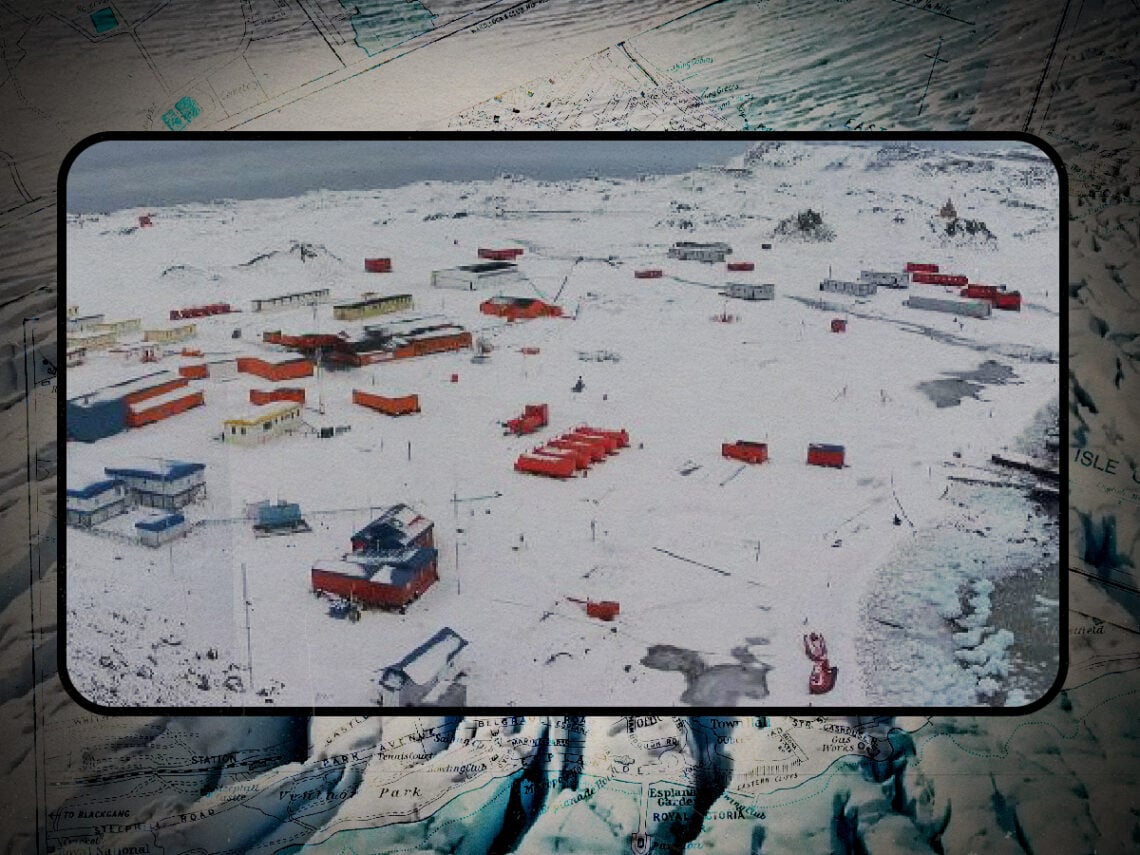
Villa Las Estrellas: The civilian settlement in Antarctica

Life always finds a way, and there’s nowhere that’s more evident than Antarctica, and more specifically in Villa Las Estrellas, the Chilean outpost just off the peninsula that isn’t just a travel destination but a legitimate human settlement.
This village has a school, a post office, a bank and more, and is one of just two civilian settlements in Antarctica, alongside Argentina’s Esperanza Base. Literarily translated, Villa Las Estrellas means ‘village of the stars’, and this icy, cold town is one of the most unique and strangest settlements on the planet, located on King George Island, just off the Antarctic Peninsula, and lies within the Chilean Antarctic Territory, although the Argentinians and British also claim this land.
In 1984, the Chilean government founded Villa Las Estrellas, alongside the Presidente Eduardo Frei Montalva Base, a military and scientific base on the island. They did this for a number of reasons, firstly, for scientific research, but also, and most crucially, to strengthen Chilean presence in Antarctica and reinforce their claim on this region of the continent. The Chileans encourage families to move to Villa Las Estrellas permanently, and not just those with military or scientific jobs, but the majority of its residents just have family members within those roles.
The village itself is tiny, swelling to around 150 people during the summer, before dropping by nearly 50% to about 80 people during winter and the extreme climate that it brings. Alongside the school, post office and bank are a gym, community centre, radio station, library and a medical clinic, and it operates just as any other Chilean town would, except smaller and far, far colder, with the buildings themselves prefabricated and built to withstand the harsh polar conditions.
A primary school ran with just two teachers and educated over 300 children across its 33-year history, but sadly had to close in 2018 due to an ageing population in Villa Las Estrellas and a lack of kids coming through. It was important for Chile that this was a regular village, albeit one in a unique location, so the loss of the school was a blow; however, it has seen lives come and go, with multiple deaths and births too, with Juan Pablo Camacho, the first person conceived on the continent.
The living conditions are, unsurprisingly, the biggest hurdle to overcome for residents, with temperatures substantially below freezing during winter, but it’s the sunlight that can be most difficult, as during winter months, there is barely any sun at all, before summer brings a sun that barely sets.
Lying over 1,000 kilometres from the nearest major city in South America, there are also clear issues with isolation, especially when the weather conditions make air or sea arrivals notoriously difficult and unreliable, which means a lot of planning in advance, both in terms of food and medicine. The remote nature of Villa Las Estrellas means that residents are advised to have their appendices removed before moving to the island, such as the fatal risk that appendicitis might bring, if they were to get ill during a time in which evacuation was impossible.
The town sees occasional tourists, but it’s largely just a base for scientific research, with experts studying meteorology, marine biology and glaciology able to glean huge amounts of knowledge during visits. Despite an unusual location and an extreme climate, it’s still a town and a community first and foremost.
People have families, with hopes and dreams, and unlike military bases within the continent, they spend their lives here, not just secondments. Ultimately, Villa Las Estrellas stands for two things: firstly, it’s a Chilean declaration of presence in what is a disputed region, and secondly, it’s a symbol of the strength of humanity and our ability to adapt and live anywhere, even on the only continent that has no indigenous population.
