


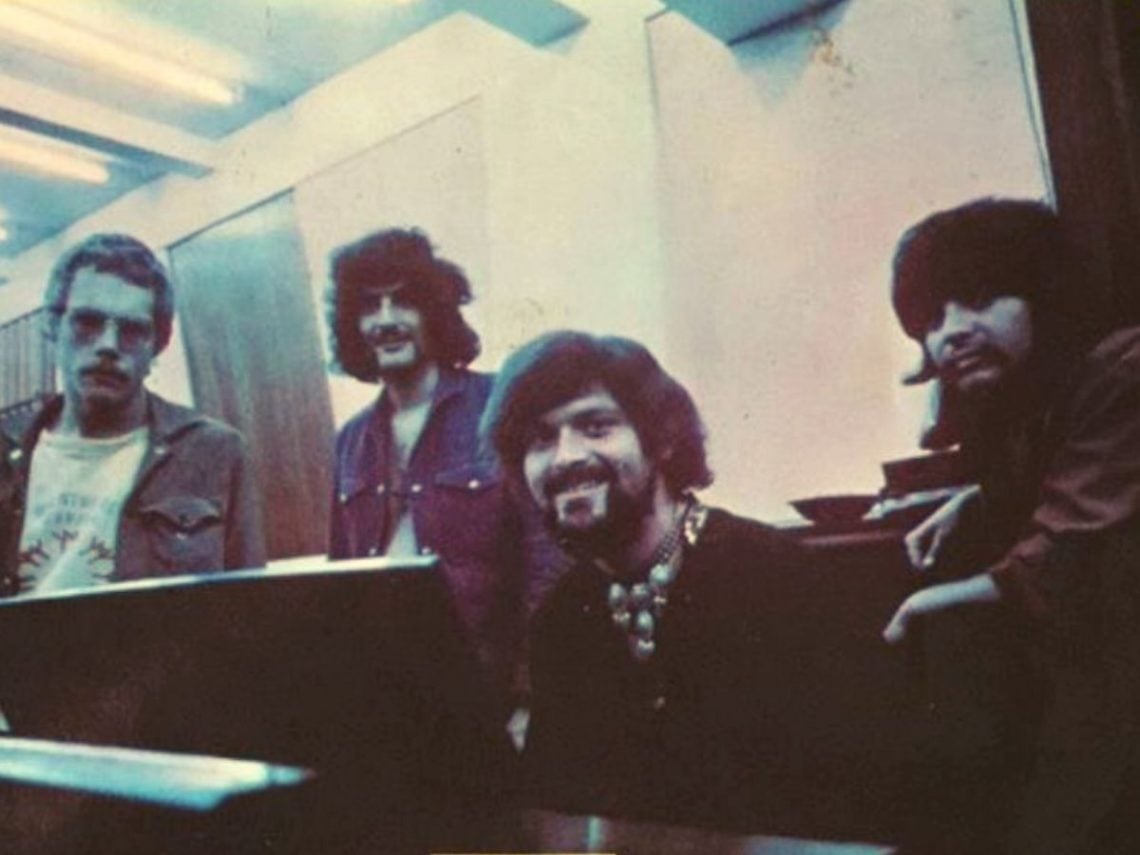
Vanilla Fudge: The greatest covers band of all time

It’s the late 1960s, and The Who are set to perform at the Saville Theatre. The audience takes their seats and prepares for whoever the support band may be. They get more than just a support band, though, as the curtain is drawn back and a massive wall of red amplifiers lines the back of the stage. Looking like fish out of water, the band stands still with the only sign of branding being a barely visible logo on the bass drum that reads “Vanilla Fudge“.
“We’d come over with hardly anything, and we knew The Who were going to have a wall of equipment,” recalled Carmine Appice, the band’s drummer, “Our roadie, who used to work with The Yardbirds, said he could borrow their stuff. So when the gig opened, there was this lone spotlight that shone down to the bass drum, which said, ‘Vanilla Fudge’. Then it opened up to reveal a line of little red Vox amps that was most The Yardbirds stuff.”
Vanilla Fudge had some success in the UK with their single, a cover of The Supremes ‘You Keep Me Hanging On’. It’s hard to work out exactly why they had success in the UK and not their home country of America with the song, but a top 20 single was enough to bag them plane tickets to London to perform some shows.
That single and those shows marked the true beginning of Vanilla Fudge, a musical outfit that would go down in history. When you cover a song, there are two ways that you can do so. The first is completely faithfully. Chances are, if you’re covering a song, it’s because you like the original artist and, therefore, want to pay homage to them. One of the best ways to do that is by playing their song as they wrote it. Then you have the Vanilla Fudge method, which saw the band take songs and make them so they were barely recognisable. It’s a risky move, but in this instance, it landed them the title of the best covers band in the world.
Take their cover of The Supremes, for instance. Almost the antithesis of Motown, the song starts by hanging on one strained organ note that feels as though it’s struggling so much to keep making noise that it could have been pressed by mistake. When the vocals finally come in with drums and rhythm, it’s played at a quarter of the speed of the original, almost a complete rewrite of the track that people knew and loved.
Playing covers in the late ‘60s wasn’t unheard of; in fact, it was incredibly common. There was a lot of competition for bands, and playing covers was an easy way to get people’s attention. There was no guarantee for success with Vanilla Fudge, but they backed themselves because of the array of talent present within the band.
“When I got together with these guys it was, ‘Great voices, great musicians’,” said Appice, “The other bands didn’t have the vocals that we had. We’d listened to the doo-wop, the R&B and the Motown, and they didn’t have the chops that we had. The other drummers weren’t technical like I was. There were certainly no other bass players like Tim. Maybe there were guitarists like Vince, but Mark was certainly better than most of the other keyboard players around.”
There was a great deal of talent on display within the band, and this meant that when Vanilla Fudge covered a song, they weren’t restricted by the song itself. Instead, they could completely deconstruct a track, pull it apart to its bare bones and create something entirely different. If not for the lyrics, covers of famous songs such as ‘Ticket To Ride’ and ‘Eleanor Rigby’ would be unrecognisable. Their psychedelic interpretations of songs were way ahead of their time, as they took already great tracks and propelled them decades into the future.
You know they were a fantastic covers band because their approach to songs influenced other artists. They were so separate from the originals that they formed something new entirely that budding musicians could listen to and take inspiration from. One of these budding musicians was Ritchie Blackmore, who injected a great deal of Vanilla Fudge’s sound into Deep Purple.
“We loved Vanilla Fudge – they were our heroes,” said Blackmore, “They used to play London’s Speakeasy, and all the hippies used to go there to hang out – Clapton, The Beatles – everybody went there to pose […] The group was ahead of its time […] So, initially we wanted to be a Vanilla Fudge clone. But our singer, Ian, wanted to be Edgar Winter. He’d say, ‘I want to scream like that, like Edgar Winter’. So that’s what we were – Vanilla Fudge with Edgar Winter!”
No cover band had the same effect as Vanilla Fudge, and their artistic excellence and unique approach to music continue to inspire artists to this day.
