


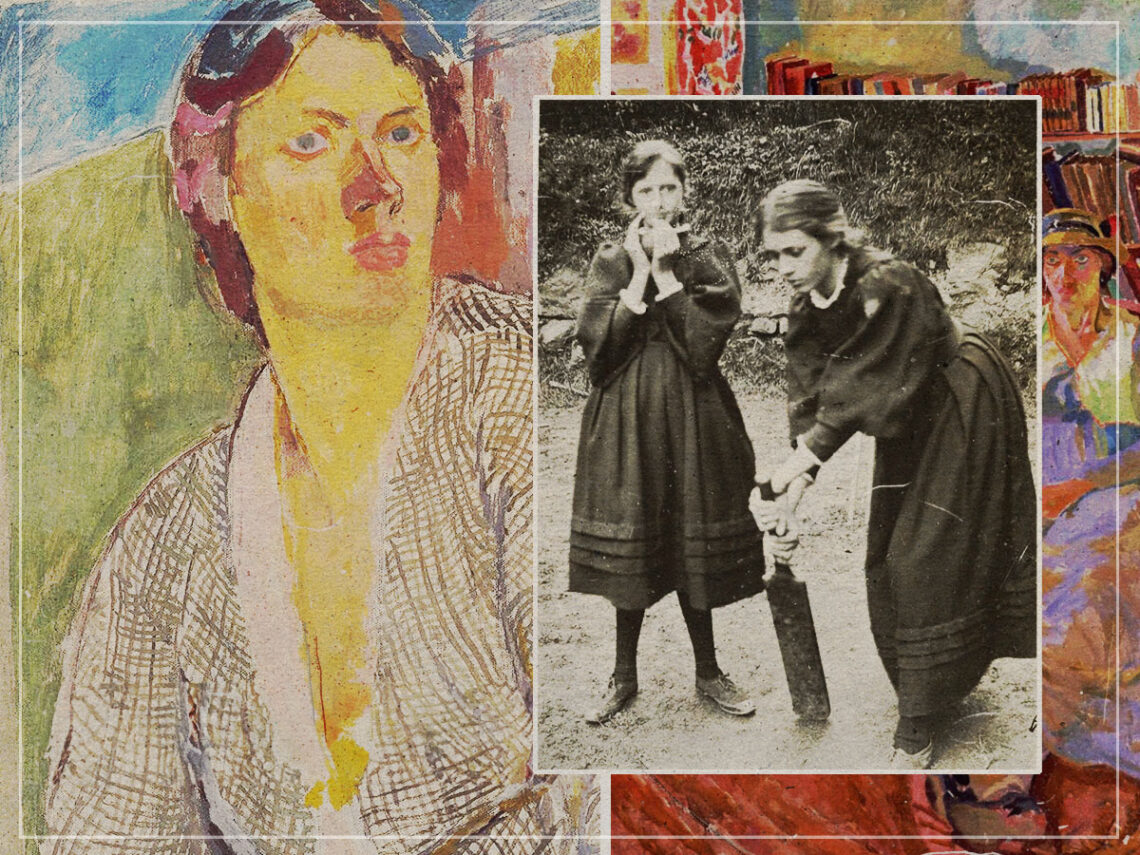
How Vanessa Bell stepped out of Virginia Woolf’s shadow

Vanessa Bell is now deemed one of the most celebrated artists to emerge from the Bloomsbury Group. In the first half of the 20th century, the group formed something of an intellectual aristocracy, but tragically for Bell, her art was not only overlooked in favour of its male members – but also her own sister, Virginia Woolf. But a modern feminist lens refuses to pit the two against each other, instead celebrating their individual contributions to the creative scene. For far too long, Bell’s influence on the post-impressionist movement has been ignored.
Bell has often been referred to as a “free spirit” who lived a bohemian life, likely because of her open marriage to fellow Bloomsbury intellectual Clive Bell. Equally, references to her lovers, Duncan Grant and Rodger Fry, an artist and an art critic, seem to suggest she owed her success to being associated with those men and that somehow their talent rubbed off on her.
A more accurate description would mention that it was Bell who first created a place for these creatives to mix and share ideas: In 1905, she formed the Friday Club, which was the precursor to the Bloomsbury Group itself.
At Bell’s house, the likes of Desmond MacCarthy, Lytton Strachey, and even economists like John Maynard Keynes would rub shoulders, having lofty discussions about modernism and cultural affairs. As a unit huddled in Bell’s house, they vowed to break down barriers surrounding marriage and women’s rights. It’s not hard to see why Woolf is lauded for doing this more so than Bell, given the scope of her published works, but it’s important to note that Bell’s life choices echoed Woolf’s feminist sentiments.
Bell’s life and art were all about pleasure. Her ability to put her own desires at the forefront of her life made her just as radical as Woolf, and her aesthetic eye meant every environment she touched, from the scenes she painted to her own houses, was beautiful. She was also incredibly wise, setting up the Friday Club to make London a more hospitable place for artists just before starting to produce work on a larger scale.
Bell was directed towards post-impressionist works by Rodger Fry and took their boldest and most daring colours into her own pieces. But she was never tied to the movement and turned later to Abstraction, flitting between styles with ease and confidence. Although her art changed over the years, she never reverted to the Victorian style of painting that was encouraged at the time.
Instead of creating art that only spoke to ideals of feminine qualities, she doggedly followed her own interests and tastes. Her artistic instinct was strong, and she showed her work everywhere, from London to Paris. But with Virginia Woolf as a sister and Duncan Grant as a lover, she was destined to be considered a footnote in the Bloomsbury Group in her lifetime rather than what she is now rightfully considered: one of its most important founding members.
