


Keeping Score: ‘Up’ and the sound of heartbreak

It’s a sequence of events that we all know and dread.
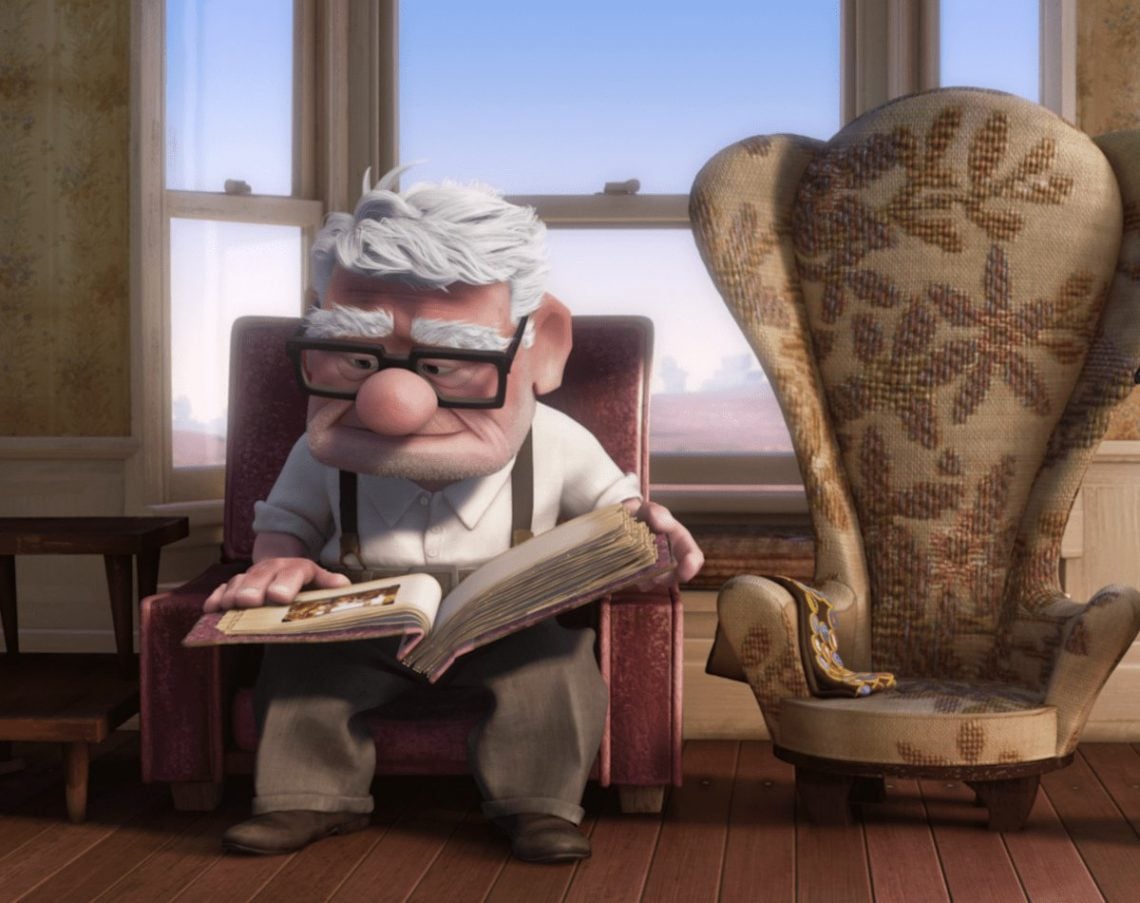
Two childhood sweethearts get married and begin their life together. They renovate their home, go to work, fail to have a child, and grow old. As the years catch up with them, the woman grows frail and passes, leaving her husband alone, with nothing but memories to console him. The tears streaming down your cheeks right now should be a clue that you’ve just read about the wordless opening sequence to Pixar‘s Up.
The story of Carl and Ellie, condensed into a beautiful, heartbreaking four-and-a-half-minute montage, is one of the greatest openings in film history. By the time Ellie dies, you feel like you’ve known her all your life, and are left reeling at the prospect of her devoted spouse spending his final years alone. It is sadness on an industrial scale and no doubt caused many viewers to reach for their Kleenexes when it opened the Cannes Film Festival.
There is no dialogue in the so-called ‘Married Life’ sequence. In fact, it takes its name from the instrumental piece that accompanies its tragic scenes. The music was written by Michael Giacchino, who has become something of a de facto in-house composer for Pixar and the wider Disney machine. His first project for the esteemed animation company was The Incredibles, and he has since gone on to score the likes of Ratatouille, Coco, Inside Out, and countless other non-animated projects like Jurassic World and The Batman. Though the music from Up remains one of his greatest accomplishments.
Writing on his website, Giacchino describes how he felt when he first saw the images that would accompany his most celebrated work. “The first version of the ‘Married Life’ sequence that Pete [Docter] showed me was in storyboard form, and I cried even then,” he recalled.
“It was incredibly powerful to see someone’s life captured within just a few moments—the ups and downs, the joyful times and the tragic ones. Just from that storyboard, I knew that everyone would immediately relate to the story on an emotional level.”
Giacchino immediately began work on the music for the scene. He wrote two pieces on the piano, but neither felt right. After sleeping on it, he tried a third time and knew he had found the melody that would anchor his creation. His next problem was tone. A life isn’t lived in one singular emotion, so how do you capture this range of feeling while remaining musically concise? Giacchino decided to put himself in the character’s shoes to decide what he would say to Carl when he found out that his wife had died.
“I don’t think I would be screaming, ‘This is so awful! I am devastated!’,” he revealed, “I think it would be a quiet and gentle moment, reverent and present”.
This is why ‘Married Life’ never becomes too grandiose. Ellie and Carl lived a quiet, contented life. Her death is sad, but she was old and spent her days well. Giacchino wanted to capture the subtle reflectiveness we experience when somebody dies, which he managed to do without straying into melodrama.
We’ve all known an ‘Ellie’ in our lives: a parent, a grandparent, a sibling or a friend. Through ‘Married Life’, Giacchino captures the quiet dignity of an ordinary life, the good times and the bad, which just makes it even more devastating when it comes to an end.
