


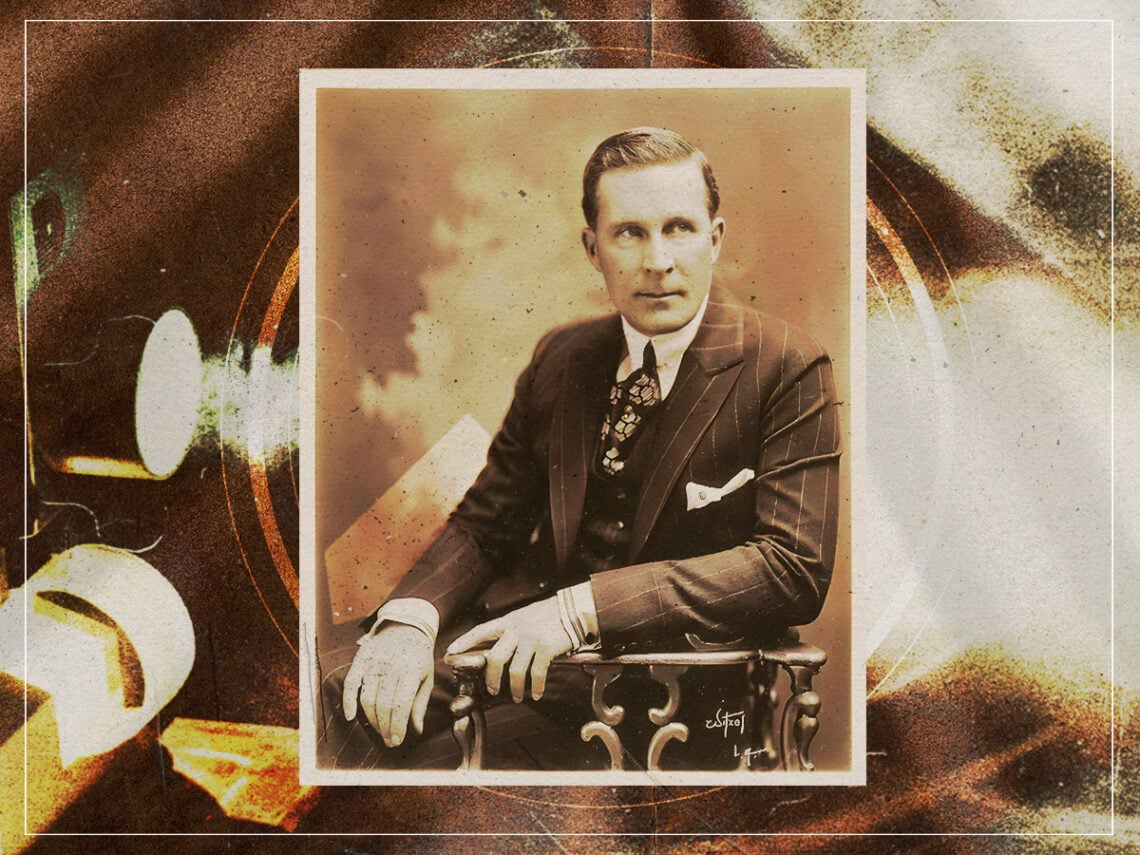
The unsolved mystery of the death of director William Desmond Taylor

These days, the prospect of a recognisable movie director being murdered is about as unthinkable as it gets. However, that was the fate that befell William Desmond Taylor over 100 years ago, placing Hollywood under intense scrutiny as a result, with the case remaining wide open and unsolved to this day.
Beginning his career behind the camera in 1915, Taylor helmed almost 60 silent features prior to his death on February 1st, 1922, and kept himself even busier by appearing as an actor in almost 30 productions. With his star firmly on the rise in both respects, shockwaves were sent through the industry when he was discovered in his home with a bullet in his back at the age of only 49.
A doctor on the scene initially claimed that a stomach haemorrhage was the cause of death, although reports suspiciously offer that the physician was never seen or heard from again. When forensic investigators took a closer look, it transpired that he’d been shot at least once by a small-calibre pistol.
His possessions – including money, a pocket watch, and a diamond ring – remained on his person, seemingly ruling a spur-of-the-moment robbery out of the equation. However, just a day previously, Taylor had allegedly shown his accountant a substantial volume of cash that had vanished and went completely unaccounted for, adding another layer of intrigue to what was fast becoming the talk of Tinseltown.
Actor Mary Miles Minter revealed in her police statement that fellow thespian Marshall Neilan told her Taylor had been making “delusional” claims about people in his social circle. Minter ended up becoming a suspect based on the two having a relationship. When that was made public, her reputation as an innocent starlet was effectively ruined. 15 years later, she begged that her name be distanced from the case to the Los Angeles Examiner: “Now I demand that I either be prosecuted for the murder committed 15 years ago, or exonerated completely.”
Minter’s mother, Charlotte Shelby, was also linked to the murder due to her ownership of a rare weapon and its bullets, which were similar to those that killed Taylor. Not only that, but she was a known associate of the local district attorney and exiled herself from the United States in the aftermath, although she too was never formally charged.
Another starlet – Margaret Gibson – is alleged to have confessed to Taylor’s murder before her death despite never being named in conjunction with the investigation. That said, her familiarity with the filmmaker after they’d worked together – coupled with prostitution and exertion charges that were dropped – established an element of public-facing criminality that saw her constantly drawn back into the orbit of speculation.
Taylor’s valet, Edward Sands, also had a criminal record – with embezzlement and forgery among them – and had previously robbed the director of his possessions and crashed his car while he was out of the country. Viewed by many as the prime suspect, he effectively vanished off the face of the planet following the murder.
Sands’ replacement, Henry Peavey, was the one who found the body to begin with and was even kidnapped to try and force out a confession after suspicions arose that he was withholding information. He pointed the finger of blame at actor Mabel Normand – an object of Taylor’s infatuation – but she was ruled out in spite of her status as the last person to see the filmmaker alive.
A string of scandals to rock Hollywood throughout the 1920s ended up changing the business forever by the end of the decade, too, with morality clauses becoming standard practice after so many notable figures being implicated in unsavoury headline-grabbing incidents spurred the studios into action.
More than 100 years on, and with much of the evidence lost to the sands of time, the identity of the person responsible for Taylor’s death remains restricted to the realms of rumour and hearsay. The case did take on a life of its own, though, with the status of both the victim and several prospective suspects as movie stars and household names creating one of the first murder cases that became an obsession among the general public.
