


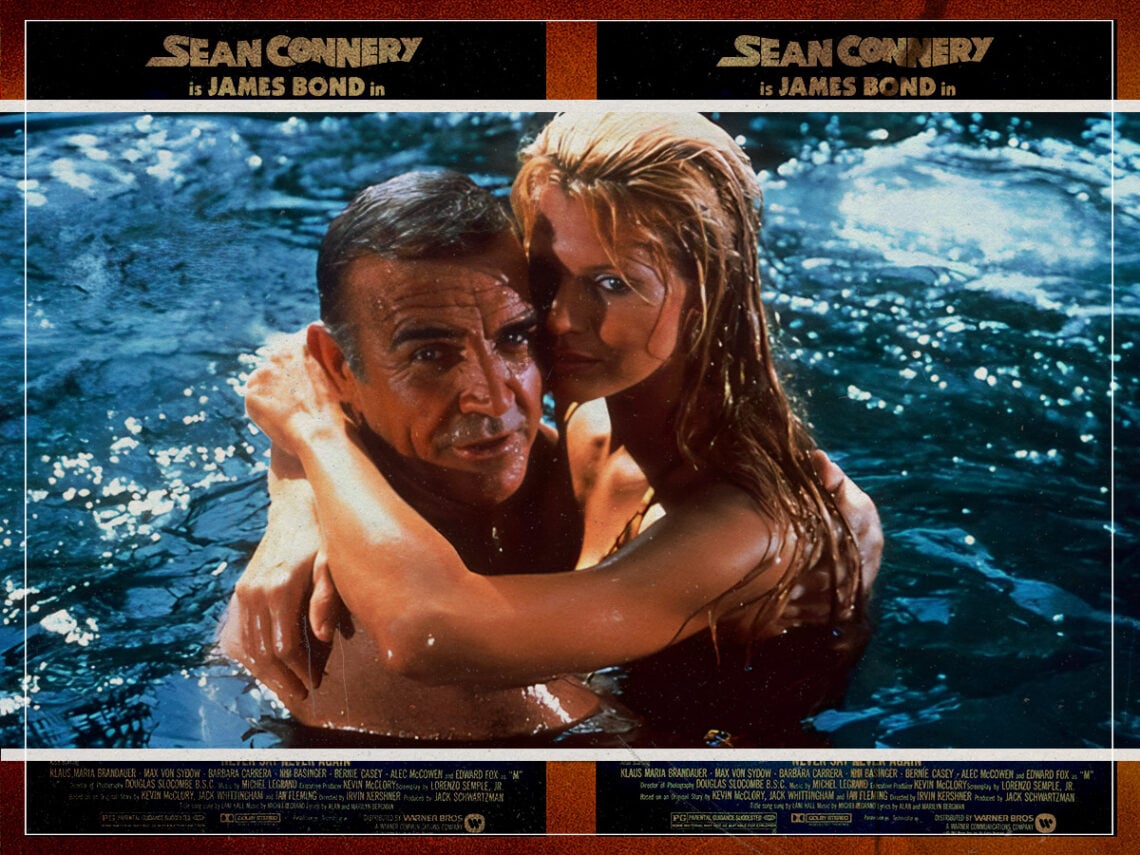
‘Never Say Never Again’: the story of the unofficial James Bond movie

For over 60 years, the James Bond franchise has been at the forefront of pop culture, with the suave secret agent one of cinema’s most iconic characters. And yet, no matter how long the series continues, Never Say Never Again will always be a source of frustration for Eon Productions.
From the outside looking in, it’s a Bond movie by every usual metric. Sean Connery returns as 007 to embark on a globetrotting adventure that requires him to cosy up to beautiful women, deploy dazzling gadgets, wear immaculately tailored suits, and prevent the nefarious SPECTRE organisation from unleashing nuclear catastrophe on the planet.
For all intents and purposes, then, it’s a Bond flick. Except it’s not really, because rights-holders Eon have never acknowledged Never Say Never Again as part of the timeline that kicked off with Dr. No and carried all the way through to No Time to Die, and it’s partially Ian Fleming’s fault that an unofficial loose remake of Thunderball – which also starred Connery – was even allowed to happen in the first place.
Writers Kevin McClory and Jack Whittingham developed the story for what would eventually become Thunderball alongside Fleming, but it never came to fruition as a feature film. However, the Bond creator went ahead and decided to turn the basic outline into the novel of the same name, without crediting either of his co-scribes.
As a result, McClory launched legal action for breach of copyright, which was settled in 1963. When Eon began backing the Bond saga on the big screen, another deal was made with McClory, which gave him a producer’s credit on Thunderball and the rights to make another version of the same story, but only after ten years had passed since the first one.
Once enough time had elapsed, McClory immediately began working on his production that existed outside the established Bond universe, with Connery having been drafted in as early as the mid-1970s. He’d already headlined 1965’s Thunderball so there was no point in repurposing the title, but his own dismissal of 007 helped inspire the final moniker.
After Diamonds Are Forever, the Scotsman said he’d “never again” play the character, which gave rise to the Never Say Never Again nomenclature. The trustees of Fleming’s estate tried to prevent the movie from happening, but thanks to the initial agreement struck with McClory in which the author was a key figure, any moves to block Connery’s comeback were tossed out of court.
The Empire Strikes Back director Irvin Kershner was drafted in after Richard Donner declined an approach by Connery to direct. The George Lucas associate brought several key members of the Raiders of the Lost Ark crew along for the ride, including its assistant director, cinematographer, second unit director, and production designers.
With the leading man being into his 50s at this point, Never Say Never Again features plenty of jokes about Connery’s age, which double as indictments on the mainline Bond adventures, too. Roger Moore was three years older than his opposite number, and his films didn’t mention his own status as a middle-aged 007, with another wrinkle being added when the unofficial espionage adventure set its theatrical release just six months after Moore’s sixth outing in Octopussy.
Eon’s movie cost less to produce and earned more money at the box office, so technically, the stewards of the franchise had the last laugh in the end. The whole thing could have been avoided entirely had Fleming simply credited McClory and Whittingham when Thunderball was published in 1961, but more than two decades later, the world ended up with the one and only unofficial James Bond film and a quietly furious production company.
