


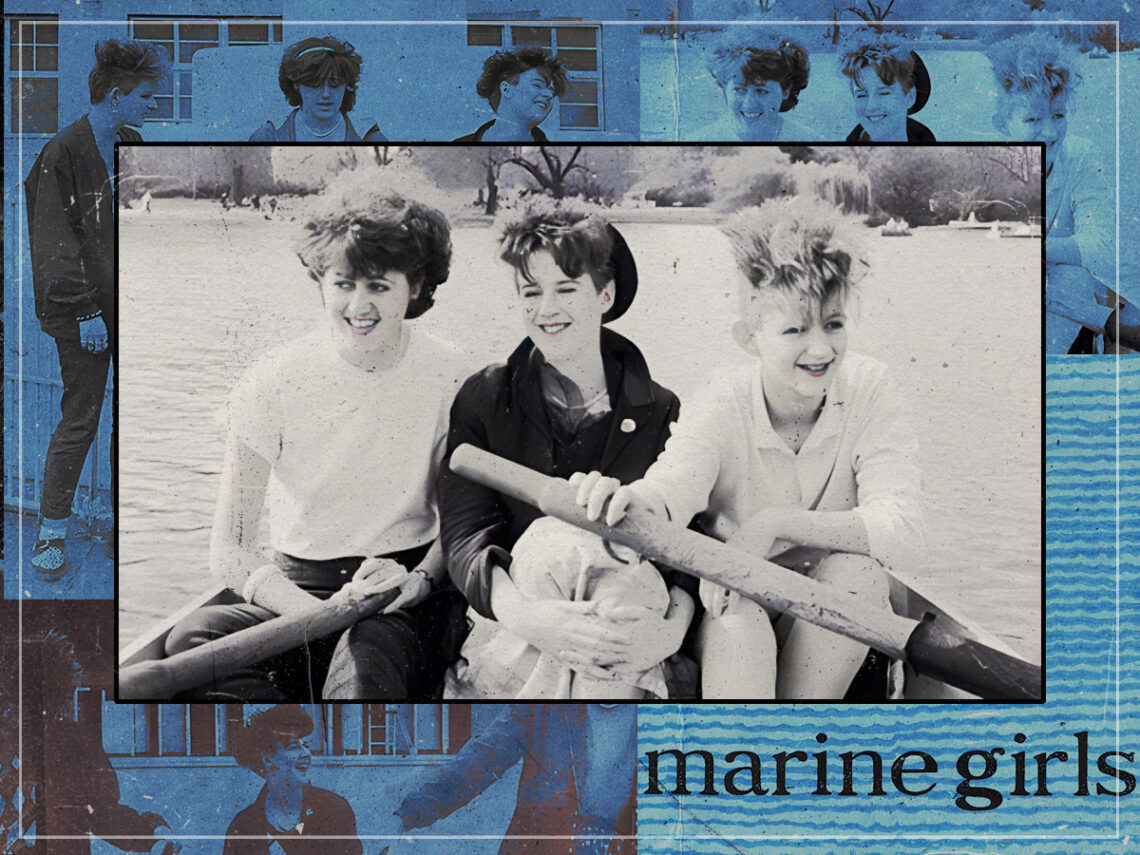
The understated impact of Marine Girls

After the initial explosion of the British punk scene in the mid-to-late 1970s, post-punk took hold, which paved the way for genres such as indie rock and indie pop. Bands such as The Pastels, Talulah Gosh, Dolly Mixture and Marine Girls were part of a new ‘80s wave, predominantly featuring female vocalists. These artists utilised punk’s DIY ethos, yet their sound was considerably less abrasive, often featuring charmingly amateur-sounding vocals alongside jangly guitars and upbeat percussion.
Marine Girls remain an incredibly underrated band from the British indie pop movement, despite exerting significant influence over artists to come, such as Kurt Cobain. The band was formed in 1980 by school friends Tracey Thorn and Gina Hartman and harnessed a distinctively youthful and feminine sound that was refreshing to hear.
The band’s music perfectly encapsulates the feeling of being a teenage girl, and their DIY approach to crafting and performing songs only makes them feel more authentic and urgent. Songs such as ‘Marine Girls’ discuss the pressures of girlhood particularly well, using gentle refrains of “Try so hard/ Try to be/ What every girl should be” before listing expectations such as “not too smart and no opinions/ Bright and pretty, sweet and willing”.
In a piece for The Quietus, Thorn reflected on the band’s status as an all-female band, writing, “We used to get up on stage in front of mostly male crowds who’d come to see a rock gig, and we’d quietly but defiantly play our heartfelt songs about boys we loved or boys we despised, mixing in strange and ever-so-slightly random references to the sea.”
In many ways, Marine Girls were considerably more punk than some of the aggressively-charged bands that came before them. They truly threw caution to the wind and disregarded convention, unafraid to sound a little wobbly, unpolished or unprofessional at times. That’s not to say that Marine Girls sounded like they didn’t know what they were doing. The band’s simplistic approach to structuring songs – often centring a repetitive riff among distinctively British, sometimes spoken, vocals – works incredibly well.
Marine Girls created an incredibly distinctive, singular sound unbothered with flashiness and excess. Often harmonising with each other, the band allow their adolescent musings to take centre stage. On ‘Honey’, the band sing lyrics such as “I know I’ll love him forever or until I find another boy,” and on ‘Friday’, Thorn speaks: “I know you never loved me, why did you say you cared?/ You said I broke your heart, but I told the truth, so I win, yeah.”
The band’s lyrical content is unapologetically melodramatic, yet it is also incredibly realistic, harking back to ‘60s girl groups such as The Shangri-Las. While these might not sound like revolutionary lyrics, hearing young women singing about their honest experiences of girlhood, not filtered through heavily produced and polished tracks but via rough-around-the-edges, lo-fi techniques, is a joy to listen to.
In this respect, Marine Girls were an unequivocally feminist band, defying musical expectations and allowing their femininity to become an intrinsic part of their sound. Thorn explains that many fans “saw themselves reflected and represented in our refusal to adhere to either mainstream pop or underground rock ‘n’ roll rules. We conducted ourselves as though none of those rules existed, or as if they simply didn’t apply to us.”
However, the band might not have had the courage to be so fearless if not for the female musicians who inspired them. In Sam Knee’s book Untypical Girls, Davidson revealed that artists like “The Raincoats, The Slits, Poly Styrene [and] Pauline Murray” were significantly impactful to the formation of Marine Girls.
The band released their first tape, A Day by the Sea, which they self-produced, before recording two albums, Beach Party (1981) and Lazy Ways (1983). Breaking up after a gig in 1983, the members soon went on to other projects, with Thorn most notably finding success in bands such as Everything But the Girl and as a guest vocalist on two Massive Attack songs. Despite their short lifespan, Marine Girls have since garnered cult success, aided by the band’s championing by Kurt Cobain, who happened to be a huge fan, listing Beach Party as one of his all-time favourite albums. While Marine Girls might not sound much like Nirvana, Cobain was undoubtedly inspired by the way they utilised minimalism to create effect, paired with their lyrical authenticity.
These days, Marine Girls are not exactly a household name – unless you have a particular interest in ‘80s British indie pop – yet their music has inspired some highly important acts, from Nirvana and Hole to LCD Soundsystem. From their blissfully youthful cover of the sultry ‘Fever’, made popular by Peggy Lee, to the tender ‘In Love’, Marine Girls are an unstated gem who deserve to be discovered by a new generation of listeners.
