


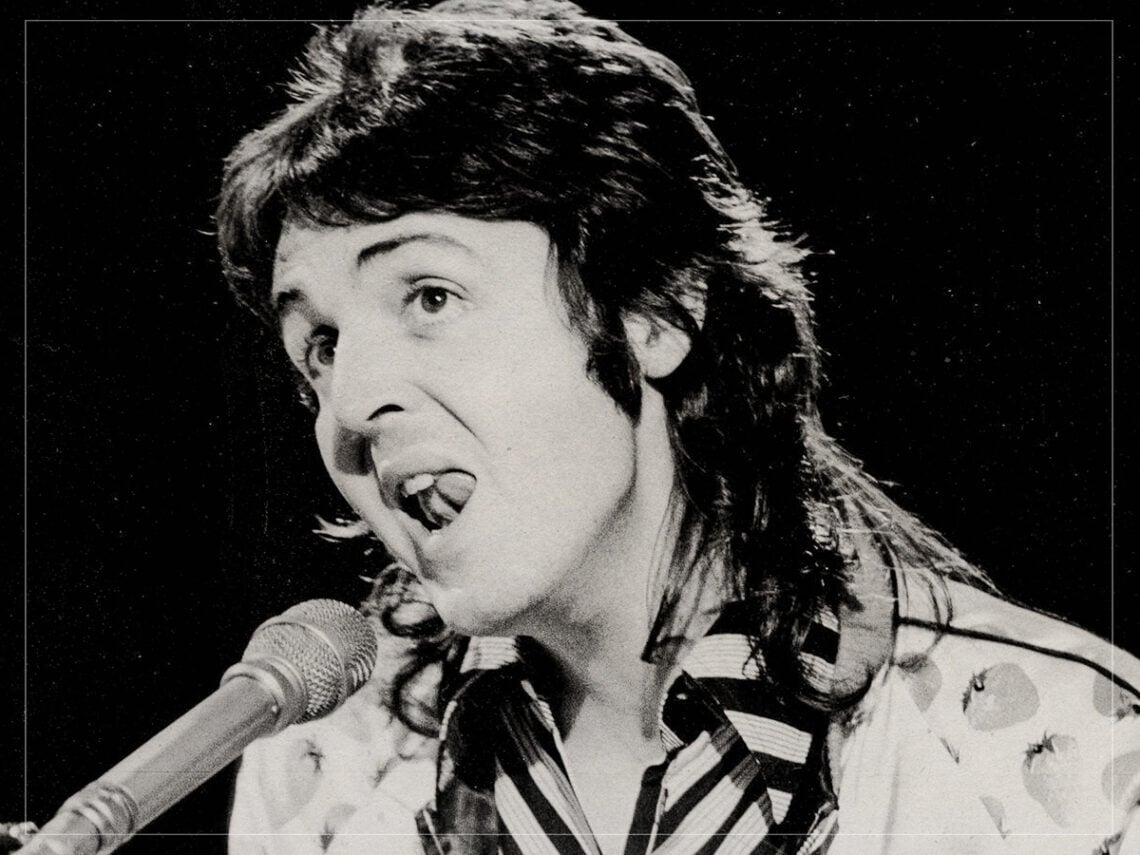
The underated 1979 Wings album that gave Paul McCartney a new lease of life

In today’s pop-led musical landscape, it’s often easy to forget the power of a strong work ethic. Paul McCartney never did, which is also a big part of why he’s still one of the best and most important figures in music.
Another reason is that, no matter what project he’s working on, McCartney always exercises a good level of sensibility, following ambition while knowing that nothing is ever guaranteed. As he once put it himself, you never know what’s going to happen: “You just hope you’re lucky. And you just work hard.”
This mindset no doubt reached an all-time high in 1979 for Wings’ final album, Back to the Egg, which saw McCartney adopting a back-to-basics approach reminiscent of the dynamics he fostered in the early days of The Beatles. Working around this concept, McCartney returned to Abbey Road, as well as Replica, an exact replica of Studio Two at Abbey Road.
At the time, McCartney felt completely “reinvigorated”, partially because of this return to form that he’d become familiar with over the years, but also because he was in the right mood to reach new heights, exploring different styles and sounds, embracing many aspects of what we now consider to be characteristic of the new wave and punk genres.
As he explained in 1979, the whole project was a “back-to-the-beginning kind of feeling for us”, with an open-minded environment that saw them “sort of trying different things”. As far as work ethic and mindset go, therefore, Macca had everything he needed to make this his next best thing. Only, when it finally came out, people weren’t quite as dazzled as he’d probably hoped.
That said, it wasn’t quite as straightforward as that either. After all, as a former member of the biggest band on the planet, anything McCartney did was always going to be held to a higher standard, and anything that achieved even the slightest bit less success than Beatles records would be seen as a failure, even if that wasn’t the case.
For a while, therefore, McCartney saw Back to the Egg as a failure (he even once called it a “disaster”) because, well, when you look at his previous streak when it comes to charts and commercial success, it was. However, when you look at it more objectively and ignore the negativity from reviewers upon release, it wasn’t quite as black and white as that, either.

And McCartney only acknowledged this much later while flipping through a rock book with David Bowie, when he reflected on the record achieving a chart position of number eight and questioned why he ever felt that it was anything close to a so-called ‘failure’. “Most people would give their right bloody arms to be number eight,” the musician told Reverb. “But eight, and I wasn’t satisfied. The Beatles had been number one. This is all right, keeps you going. But yes, a lot of the stuff is underrated, because of that.“
For a long while, those ‘losses’ distracted McCartney from the reality surrounding Back to the Egg, and, perhaps, the most important takeaway of all: how poised and excited he felt during the entire process, especially when it came to taking the traditions of operating more like a band while adopting new styles and techniques. Ultimately, therefore, that new lease of life he experienced undeniably outweighs the frustration of the record being overlooked because it didn’t outperform a Beatles record.

Never Miss A Beat
The Far Out Beatles Newsletter
All the latest stories about The Beatles from the independent voice of culture.
Straight to your inbox.