


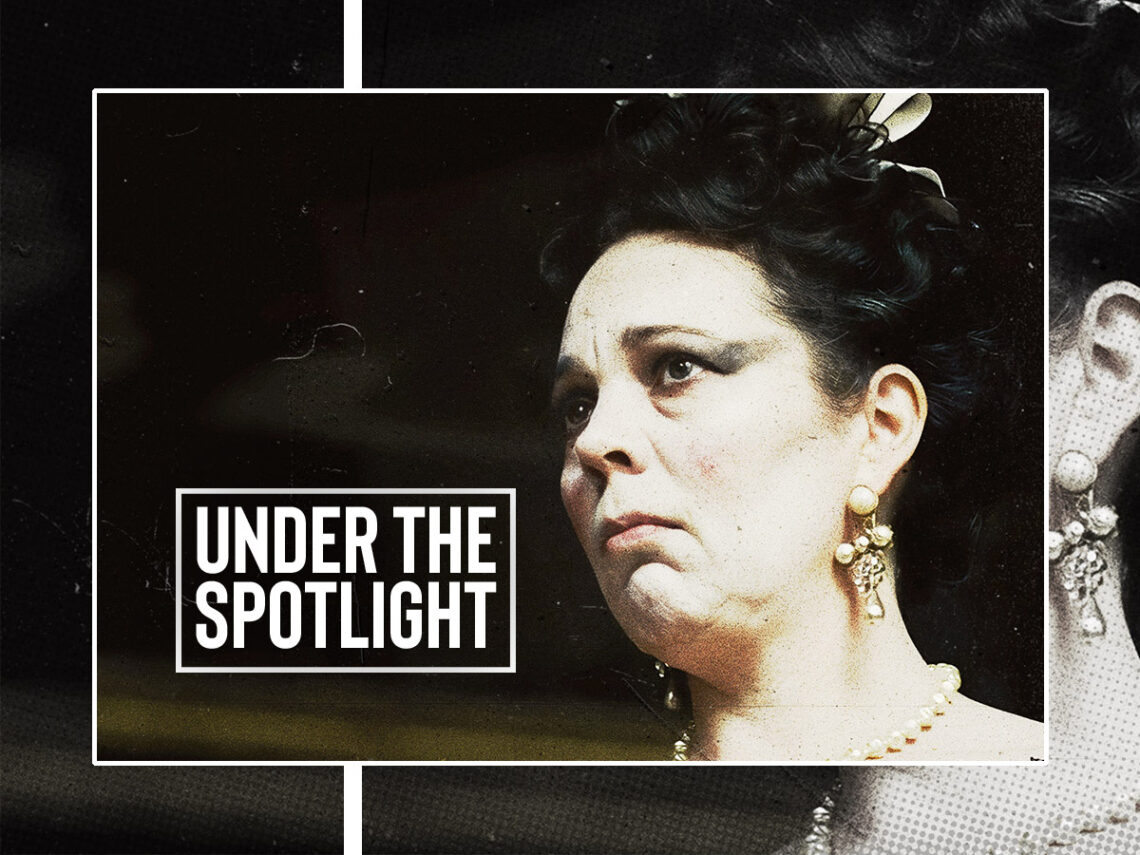
Under the Spotlight: Olivia Colman in ‘The Favourite’

Olivia Colman has been a big part of British television over the last 25 years. If you are a British reader, you will have struggled not to see Colman crop up in a huge congregation of roles, from the hilarious Peep Show to the harrowing Broadchurch. Due to some of her dark television roles, it wasn’t particularly big news to see her take on the role of Queen Anne in Yorgos Lanthimos’ The Favourite, an absolute powerhouse of a film which led to Colman winning the Academy Award for her portrayal. It was, however, a surprise seeing the British delight win the award and get very emotional whilst accepting it. Upon revisiting the film, you cannot help but appreciate her knockout performance.
Colman, over the last few years, has become quite a darling in Hollywood. She’s starred in a slew of projects she likely would not have had the chance to if not for her Academy Award. Of course, I’m talking about the likes of Maggie Gyllenhaal’s directorial debut – The Lost Daughter, the Marvel television series Secret Invasion, alongside voicing characters in animated romps Ron’s Gone Wrong and Puss in Boots: The Last Wish. Whereas we fondly recall Colman with her cheesy smile and infectious personality, she is actually more than well-versed in pushing her performances to reflect the deep complexity of the character. It is never more forefront than her take on Queen Anne.
Queen Anne is a tragic tale, one you are not often familiar with as it is sidestepped in school textbooks and history lessons. Queen Anne is remembered today for her major accomplishment in uniting Scotland and England, founding the United Kingdom. In this film, though, you just see a matriarch plagued with the loss of 17 children, obesity, illness, woe and a battle with her own sexuality – whether this is true or not is debated, but Lanthimos makes this a central theme here.
The Favourite isn’t a biopic of sorts. Instead, it focuses on the love triangle between Abigail, Lady Churchill and Queen Anne. Queen Anne and Lady Churchill are school friends, and the influence Lady Churchill has over Queen Anne allows her to essentially run the country. Abigail Hill, played fabulously by Emma Stone, is a new servant to the Queen as she was once from nobility but lost all she once knew. Intelligent, quick as a whip and fiercely passionate about her political agenda, Abigail begins to see through Sarah Churchill (her own cousin, in fact) and the game she is playing.
One evening, Abigail spies on Sarah and Queen Anne engaging in passionate lovemaking, sparking that she could use her body to get her way against the sexually-disorientated Queen. Dissimilar to women of that era who were merely toys for men to play with – as demonstrated in the carriage as Abigail arrives at the palace – she uses her body to progress her worth.
At the heart of The Favourite, two women are fighting for the attention of a distressed and ill Queen Anne. Gout is ravaging the Queen, leaving her crippled and pushed around by those closest to her. The women are fighting for that position of power by being the Queen’s lover, a position of unassigned ruler of the country by being able to bend the Queen’s fragility. This is where Colman comes in. She offers a frightening performance as Anne, hard to watch at times as she lays bedridden with gout, jumping from emotional highs to emotional lows. There are times when she can’t keep a smile off her face, in addition to other instances when she seems so angry with her misfortune and the world around her. And can you blame someone who has lost 17 children to believe the world has not dealt them a poor hand?
A marvellous scene which showcases the emotional range Colman delivers across the nearly two-hour runtime is the infamous ‘Look at Me’ scene. In this scene, Colman comes out in full regalia, makeup and hair done in order for her meeting with the Russian ambassador. She is happy with the way she looks and ready to conduct important business for the crown. Lady Churchill meets her and tells her that her makeup “makes you look like a badger”. Almost instantly, she is deeply unsettled by Lady Churchill’s remarks (which just shows the value Queen Anne puts on those in the first place), and Colman looks devastated. As she marches back to her room to change, she transforms this hurt into a rage as she lashes abuse at the guard outside of her room, who may or may not have been looking at her. The whole scene leaves you shaking, and it’s only a minute long.
Another scene which showcases her rage at her misfortune is when she hears music being played outside on the lawn. Being carted around in a wheelchair by Abigail, she asks to stop to hear the beautiful music playing. In order to reflect her insanity during this moment, the camera focuses on Colman’s face as you see it distort from smiling to tears to rage. All of a sudden, she launches herself out of the wheelchair, demanding they stop by the ‘order of the Queen’. They all scurry away obediently. The scene is followed by a distraught Colman wandering around the west hallway, crying, stumbling as she struggles to walk and screaming, “Where am I?”. She is unable to contain her emotions. She attempts to grab a baby who is being held by a nanny passing by, but, despite it being the Queen’s will, the nanny only lets the Queen hold the baby for a few seconds before promptly moving on.
Colman understands Queen Anne’s confusion and makes this the centrepiece. She has lost 17 of her children and her husband (not mentioned in the film); her two lovers are fighting for her favour, not her love; and her opinion on the War in France depends entirely on those closest to her, for she does not have any genuine thoughts of her own. Colman excellently plays all of these conflicting ideas in this film through her pantomime-ish display by showing over-the-top emotions in quiet scenes. This allows the character to develop a larger-than-life monster-cum-icon. In the film’s final scene, upon seeing Abigail’s cruelty inflicted on one of the rabbits she sought as a replacement for her children, Queen Anne’s actions cast a rather strong ambiguity.
I’m sure Colman would claim that this performance was the turning point in her career. It allowed her to shine on the big screen and show Hollywood what she was really capable of.
