



The ultra-violent flop that landed Christopher McQuarrie in director jail: “Fox told me to get fucked”

In 1996, Christopher McQuarrie won the ‘Best Original Screenplay’ Academy Award for The Usual Suspects, his rollercoaster neo-noir released the year before. The young writer was only 26 years old, yet he had reached the top of the Hollywood mountain in double quick time.
To his dismay, though, he then suffered several years of Tinseltown dead ends.
McQuarrie was able to make ends meet by working as a script doctor, but he had aspirations of directing his own film, which were going nowhere. In fact, the longer he tried to get an Alexander the Great biopic off the ground, the harder it seemed Hollywood rejected him.
“You slowly start to realise no one in Hollywood is interested in making your film,” McQuarrie told Sight and Sound in 2000, “They’re interested in making their films”.
So, already facing a career crossroads, McQuarrie took a meeting with 20th Century Fox. He told the studio he’d be willing to direct whatever project it wanted to give him, as long as he had creative control. He figured his Oscar-winning bona fides made that a tantalising prospect, but to his shock, he couldn’t have been more wrong.
“Fox told me to get fucked,” he remembered, “No money. No control. No nothing. They didn’t want my input; they just wanted me. For nothing”.
Shellshocked and disillusioned by the nature of a movie business that would only give him a film if he ceded creative control and accepted a lowball studio contract, McQuarrie thought it was all over for him. Thankfully, he was saved by a conversation with Benicio Del Toro, who starred in The Usual Suspects. The actor encouraged him to write another crime film, which McQuarrie initially resisted as he didn’t want to be typecast as a “crime guy”. However, when Del Toro theorised that he’d receive the least amount of studio interference if his directorial debut were in the Suspects mould, he realised the Fear and Loathing in Las Vegas star was right.
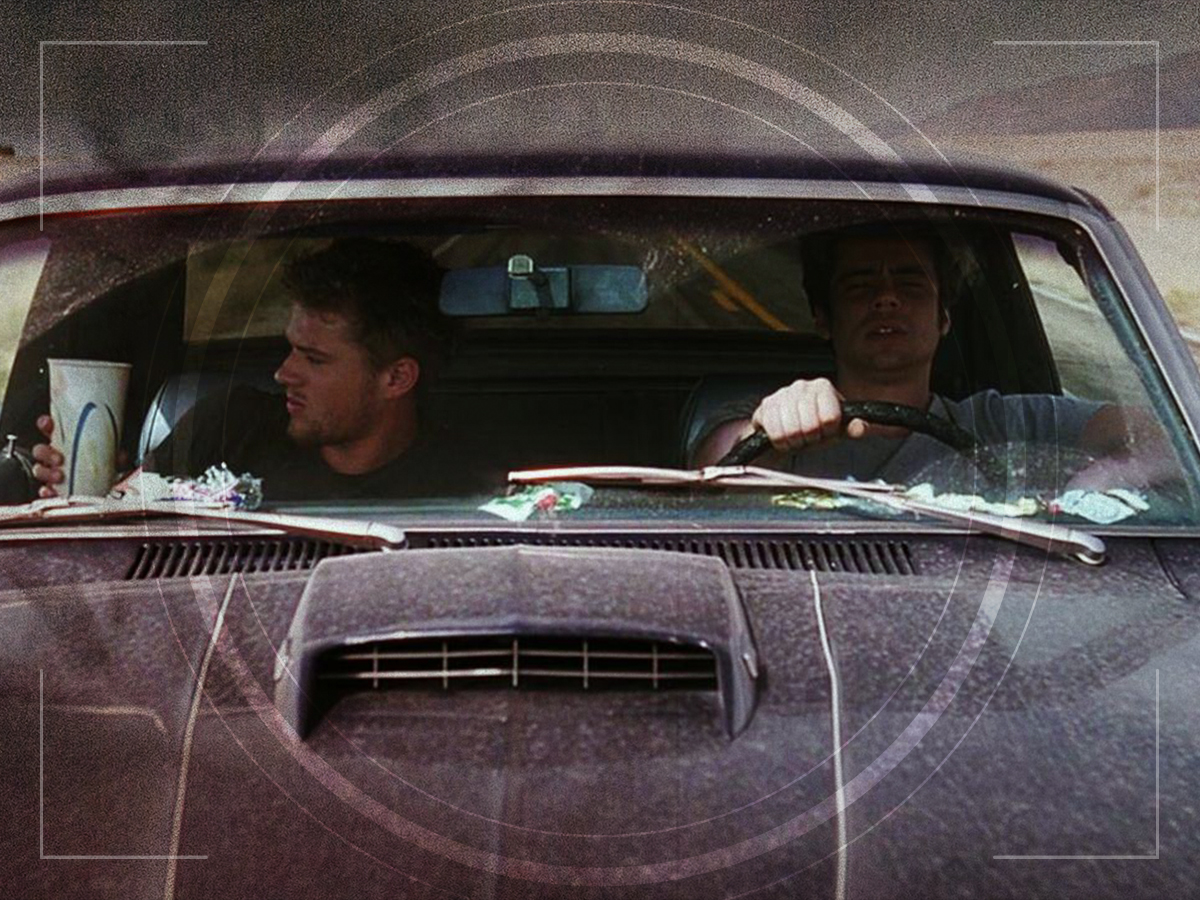
At this point, McQuarrie figured he had nothing to lose, so he poured all his angst and anger at the Hollywood machine into The Way of the Gun, a neo-western crime flick about two minor criminals who kidnap the pregnant surrogate mother of a money launderer for the Mafia. They try to extract a ransom, but matters soon get out of hand in a bloody, bullet-soaked fashion.
In truth, the movie McQuarrie wound up making was intentionally abrasive and defiantly anti-authority, with the main characters being purposely detestable types who challenge every taboo imaginable. Ryan Phillippe’s Parker and Del Toro’s Longbaugh were specifically calibrated to be deeply unsympathetic, where McQuarrie later admitted they were his response to what he saw as “an oppressive and hypocritical industry”.
Overall, the film emerged as a violent, cynical, bleak picture, perfectly reflecting the director’s headspace at the time.
However, despite this fire in his belly, the writer/director remembers the shoot being fun, if exhausting. It was only after the film was in the can that he started to get the feeling that Artisan Entertainment, which bankrolled the movie, weren’t thrilled with it. This is why, when the $8.5million budgeted film was released and grossed $13.1million, a small profit, it was still treated by the studio, critics, and Hollywood in general as if it were a disaster.
“The town literally recoiled,” McQuarrie told Den of Geek in 2015. “Some critics were nasty. Personally so. At first, I was pretty depressed”.
Amazingly, McQuarrie wouldn’t direct another film until 2012’s Jack Reacher, after what he dubbed 12 years of “director jail”. In this period, it felt like he was back where he started in the post-Usual Suspects years, and it weighed on him heavily.
Eventually, of course, his burgeoning relationship with Jack Reacher star Tom Cruise helped him resurrect his career, and now he is the successful director of four blockbuster Mission: Impossible movies. Over the years, The Way of the Gun also developed a cult following among people who like their films nihilistic, profane, and reverential toward old westerns and crime features. In a way, perhaps the combination of these elements helped McQuarrie finally make peace with, to steal a music term, his ‘difficult second album’.
“Critics didn’t kill my film,” a philosophical McQuarrie concluded 15 years after The Way of the Gun‘s release, adding, “The shitty marketing didn’t kill it. I killed it when I set out to make a film that lectured instead of entertained. Bottom line, most people just didn’t like it. But they didn’t need critics to tell them that.”
