


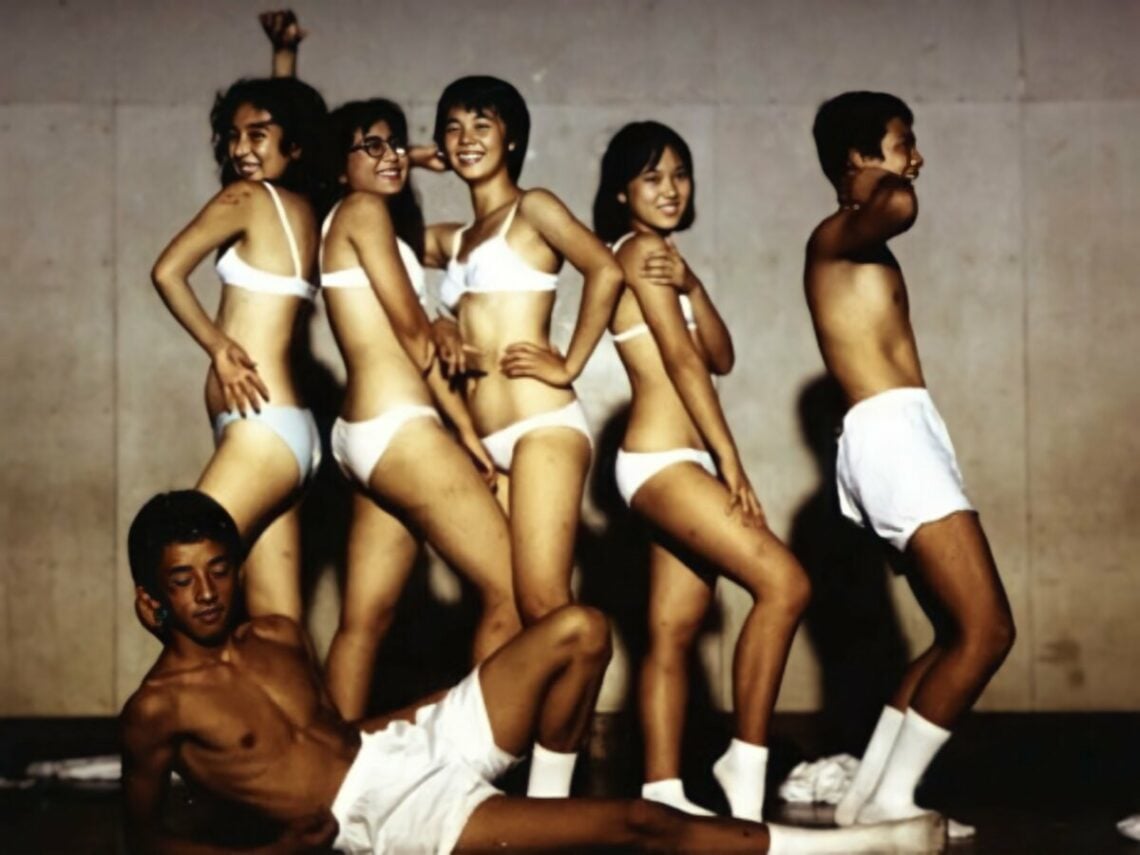
‘Typhoon Club’: how Shinji Sōmai redefined the high-school movie

Whenever lists featuring the best high-school movies are published online, it’s almost impossible to avoid mentions of staples like The Breakfast Club and Superbad. American comedies have definitely enjoyed a hold on the subgenre, creating a familiar cultural monopoly that has retained its popularity among global audiences. However, the recognisable comedic currents aren’t everything the high-school movie has to offer, as is evident from the uniquely strange Typhoon Club directed by Japan‘s Shinji Sōmai.
While most fans of Japanese media have come to know absurdly humourous or just weirdly outrageous visions of the high-school experience due to anime, there are far more nuanced explorations that treat the subject with surprising depth. Alongside the likes of Gakuryū Ishii’s August in the Water, Typhoon Club is one such example that challenges our preconceived notions of what a high-school movie really is and what it means to actually “come of age”.
Sōmai’s filmography within the context of Japanese cinema during the 1980s is already pretty fascinating, with eccentric works like Sailor Suit and Machine Gun still capturing the attention of cinephiles. However, Typhoon Club manages to stand out from the rest of the entries in the Japanese auteur’s uncompromisingly original body of work.
The premise is quite simple: a handful of young students get trapped inside their school in a rural region due to the titular typhoon. From the very beginning, there’s something ominous about the setting that can’t quite be singled out. Even before the grey clouds start accumulating overhead and the wind starts picking up its pace, the promise of potential annihilation hangs in the air like a prophecy that can’t be articulated, just felt.
Where most high-school comedies and other coming-of-age films focus on character arcs to show how some of the most formative years of our lives result in growth, Sōmai isn’t interested in any of it. Instead, he uses the typhoon to create a domain that is separated from the rest of the adult-inhabited world. The school being battered by the storm is its own universe, with a different logical framework collectively and automatically enforced by the children inside.
When asked about the significance of the typhoon, Koji Enokido, Sōmai’s assistant director, told Ultra Dogme: “Typhoon Club was a story that was very important to him because it was about how people react when faced with a natural phenomena, a typhoon—the excitement one feels, the actions that are elicited from it. Of course, now with climate change, a typhoon can be a disastrous thing, but at that time, it was something that could be exciting as a kid.”
It’s true that younger generations who have grown up under the shadow of environmental collapse will find it difficult to watch Typhoon Club without being affected by climate anxiety. However, even without that layer of subjectivity, the 1985 film isn’t as innocent as Enokido makes it sound from his description of the storm’s impact on the children’s psychological registers.
Even though time comes to a standstill during the typhoon that appears seemingly endless at one point, it paradoxically transforms the children into adult citizens of their realm, capable of violence and destruction. The most chilling example of this is a scene where a young boy hunts down a girl who is also stuck inside the school like a possessed sexual predator, almost channelling the rage and insanity of Jack Nicholson in The Shining.
As the rain brings life to the vegetation surrounding the school, the children are confronted by death as one of their classmates comes to the conclusion that suicide is the only way forward after the storm has passed. Just like him, it is impossible for us to view the world in the same way after the typhoon is over, leaving us permanently marked by its unmistakable apocalyptic energy.
