


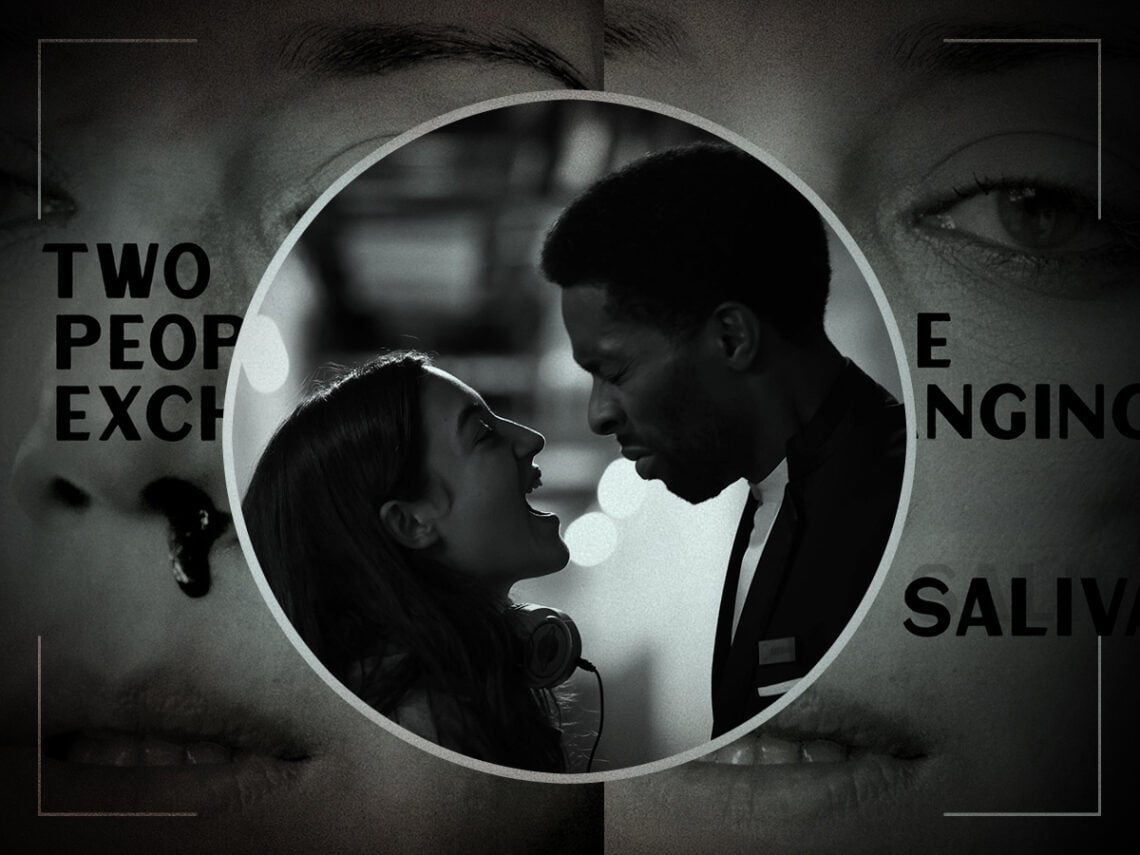
‘Two People Exchanging Saliva’: The Oscar winning-short you need to watch

In the battle of the big leagues at the Oscars, it can be easy to forget that greatness also exists in the under-the-radar categories too.
While people scramble to watch all the ‘Best Picture’ nominees or make sure they’ve seen the blockbusters in the battle for ‘Best Actress’ or ‘Best Director’, they end up missing out on amazing work from the shorts or the documentaries.
At the 98th annual awards, there were some key standouts in those categories you might have just been winging on your ballot. For documentaries, the winning films, Mr Nobody Against Putin and the short, All the Empty Rooms, feel like completely vital watching in this current moment. The first deals with the slow slide into fascism and the responsibility of the average person, while the short film is an unfaltering, brutal look at America’s gun violence and school shutting problem. Both are stark looks at the world as it is and the need to fix it, as documentaries should be.
But one of the tie-break winners of ‘Best Live Action Short Film’ will make you thankful for the world as it is, basking in the beauty of intimacy, connection and physicality. In short, Two People Exchanging Saliva will make you so thankful for the fact that you can kiss people, or, for the single viewers, absolutely desperate to kiss someone. Shot in stunning black and white that makes the whole short look painterly, it plays on a stunning line between ridiculousness and arthouse beauty. The plot is simple enough but instantly impactful and gripping from the tagline alone: “In a society where kissing is punishable by death, and people pay for things by receiving slaps to the face, Angine, an unhappy woman, shops compulsively in a department store.”
In the world of Natalie Musteata and Alexandre Singh’s short, kissing is the ultimate crime. So naturally, in this world, no one brushes their teeth, and everyone is chewing garlic, while the slapping currency feels simply like an absurdist detail. The deeper analysis would probably be to tie it into a kind of BDSM mindset in a world where human intimacy is so skewed and altered due to the outlawing of the most tender form of affection, but on the surface, it gets a laugh the first few times as the poorer members of society paint fake bruises onto their faces.
Yet as the film sucks you in with the force, grip and impact of a full-sized feature, the world taints it for you too. As Angine meets Malaise, a newly hired sales assistant clearly desperate for some kind of connection, the act of the slap, existing as the only real physical contact between the two, becomes so charged that the viewer barely dares to breathe in the scenes where Angine splashes out, racking up the debt to be paid by her face.
People tend to underestimate the power of a short film because it’s exactly that, short. There’s the worry that it won’t feel fully formed, or is even a waste of time that could be spent on a full-length feature that is expected to have a more thorough plot and characters, but after watching the French short, the connection between Angine and Malaise, and the chemistry captured between the two actors, Zar Amir Ebrahimi and Luàna Bajrami, rivals any of the duos in the big categories.
They smoked Jessie Buckley and Paul Mescal out of the water and they eclipsed the married couple in Train Dreams. Of all the Oscars’ love stories this year, theirs was the one that had me intoxicated, obviously through the great acting, but also obviously through the hungry denial of the cinematic world, where the fact that they can’t kiss only makes you root for them more.
At only 36 minutes, Two People Exchanging Saliva might genuinely stand as my ‘Best Picture’, beating out the 161-minute super-run of One Battle After Another. It has drama, humour, romance, tension and relief, high stakes and silliness, making it the perfect balance of dystopia and humanity, stress and sensuality. And with all that in a short package, it’s a bitesize wonder with an impact that lingers just as long as any feature.
