


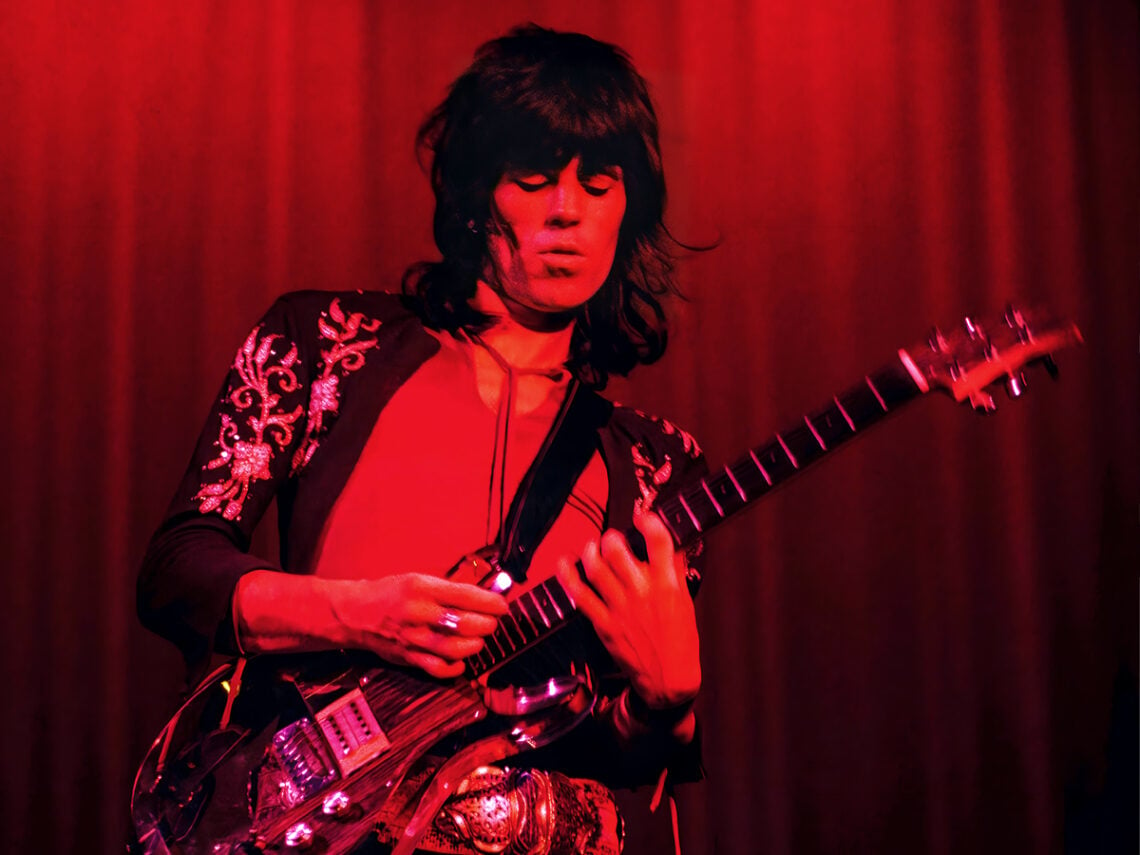
“Menacing”: the two musicians who loved Keith Richards’ guitar sound

On the surface, it doesn’t appear as if Keith Richards’ guitar playing offers anything especially detailed, revolutionary or unusual. Known for a smooth lead guitar style and smashing out hard rhythm guitar riffs, The Rolling Stones’ long-serving songwriter was exceptionally good at making simple ideas stand out and never chose to overcomplicate his style with unnecessary frills. As long as the basics were there, Richards knew what he needed to do to make his songs grab attention.
Yet, despite there not being much about his guitar playing that seems particularly virtuosic, he’s regarded by many of his peers to be among the greatest guitarists of all time, and there are just a few simple tricks that allowed him to elevate a number of his songs and have since been adopted by a number of other guitarists. While not employed in all of his work, there are a number of songs in The Rolling Stones’ catalogue that make use of Richards’ straightforward innovations, and the impact that they had on the sound is something that his fellow guitarists still marvel at.
The tricks, according to Richards himself, are that “there’s five strings, and the bottom string goes off,” and then after that, “you tune the rest of the strings to the chord of G.” This open tuning can be heard on a number of Stones hits such as ‘Start Me Up’ and ‘Brown Sugar’, and the result of this allows him to obtain a punchier sound and greater freedom in his arm movement, suiting his groove-oriented style of play.
However, Richards isn’t the only guitarist who has used this tuning, nor was he the first. A number of blues musicians that Richards was influenced by also used the same tuning, and he was supposedly first encouraged to make use of this thanks to a top from Ry Cooder.
“There’s something about the intonation of the notes that’s almost mystical,” Richards says of the sound he gets from using this tuning and string configuration. “It hits in the right way at the right moment.” Speaking further about his reasoning for playing in this unusual way, he likened his composition process using the setup to an artist and their canvas.
“Silence is a canvas for a musician,” he explained, “and it’s how much you fill in the canvas and how much white you let through, which is something you really don’t know. It’s almost intuitive – you do it by feel, really, on instinct.”
Among those who praised Richards’ sound was Tom Waits, who couldn’t quite put his finger on why it had such a mysterious quality to it despite just being a simple alteration to the guitar’s setup. “That tuning of his, there’s something menacing about that,” said Waits. “Just to weave that in the centre of the groove.” Waits wasn’t alone in being an admirer of this method, and Eagles guitarist Joe Walsh also claimed that “every guitar player in the world” was stunned by how he achieved such a sound with such a small trick.
“That is a brilliant guitar sound,” Walsh concluded. “It says so much with so little. Holy smokes!”
