


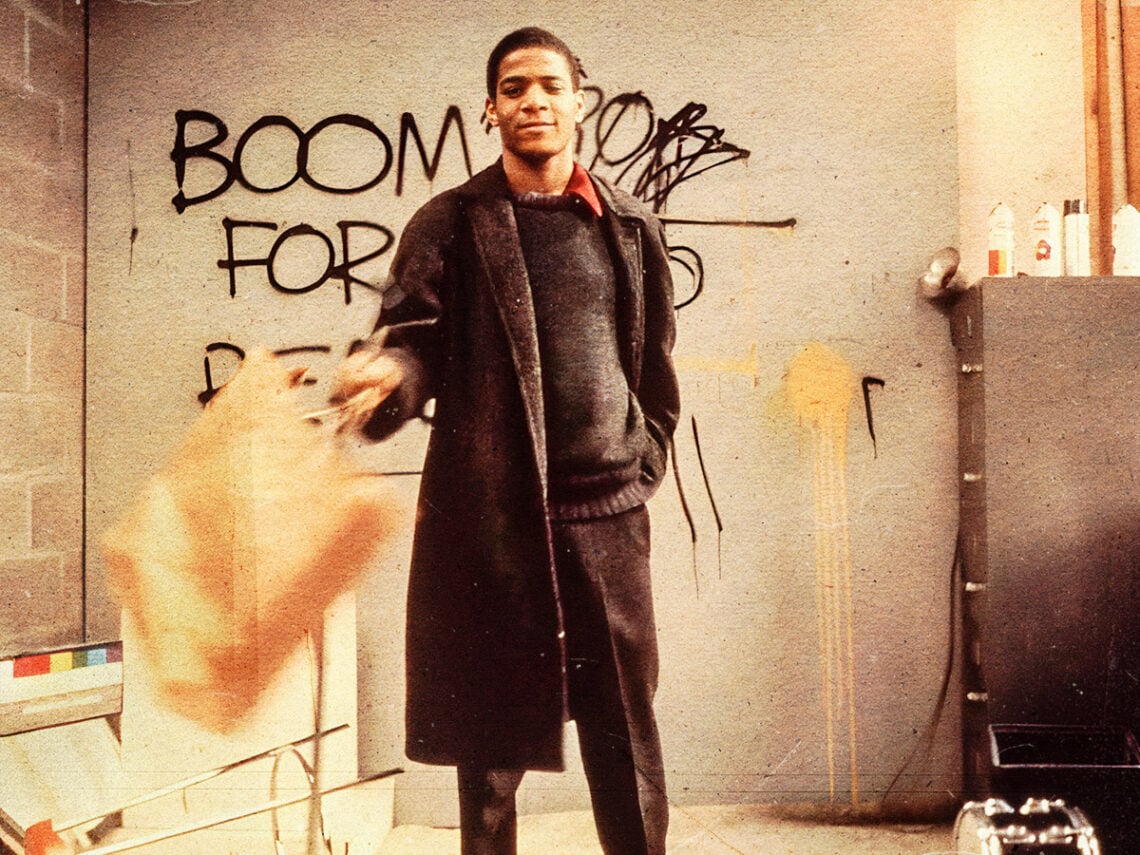
TV Party: The anarchic public access show featuring Chris Stein and Jean-Michel Basquiat

Debbie Harry is on a pogo stick, Fred Schneider is cracking awful jokes while wearing a tall pointy hat, and Robert Fripp is letting loose and joking around. These are all things you’d love to see, right?
If you lived in New York during the late 1970s and ‘80s and found yourself awake past midnight on a Tuesday, you might have been lucky enough to have witnessed them take place. Each of these events happened on Glenn O’Brien’s TV Party, an anarchic chat show that covered the underground of the New York scene and beyond throughout its four-year stint on public access station Manhattan Cable. While few people still discuss its existence in the modern day, its influence still remains strong, and the way in which it brought together cultural figures from all over the musical and artistic landscape for an hour of daft fun.
Glenn O’Brien had been successful as a writer and editor for Andy Warhol’s Interview Magazine and as a member of Warhol’s Factory during the early part of his career, and after an appearance on the similar Coca Crystal variety show that was also a public access broadcast, decided that he would have a go at setting up a show with a similar ethos. Calling out to some of his closest friends in the New York art scene, he quickly established a team who would go on to accompany him throughout the brief period TV Party spent on the air.
Sitting alongside O’Brien as co-host was Blondie’s Chris Stein, a longtime friend of his who was not only experiencing large success with his band at the time but was also a respected record producer and photographer who had connections with lots of acts that were performing at iconic venues such as CBGB’s and the Mudd Club. Also present were the likes of filmmaker Amos Poe as the show’s director, former Warhol collaborator Walter Steding, who headed up the in-house TV Party orchestra with his avant-garde violin playing, and artist Jean-Michel Basquiat, who would regularly operate the live on-screen effects while also handling some of the phone calls from viewers.
Described at the head of the show as “the television show that’s a cocktail party, but which is also a political party,” there was little scripted structure to TV Party, with large amounts of the show being built around spur-of-the-moment decisions and the harebrained ideas of O’Brien. Everyone present would either join in on the fun or add their own unique slice of bizarro humour to the programme, choosing to follow their own beat or inhibitions during impromptu musical freakouts and off-the-wall interviews. Many of the guests that appeared on the show were important figures in the underground at the time, with James Chance and the Contortions and Klaus Nomi among those who graced the studio, but bigger names such as The Clash and David Byrne also made appearances too.
“It was never real heavyweight A-celebrities,” claimed Stein in the 2005 documentary TV Party that looked back retrospectively at the history of the show. “We never had anybody like Mick Jagger or anything, but we were close to it.”
Characterised by its black and white image and abstract teleprompter messages that would regularly adorn the screen, it was always clear that being flashy and big budget was never an ambition for TV Party, and the creative minds that they invited on the show were often ones who were outsiders that stood little to no chance of achieving mainstream success. Bands such as DNA were too abrasive and angular to find their way onto regular mainstream television, and performers such as the Victorian dandy cabaret act David McDermott were far too strange for your average audience to wrap their heads around.
The team behind the show and the guests they invited on were always uninhibited, and so were the viewers who called in to hurl abuse freely at whoever would listen. Actively encouraged by the hosts, this kind of anarchic disobedience for any sort of rules or regulations about what was okay on the show was a common feature throughout. “If we had had our own studio situation like Colbert or Fallon nowadays,” Stein told W Magazine in 2017 after O’Brien’s death, “It would have been even crazier. As far as I know, there still aren’t any other TV shows where everyone smokes weed on camera – even though there should be.”
While it didn’t last long, its cult status cannot be ignored, and it caused several shockwaves throughout the art scene in New York and beyond for several years after. Speaking to Vice about the history of the show in 2014, O’Brien summed it up best himself: “We had a good run fucking up television… cursing, getting high, advocating subversion, and being party desperados.”
