


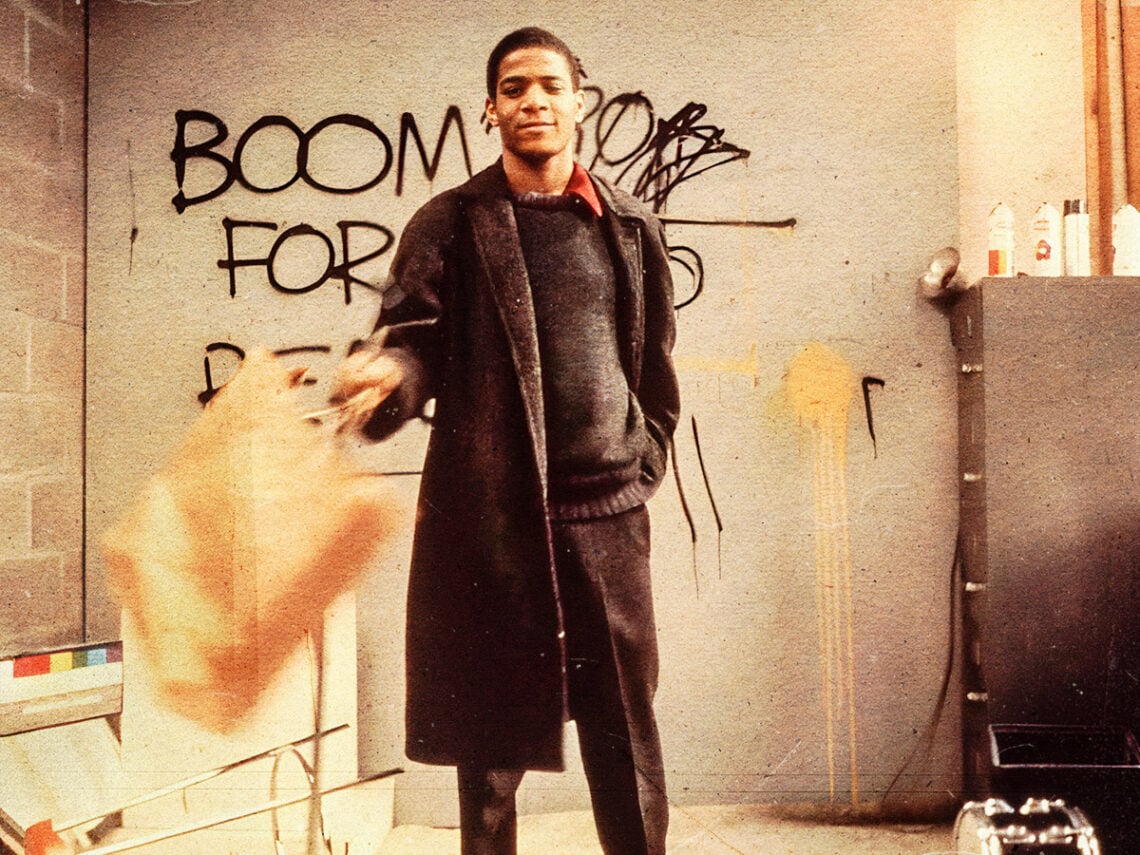
Gray: The New York experimental band founded by Jean-Michel Basquiat

New York City is known the world over for its yellow taxis, countless skyscrapers, as well as cheap and abundant pizza. Aside from all that, though, the city has always fostered a particularly interesting cultural sector. Everybody from Edward Hopper to Patti Smith has left their artistic mark on the city over the years, and the mid-to-late 20th century was a particularly vibrant time for the region, largely thanks to the pioneering work of figures like Jean-Michel Basquiat.
Basquiat has been destined for artistic greatness from a very young age, but he first made his mark on the city in quite a literal sense when he became involved in the blossoming graffiti scene of late-1970s Brooklyn. Tagging up his home borough might have allowed Basquiat to flex his artistic muscles, but his work would achieve much more widespread acclaim during the 1980s when he became a leading figure within the city’s neo-expressionist movement.
His rise to fame within this movement would see him work alongside such legendary artists as Andy Warhol and earned Basquiat a spot in the art history of New York City. However, a lesser-known aspect of his career comes with his keen interest in experimental music. Particularly during the 1970s, New York was experiencing an incredibly inventive time for music, with the advent of punk rock on the Upper East Side and the early roots of hip-hop kicking off in the Bronx. Basquiat had a front-row seat to it all, and even started his own band in 1979.
In the spring of 1979, artist and filmmaker Michael Holman hosted a party meant to celebrate the importance and impact of the New York graffiti culture. Basquiat attended the gathering, revealing his – up to that point – secret identity. The story goes that the pair hit it off instantly, and before the night was over, Basquiat asked Holman if he wanted to start a band together. Initially naming themselves Test Pattern, the band cycled through a variety of short-lived names, eventually landing on Gray after one of Basquiat’s favourite books, Gray’s Anatomy.
If you have ever seen Basquiat’s artwork, you will likely be unsurprised by the experimental nature of his musical output. Gray’s sensibilities were heavily influenced by the New York no-wave scene dominating the underground during the late 1970s. A reaction against the banality of punk and the commercial complacency of disco, no-wave was one of the most important movements in the history of experimental music.
The band’s initial run only lasted between 1979 and 1981, but during that time, Gray became regulars at iconic New York venues like the CBGB club or Max’s Kansas City. Not only were Gray among the most interesting and prominent groups of the no-wave movement—spearheaded by figures like Lydia Lunch and James Chance—but this delve into the city’s music scene also provided Basquiat with a great deal of artistic inspiration.
According to Holman, who has since reformed the band for a number of live appearances, the early days of Gray were characterised by “angry, blaring, loud, confrontational music,” explaining, “Sometimes it was kind of mellow too, but it was very minimal.” That was the beauty of no-wave: seemingly anything went, it was all about experimentation and artistic vision, both of which Basquiat had an abundance of.
When Basquiat began to become known as being at the forefront of the neo-expressionist movement, his time to make defiantly experimental no-wave music drastically reduced, and the band eventually split up in 1981. However, the experiences he gained while enmeshed within the world of no-wave certainly impacted his later work and career as an artist. The Gray story simply adds another layer to the endlessly complex figure that was Jean-Michel Basquiat.
