


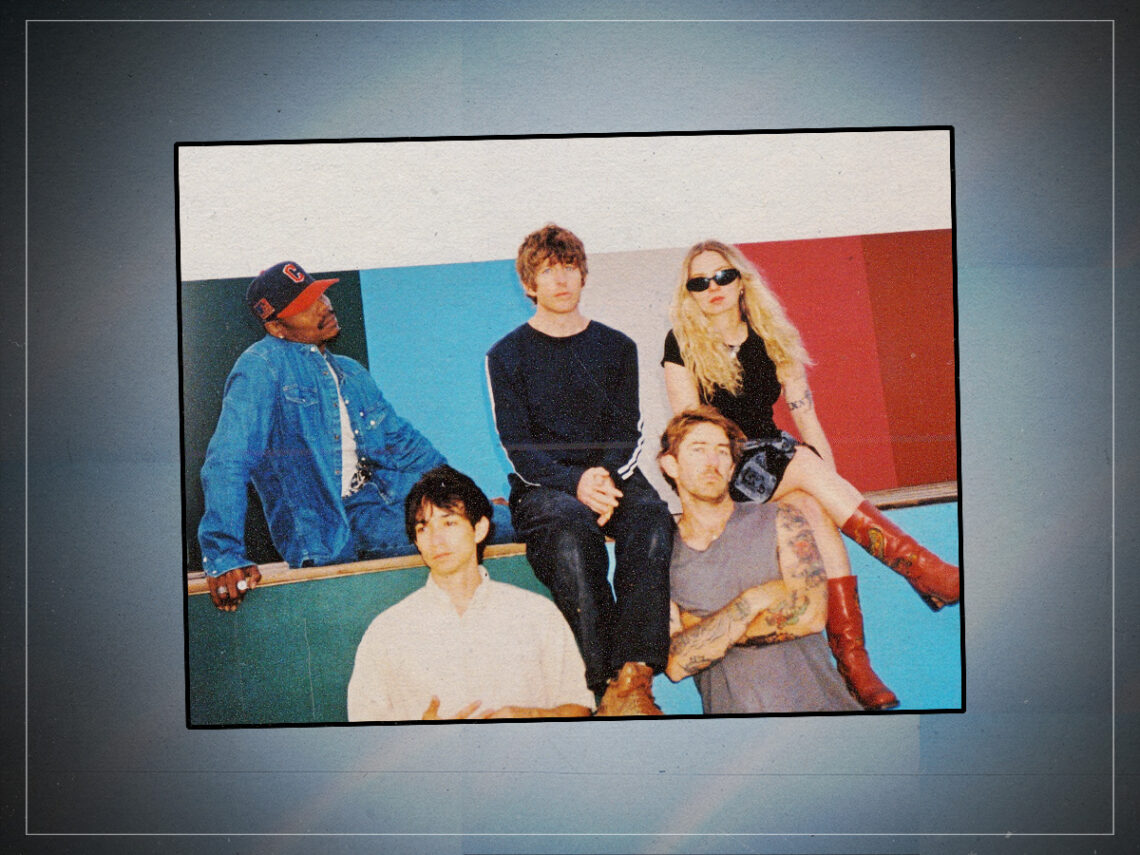
Why did it take Turnstile a decade to reach the top?

Hardcore was never ‘supposed’ to become mainstream, but despite its stubborn resistance, the genre has found unlikely heroes in Turnstile, the Baltimore-based band that steadily grew into heavy music’s latest favourite. But their ascent to the top was no miracle.
Formed in 2010 out of Baltimore’s hardcore scene, Turnstile faced the early challenge of persisting in a world that perhaps did not want to see them succeed.
An anti-establishment ideology is rooted in the genre’s ethos, and it holds tight to its DIY approach with unwavering ambition. Hardcore is not intended to be palatable to the average listener. Taking notes from the likes of Ian MacKaye’s Minor Threat and later, post-hardcore band Fugazi, or fellow DC hardcore legends Bad Brains, it is supposed to find those who resonate with its cathartic aggression. It is in this that Turnstile formed, but from the beginning, they were different from their peers.
As frontman Brendan Yates recounts to Anti-Matter: “I think, fortunately for me, after a few years of getting into hardcore, I realised it’s cool to be yourself and you don’t necessarily have to be hard. Because I think, going in at first, the initial black-and-white perception is that this is not a place for you to be vulnerable.”
Generations of hardcore fans, young and old, saw Turnstile as possibly too vulnerable, dissecting their lyrics, sonic influences and even their clothing choices to separate them from the hardcore scene. But the band persisted, deciding that to grow as a band, freeing themselves from preconceived standards, would be their truest form of authenticity.

“Anytime I got those glimpses of bands who can present that kind of [hardcore] aggression,” says Yates, “But also have a human approach of being—not needing to have some sort of guard up—those, at an early age while getting into hardcore, were appealing to me.”
In Turnstile’s early EPs, 2011’s Pressure to Succeed and 2013 follow-up Step 2 Rhythm, the makings of a hardcore classic are evident: relentless drum beats, wailing vocals and lyrics that tackle a disdain for authority. What immediately sets Turnstile apart, though, is their experimentation. Every Turnstile song, from their earliest work to this year’s latest, Never Enough, combines ‘traditional’ hardcore with an unexpected element. Whether it be a funk bassline, an electronic groove, or another invention, Turnstile’s discography exists on its own plane.
So, what changed?
Maybe the root of Turnstile’s slow rise to fame is due to their inherent refusal to be defined. Evident from their discography, each member has tastes that reside outside of hardcore. They are not genre purists by any means; instead, they envision possibilities for the genre to expand beyond its roots. While their popularity steadily grew, it was when they joined forces with Dev Hynes – known as Blood Orange – that they became recognised seemingly overnight. This collaboration is not too surprising if you know of Hynes’ roots in hardcore. However, he found his groove outside of the genre, crafting Blood Orange’s sound in a landscape of disco, funk, psychedelia and R&B. Thus, what resulted from their sessions was two songs off of Turnstile’s third album, 2021’s Glow On, ‘Alien Love Call’ and ‘Lonely Desirez’.
Simply put, Glow On is a masterclass in genre fusion. The list of influences across each track is endless, yet their roots in punk, sonically and lyrically, remain, birthing a whole new strain of hardcore. This evolution is heard similarly on Never Enough, this year’s increasingly experimental follow-up that also features Hynes on one of its singles, ‘Seein’ Stars’.
Turnstile has taken on the feat of keeping the spirit of hardcore alive, while giving it breathing room to grow, and they have done so in a genuinely exciting way. True innovation is found in a band like Turnstile; listening to them, you never know what you’re going to hear next. Shuffling their discography, you could be two-stepping one minute and crying the next, but that’s what makes them cool. Their appeal goes back to that signature vulnerability that Yates thankfully found in himself early on, and that which each member leans into both on stage and in the studio.
