


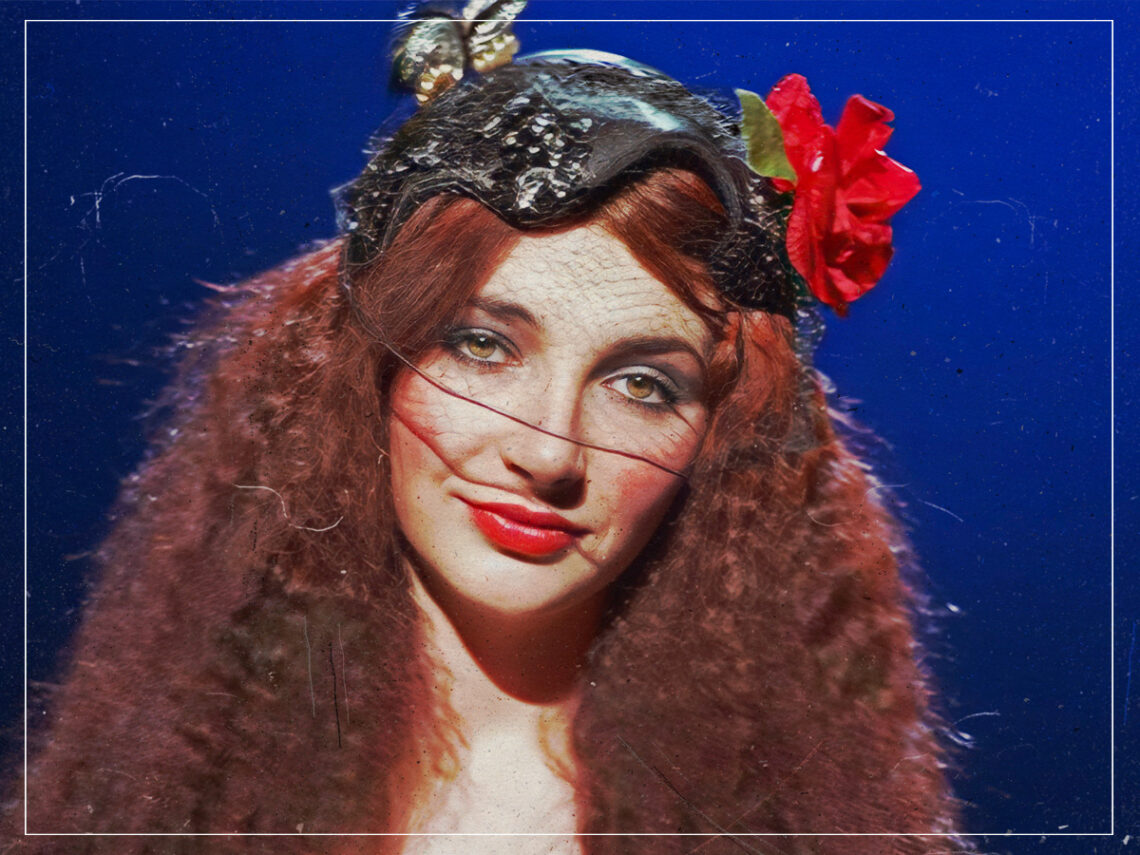
‘Army Dreamers’: the turning point in Kate Bush’s discography

It can’t be overstated what a unique presence singer-songwriter Kate Bush was when she first landed on the charts at 19 years old. Boasting the first female-penned UK number one with her debut single ‘Wuthering Heights’, 1978’s The Kick Inside dazzled with its inventive baroque compositions and artful orchestral rock, heralding a fiercely original voice that would prove to be one of the following decade’s most influential artists.
Yet mere months after Bush’s first album, label EMI pushed for a follow-up. Reluctantly collating pieces she’d sketched before her debut, Lionheart was dropped later that year to lacklustre critical reception that deemed her sophomore effort an uninspired retread. Save personal satisfaction with single ‘Wow’, Bush largely agreed with them, frustrated with the rushed production and keen to ensure her awaited third LP would explore new creative terrain.
Following a short but theatrically intense tour of Europe in 1979, Bush joined former Genesis frontman Peter Gabriel for the recording sessions of 1980’s Peter Gabriel 3: Melt (also known as Melt), contributing backing vocals for ‘No Self Control’ and ‘Games Without Frontiers’ at his Bath home studio. Gabriel was the first UK musician to encounter the pioneering digital synthesizer Fairlight CMI, a revolutionary piece of hardware that acted as a sampler and Digital Audio Workstation rolled in one, complete with a light pen touchscreen, QWERTY keyboard, and floppy disk save functions—an extraordinary innovation for 1979.
Gabriel was gobsmacked. Engrossed with the new aural possibilities at his disposal, Gabriel coughed up the hefty £18,000 price tag—the same cost of an average house at the time—and helped establish Syco Systems to distribute the Fairlight to his British music contemporaries from John Paul Jones, Richard Wright, Trevor Horn, and Bush.
A new world of sensory possibility had now opened up. Recruiting Landcape’s Richard James Burgess and John L Waters for programming assistance, Bush carted her Fairlight to Abbey Road Studios to begin work on a new LP slated for the 1980s. Able to record organic sounds and sculpt the samples to strange and new ethereal planes without compromising the authenticity of the instruments or noises captured, Never for Ever marked a new era for Bush. It was an immediate sonic leap towards the ethereal dreamscapes that would enchant on later albums.
While ‘Babooshka’ contains a sampled glass break courtesy of the Fairlight, it’s the heartwrenching waltz of ‘Army Dreamers’ that truly established Bush’s new creative direction. Studying the War Machine’s devouring of working-class life through the lens of a grieving mother, the track documented an intriguing evolution of lyrical reportage with a firmer footing in reality and a pop offering that sounded unlike anything she’d released yet or what was in the charts around her.
Deploying the Fairlight’s keyboard-mapping functionality, Bush and the studio team recorded the cocking of her older brother’s gun collection for its distinctive firearm percussion and the haunting cello likely the Fairlight’s own SOLOSTR2 sample from its HISTRING sound bank. It proved to be an incredible piece of work, demonstrating how emerging digital innovations need not impede or compromise creativity in the right hands.
The Fairlight would briefly dominate the 1980s’ pop climate before being supplanted by the cheaper Synclavier and E-mu Emulator. However, Bush still stuck to the tools she knew and loved, relying ever more on its frontier of new sounds for The Dreaming and Hounds of Love. In 1983, Bush revealed to Electronic Soundmaker, “I find it’s very exciting to use natural sounds rather than using a synthesizer…and getting the Fairlight has been revolutionary for me and my work.”
