


The Mrs Mills Piano: the story of Abbey Road’s most famous instrument

London’s Abbey Road Studios isn’t just one of the most famous music production facilities in the world; it’s also the oldest. Back in 1929, when audio was still being captured with a wax disc and wooden horn, The Gramophone Company sought to establish a permanent site for state-of-the-art recording.
Spotting a nine-bedroom property with a massive garden for sale in St John’s Wood, the Georgian townhouse was snapped up for £16,500 (nearly £900,000 today). After two years of development, the studios were opened to Edward Elgar’s ceremonial performance of ‘Land of Hope and Glory’ with the London Symphony Orchestra.
With an impressive roll call of artists who’ve recorded at Abbey Road’s three-room studios, from Pink Floyd, Fela Kuti, Radiohead, and Kate Bush, it’s The Beatles who the studio is most associated with. Recording virtually all of their material at what was then called Electric and Musical Industries (EMI) with in-house producer George Martin and naming their 1969 swansong after its street, Abbey Road has become a major tourist spot and shrine for Fab Four fans around the world, writing messages on its exterior walls and bothering cabbies on the iconic zebra crossing nearby.
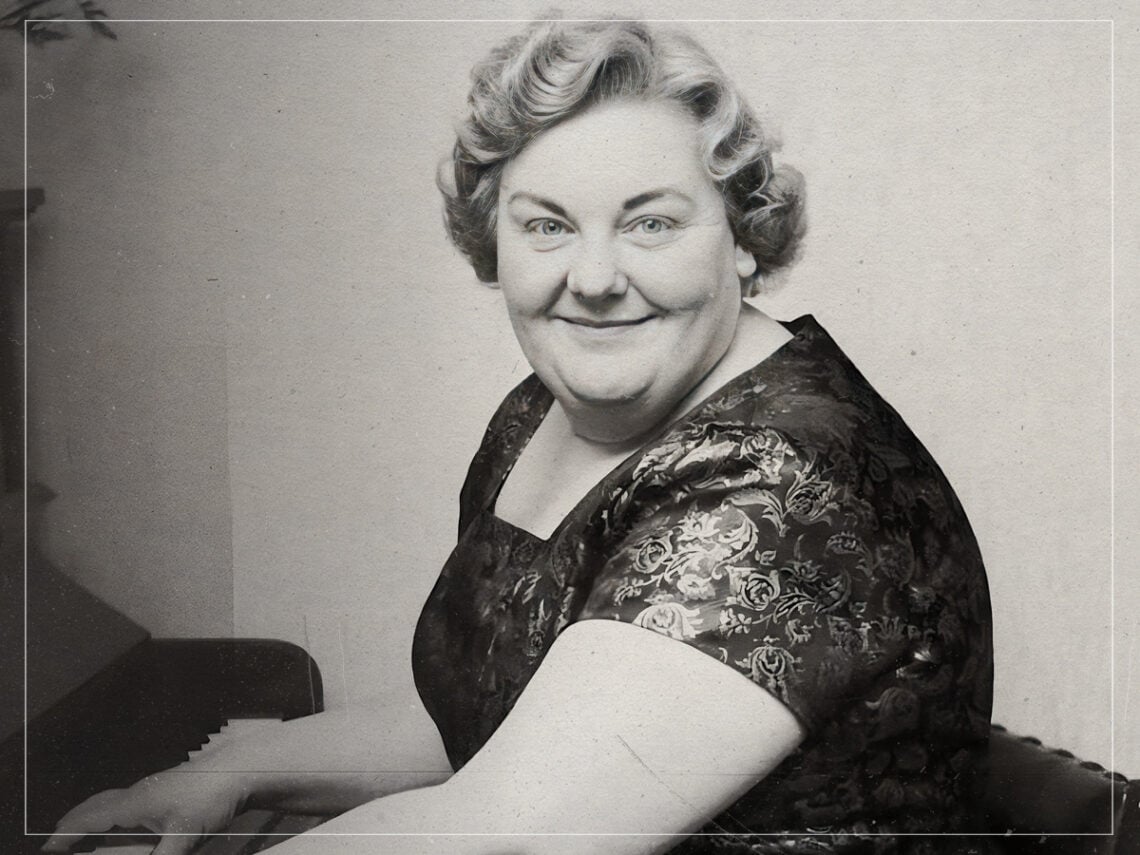
One lesser-known name that’s formed an essential part of the Abbey Road story is knees-up sing-along pianist Gladys Mills. Performing honky-tonk at functions in the evenings around her superintendent duties at the Paymaster General’s typing pool, Mrs Mills was spotted by a talent scout bringing the roof down at Essex’s Woodford Golf Club with her jolly repertoire of music hall numbers and variety show standards. With future Rolling Stones co-manager Eric Easton acting as her agent, she cut her first record, ‘Mrs Mills Medley’, entering the UK Top 20 in 1961.
The distinctive ragtime piano sound as heard on Mills’ records came from Abbey Road, however, where she recorded the vast majority of her LPs. Owning a 1905 Steinway Vertegrand since the early ’30s, in-house engineer Stuart Eltham arranged for the piano to have its hammers hardened with lacquer to emulate the ‘old’ style effects of tack piano reminiscent of stride ivory tinklers like Fats Waller or Mary Lou Williams. Its extensive use by Mills afforded the piano the affectionate nickname ‘Mrs Mills Piano’, and it is often used to this day for its nostalgic sonic quality.
‘Mrs Mills Piano’ can be heard on several Beatles recordings. ‘Penny Lane’, ‘With a Little Help from My Friends’, and ‘The Fool on the Hill’, all Paul McCartney pieces dabbling in the quainter, eccentric end of UK psychedelia make prominent use of Mills’ metallic keys. In addition, John Lennon’s heady, Nyingma-inspired ‘Tomorrow Never Knows’ that closes Revolver unleashes a blast of the Steinway’s trippy ragtime in the lysergic cut’s final few seconds.
Mills was busy throughout her unlikely late career change, releasing a steady string of records with fantastically garish covers, covering contemporary hits including ‘Yellow Submarine‘, and twice appearing on The Morecambe and Wise Show performing a medley of her songs. While The Beatles were crafting their self-titled double LP, Mills was touring North America and finding further success with the UK’s overseas immigrants in Canada, Australia, and Hong Kong. Still riding the wave of her second life as a music entertainer, Mills died in 1978, aged 59.
In a 2021 collaboration with Spitfire Audio, Abbey Road released the Mrs Mills Piano plug-in for digital use, meticulously sampling each note for would-be producers wanting that ‘old-time bar’ feel to their work. Referenced on Eddie Vedder’s solo LP Earthling and her associated piano featured on a 2024 episode of Doctor Who, Mills’ knees-up legacy wound its way in places she could never have expected.

Never Miss A Beat
The Far Out Beatles Newsletter
All the latest stories about The Beatles from the independent voice of culture.
Straight to your inbox.