


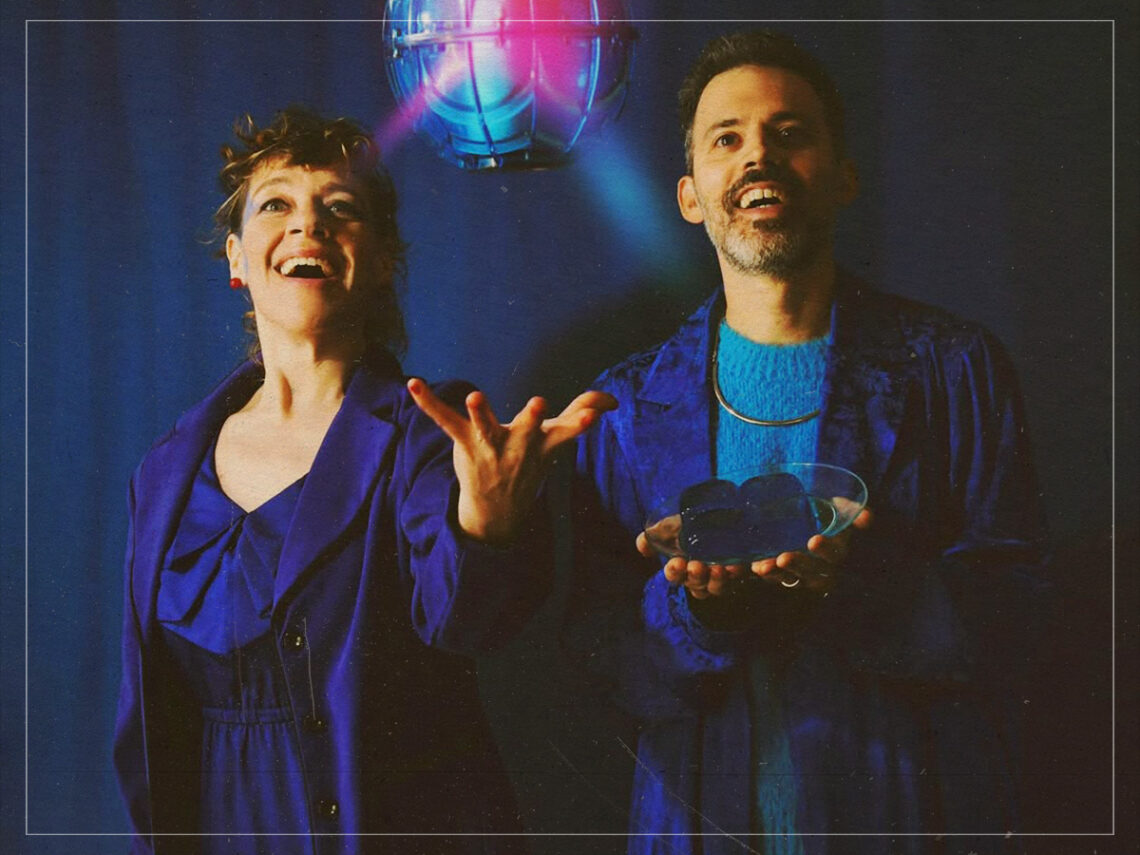
Tune-Yards – ‘Better Dreaming’ album review: Another vibrant protest

THE SKINNY: Initially formed as the solo project of Connecticut multi-instrumentalist Merrill Garbus, Tune-Yards have become a staple of experimental indie music over the last decade and a half, fusing together elements of funk, disco and music from various cultures across the globe. While the earliest releases, such as the debut album BiRd-BrAiNs, were recorded on a shoestring budget using dictaphones and lo-fi techniques, their sound has gradually become more opulent and featured a wider range of instruments.
It was with their second album, w h o k i l l, that the project first garnered mainstream attention. Singles such as ‘Bizness’ and ‘My Country’ are shining examples of their expansive sound becoming more daring, as the recruitment of bassist and producer Nate Brenner helped flesh out Garbus’ zany concepts and make them more technicolour.
They could easily have been compared to the scores of other experimental indie acts that were emerging from the US at the same time, such as the more psychedelic Animal Collective or the knotty riffs and vocal hocketing of Dirty Projectors’ late-2000s work. However, there was something distinct about what Tune-Yards (then irritatingly stylised as tUnE-yArDs) were offering, and the immaculate projection of Garbus’ vocals was a true gem to behold.
In more recent years, their releases have become a lot more infrequent, with Garbus and Brenner having recently welcomed their child into the world, and with this, some of the concerns of the band have shifted towards becoming more introspective rather than rallying directly against the ills of the world. The questions they’re asking are more to do with how they as individuals can make a bigger impact rather than summoning the citizens of the world to do better.
The music is still as vibrant as it was before, although some of the introspection is translated into more downcast songs on Better Dreaming. That doesn’t mean it isn’t still a riot to indulge in, and it’s always reassuring to know that the duo still have plenty of passion for the project and is allowing it to evolve.
For fans of: Radical progressive politics, striving for something meaningful, chunky basslines.
A concluding comment from my shift key: “You mean all the titles are written in standardised title case? Can I have a bit more work, please?”
Better Dreaming track by track:
Release Date: May 16th | Producer: Merrill Garbus & Nate Brenner | Label: 4AD
‘Heartbreak’: It’s a tried and tested song subject, but Garbus uses it as a tool to empower here rather than wallow in misery. Her voice is as radiant as ever on the opening cut, and the duo use a skittish rhythm over the top of Brenner’s ever-undulating basslines to emphasise the up and down nature of experiencing something so painful yet freeing. [4/5]
‘Swarm’: Less melodicism on this track, where Garbus uses her voice as more of a rhythmic tool in the verses, but Wye Oak’s Jenn Wasner and Sylvan Esso’s Amelia Meath come in to provide some additional harmonising. It’s another track where Garbus leans into her radical politics through her lyrics, something which she is proud to always be learning from and allowing to grow in Tune-Yards’ music. [3.5/5]
‘Never Look Back’: Inspired by a real event of male abuse of power that Garbus endured, we’re given more minimalist synth-funk grooves that feel quite distant from the lo-fi sound of the group’s past. It’s the lyrical content that rallies against authority figures and holds up a mirror to the ills of society that is the more common thread for any Tune-Yards fans of old. [3/5]
‘Suspended’: Playful and experimental, this song is built around a simplistic piano motif and is more vibrant in tone compared to the previous two songs. Of course, the band was always going to mature in some regard, but the occasional callback to older styles is welcome. [4/5]
‘Limelight’: Garbus herself acknowledges how the themes of celebrating freedom don’t align particularly well with the genocidal atrocities that are happening across the world currently, but it’s also worth holding out hope for better days in our art. The disco grooves and joyful chanting are the exact pick-me-up that we need in dark times, no matter how little the song might address global affairs compared to the rest of the record. [4/5]
‘Get Through’: Very sparse in its arrangement, this is one of the darker moments on the record, where Garbus is more lamentful in her vocal delivery. Her focus on her experiences of motherhood and raising a child in the torrid geo-political landscape is something that she agonises over, and this is perhaps more lyrically cathartic than the previous song, if slightly less musically rewarding. [3.5/5]
‘Better Dreaming’: The album’s centrepiece and title track is a much slower song, and the first to have been written in the process. The sluggishness of the creeping bassline and processed drum beat is eventually joined by a wash of psychedelic and disorienting sounds, giving it that dreamlike quality as Garbus hopes for change to come to the world. [4/5]
‘How Big Is The Rainbow’: A song of advocacy for our queer and trans siblings, the message of the song is clear and simple: how much are you prepared to let people live their lives and be free to exist as the true versions of themselves. Just as the other songs of protest on the record have a colourful touch, the percussion work on this song is where the real cascade of colours comes through. [3.5/5]
‘See You There’: With some sumptuous vocal harmonies and a pulsating bass, it would’ve been incredible to see this song develop more, but it cuts off a little earlier than it ought to. Plenty of promise in what is ostensibly a song that doesn’t seem finished. [3.5/5]
‘Perpetual Motion’: This is the most ukulele-heavy song on the album, a feature that used to be such a prominent part of the band’s sound in the past. However, it’s not used to the same twinkling effect that most would associate with the miniature guitar instruments. It’s got a far more brooding and ominous presence when Garbus brings it into play here. [3.5/5]
‘Sanctuary’: Again, this is a largely spoken-word track to close the album, which is a shame, because melody is the glue that holds a lot of Tune-Yards songs together. We do get some rejoiceful harmonies toward the end, but it doesn’t quite feel like the emphatic closer it could’ve been if the choir had come in sooner. [3/5]

Never Miss A Beat
The Far Out New Music Newsletter
All the latest New Music from the independent voice of culture.
Straight to your inbox.