


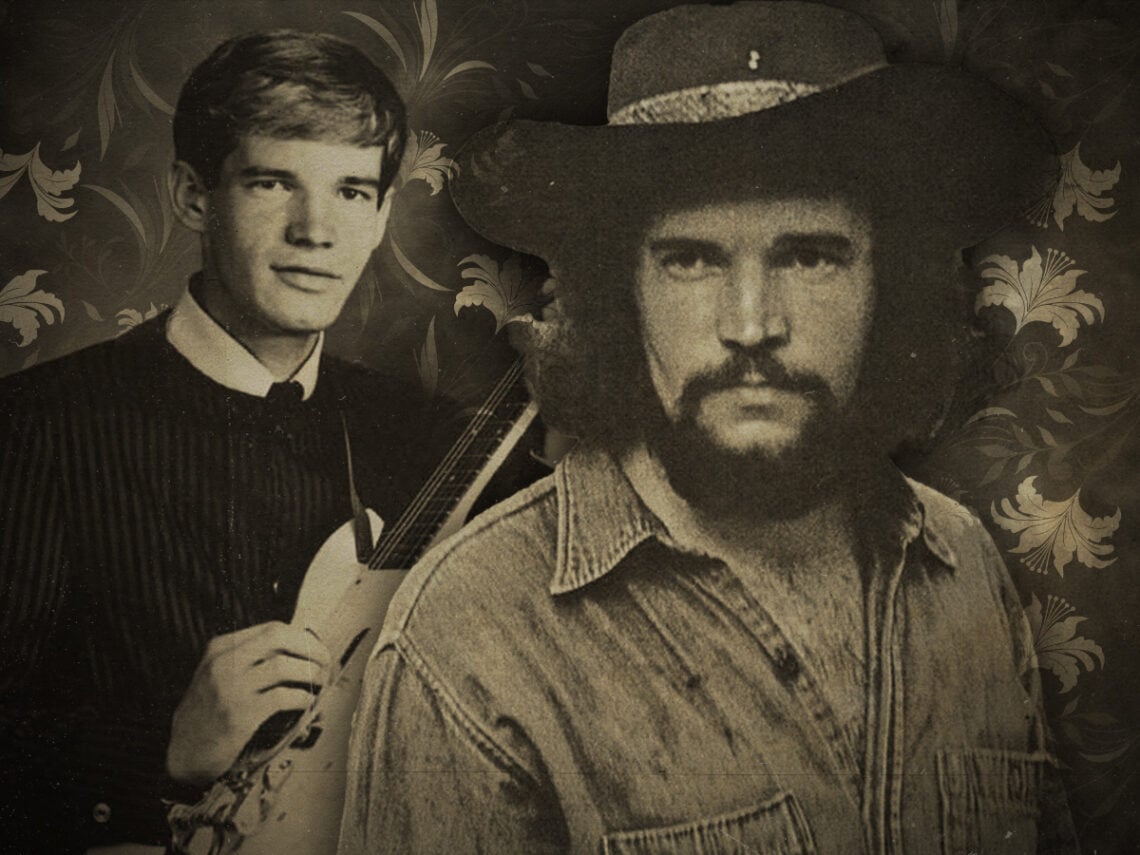
Travis Wammack: The fuzz-toned life of one of rock’s great, unheralded guitar gods

In 1964, not long after The Beatles rather famously appeared on The Ed Sullivan Show, a 19-year-old kid from Walnut, Mississippi, found himself on the very same New York stage, improbably playing guitar as part of the backing trio for another British Invasion outfit, Peter and Gordon, the UK’s answer to The Everly Brothers.
It was Travis Wammack’s job, in a sense, to provide Peter and Gordon with the authentic Southern roots sound they were looking to smuggle back into the country that had invented it. Earlier that year, Wammack’s pioneering fuzz-tone guitar instrumental ‘Scratchy’ had become a charting hit in America, and his label chief, former Sun Records guitarist Roland Janes, had now paired him up with the British pop duo as a way to further showcase his chops for a broader audience.
You might not normally call it a fish out of water situation, but Wammack was famously more of a snake hunter than a fisherman, and he threw himself into the deep end with little hesitation.
“That was the time of The Beatles, and Peter and Gordon had the number one record in the country [the Lennon-McCartney penned ‘A World Without Love’] when I toured with them,” Wammack told the Daily Press in 1975, “Paul McCartney was dating Peter Asher’s sister, Jane Asher, and…there were mob scenes everywhere.” He also remembered that Gordon Waller, “the freak of the duo”, used to enjoy uttering profanities into the microphone when the screaming from the crowd was at its loudest.
As the classic Southern swamp rat and good ol’ boy, Wammack, who recently died at the age of 81, took the madness of his rock and roll life in stride, retreating to Mississippi between tours or Memphis studio sessions to go hunting copperheads and water moccasins with a slingshot, using their skins as headbands and guitar straps. If he was old school in some of his primary hobbies and sensibilities, though, Wammack was something of a savant when it came to high-tech innovations on the electric guitar.
The aforementioned ‘Scratchy’, while seen as a novelty record of sorts in 1964, was actually recorded two years earlier, and was at least five years ahead of its time sonically, powered by a distortion-heavy sound Wammack had created through his own experiments.
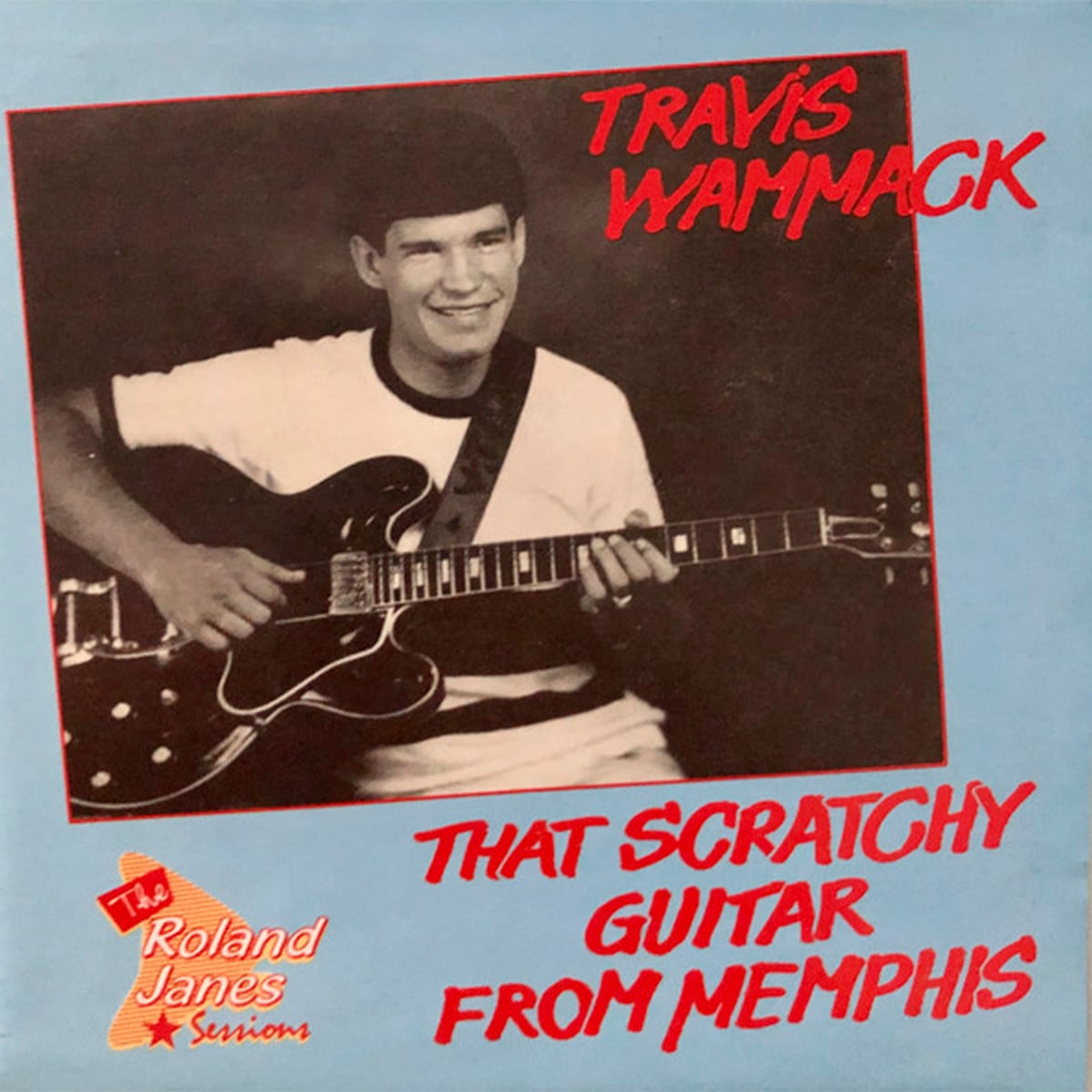
“I overpowered an old tape recorder that I had with my Fender Super Reverb,” Wammack told Vintage Rock in 2021, “I said, ‘Oh, wow! This is the sound!’”
In the studio session for ‘Scratchy’, he used a 1960 Gibson Les Paul, outfitted with a Bigsby and played through his new blaster device. On the same recording, a brief vocal line (Wammack shouting “Blast this fog, anyway!”) was played backwards and spliced into the mix, creating one of the earliest uses of reverse tape on a rock record.
Not everyone heard ‘Scratchy’ and saw the future of music. When Chet Atkins was offered a chance to release the record, he apparently wrote a letter back saying, “This scares me. I’ll pass!”
Once Roland Janes released the single himself on the new ARA label in 1964, though, it was a minor radio hit and also a bolt of inspiration for hundreds of young, emerging guitarists, all competing to be the loudest, the nastiest, the most adventurous. One of those kids was Jimmy Page, who eventually met Wammack several decades later and confessed that ‘Scratchy’ and its B-side, ‘Firefly’, “are the ones that really inspired him to bear down,” Wammack later recalled. Page said that he managed to teach himself how to play ‘Scratchy’, but that ‘Firefly’ had eluded him. Wammack was tickled pink, saying, “What a compliment!”
Not long after ‘Scratchy’ entered the charts, Wammack was approached by representatives from Gibson guitars, who’d developed their own fuzz-tone box and wanted to see if he would endorse it. He plugged it in and immediately shook his head; it was an inferior sound to his own invention. A few months later, though, Wammack was listening to the radio when he realised he should have said “yes” and cashed in on the fuzz trend. “I hear this record, and I go, ‘God, that’s that darn fuzz-tone’. You know what it was? ‘Satisfaction’ by The [Rolling] Stones”.
He was rarely intimidated by other artists or starstruck in the company of established rock legends. After his own brief flirtation with individual success, he settled into a lengthy career as a session player for Rick Hall’s iconic Fame Studios in Muscle Shoals, Alabama, in the late 1960s and 1970s. That era earned him the nickname ‘fastest guitar in the South’, as he added flavour and flourishes to records by everyone from Aretha Franklin and Wilson Pickett to Bobbie Gentry, Mac Davis, The Osmonds, and Little Richard.
The latter collaboration was particularly important to Wammack’s story.
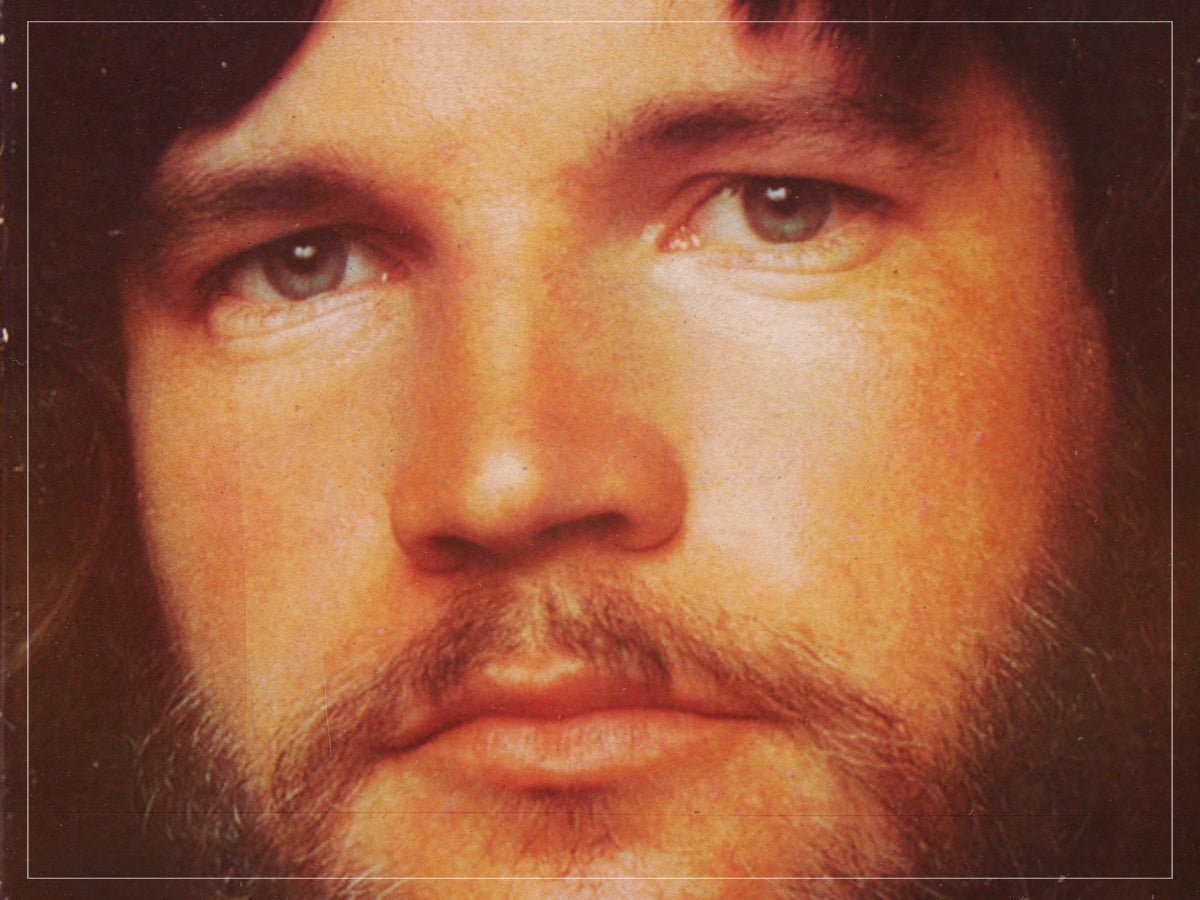
In 1970, on a random day at the office that was Fame Studios, Wammack was completely unaware, as was often the case, of who he’d be recording with. Then, to everyone’s surprise, Little Richard strode into the building, dressed in the complete Little Richard ensemble (make-up, big hair, a pink suit) and joined by a small posse of hangers-on. The rock pioneer was considered an artefact of history at that point, but he was eager to reaffirm his position as one of the greats, and Wammack and his mates were more than happy to lend a hand. The result was The Rill Thing, Richard’s acclaimed comeback record that included a cover of one of Wammack’s compositions, ‘Greenwood, Mississippi’, which the former insisted on singing directly over the latter’s original demo tape of the song.
“He was singing his butt off on that album,” Wammack told the Huntsville Times in 2020, “Oh my gosh. As far as I was concerned, we were backing the king; the greatest rock and roll singer ever”.
When Little Richard went on tour shortly after The Rill Thing sessions, he recruited a couple of the Muscle Shoals musicians, drummer Freeman Brown and bassist Jesse Boyce, to go out on the road with him as part of his band. Wammack was a bit crestfallen at not getting a similar call, but it did eventually come, 14 years later.
“I didn’t hear from [Little Richard] until about 1984,” Wammack told Vintage Rock, “I was in the studio working, and my wife hollered, ‘There’s a guy on the phone that says he’s Little Richard! He wants to talk to you’. So I got on the phone, and automatically recognised his voice.”
From there, the conversation went almost exactly as you might hope it would.
“First thing he asked me was, ‘Travis, do you think my music is the devil’s music?’” 30 years into his career, Little Richard’s off-again, on-again relationship with music still hadn’t resolved this religiously inspired moral dilemma.

“No, Richard,” Wammack responded, “when I hear ‘Tutti-Frutti’ or ‘Good Golly, Miss Molly’, I think of good times”.
Richard seemed pleased with the response, and by the next year, Wammack found himself in London, his first ever trip to Europe, where he was part of the band for yet another Little Richard comeback album, Lifetime Friend.
“We got over there, me and [bassist] Jesse Boyce, and he [Richard] did not like any of the songs that the producer had for him to record,” Wammack said, “So Richard called me, and said, ‘Y’all can write me some good gospel rockin’ songs, can’t you?’ I said, ‘Yeah!’ So that’s exactly what we ended up doing.”
While the distortion-heavy sound of ‘Scratchy’ might be Wammack’s most famous contribution to rock guitar history, he was also an extremely talented technical player; fast, proficient, acrobatic on the frets, a precursor to some of the Van Halen era of magicians that would follow.
“I tell everybody, to play fast, you’ve got to know where you’re going first, on the neck of the guitar. But nobody plays fast like Travis Wammack,” he told AL.com, speaking in the third person like a proper legend, “Since I taught myself, I don’t play no chromatic scales and stuff. Not being smart or anything, but I’ve never copied anybody.”

Never Miss A Tale
The Far Out Classic Rock Newsletter
All the latest Classic Rock content from the independent voice of culture.
Straight to your inbox.