


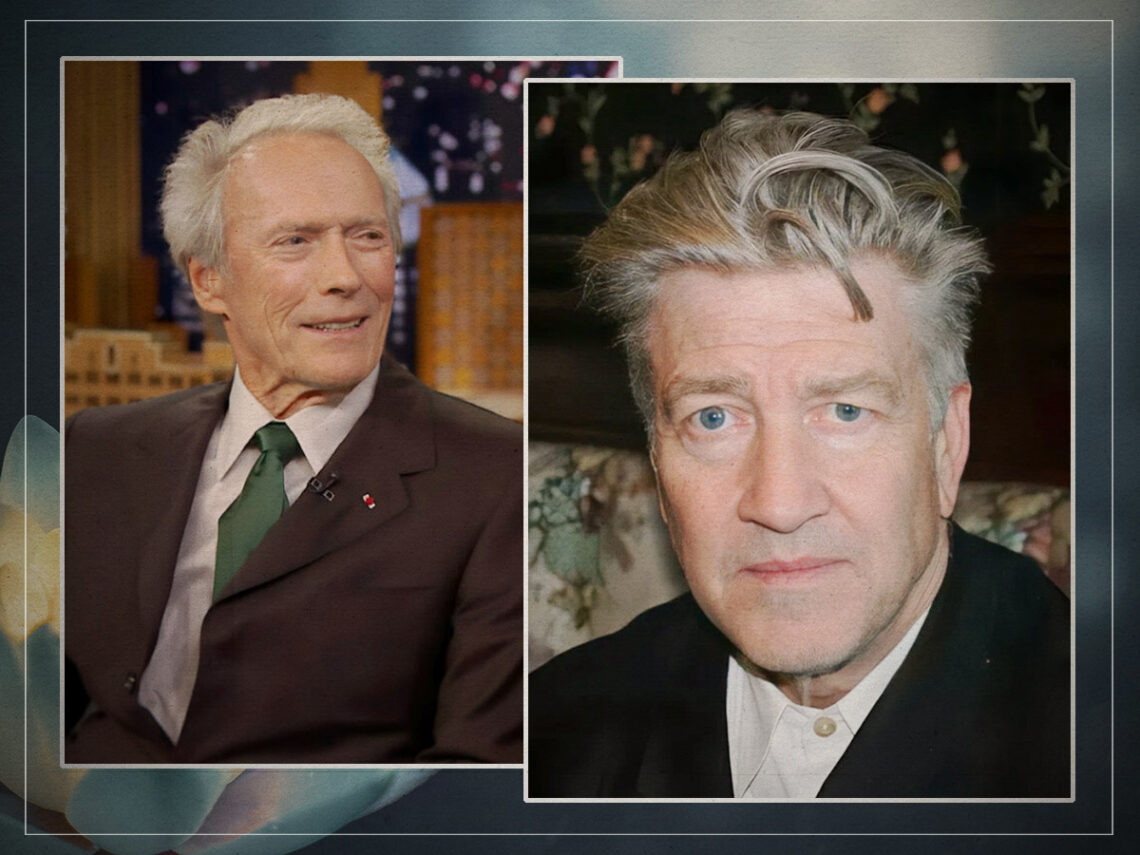
Transcendental meditation: the unique practice that connected David Lynch and Clint Eastwood

When it comes to Hollywood directors, you’d struggle to find two more polar opposite figures than David Lynch and Clint Eastwood. Lynch was an avant-garde surrealist visionary who made movies that invited audiences to decipher their meaning. Eastwood, on the other hand, has always been one of the most straightforward actors and filmmakers in the game. He makes movies that are effective in their simplicity and doesn’t often venture anywhere near the same kind of absurdity Lynch traded in. However, these vastly different artists were connected by one vital practice: Transcendental Meditation. In fact, Eastwood even took part in an event organised by the David Lynch Foundation to promote the technique to war veterans.
Lynch’s history with TM, popularised in the ’60s when the Beatles and the Beach Boys publicly began preaching its virtues, goes back to 1973. At that time, he noticed he may have been developing an anger problem and wanted to address it. He began looking into Maharishi Mahesh Yogi’s technique because, besides helping with stress and promoting relaxation and self-development, Lynch also heard it promoted humans tapping into a higher state of consciousness.
In 2024, Lynch told The Talks, “It was the idea that the human being can gain enlightenment. It was driving me crazy because you hear we only use five or ten per cent of our brains. What is the other part for? How do you get more and more, and what is the most you can get?”
Within weeks of beginning to meditate twice a day for 20 minutes at a time, silently repeating a mantra, the change in Lynch became obvious. “People direct anger at certain people they can get away with,” admitted the Eraserhead director. “I would take it out on my first wife.” However, after two weeks of peace and quiet, she came to her husband and said, “Where is that anger?” He smiled, “She didn’t see it anymore. A lot of times, when people start meditating, they don’t see the change as soon as the others around them.”
Eastwood also picked up TM in the ’70s and first spoke about it publicly during a 1975 appearance on The Merv Griffin Show alongside Maharishi Yogi. Cinema’s most stoic, grizzled tough guy told GQ in 2009 that he was still practising TM twice daily and insisted, “It works great. Because it just gives you a chance to gather your thoughts. I’m religious about it when I’m working.”
The two filmmakers’ paths in TM finally crossed in 2010 when Eastwood recorded a video for the Operation Warrior Wellness initiative’s news conference in New York City. The campaign, which aimed to help 10,000 veterans overcome PTSD with the aid of TM, was organised by the David Lynch Foundation for Consciousness-Based Education and World Peace. Lynch initially founded that non-profit organisation in 2005 to support and fund the teaching of TM in schools, but it expanded its focus over the years to include the homeless, prison inmates, war refugees, and veterans.
Lynch believed Eastwood, a quintessential paragon of American masculinity, would be an essential voice for war veterans in the quest to convince them to embrace TM. He told the Wall Street Journal, “These men and women have a lot of honour for what they have been through and don’t want to appear weak or admit suffering,” but argued, “Clint Eastwood is about as macho as they get and he’s been meditating longer than I have.”
Overall, the one of a kind cinema genius was adamant, “We’re behind this technique, and we think it can help veterans reclaim their lives and save themselves, their families, and their friendships.”

Never Miss A Tale
The Far Out Clint Eastwood Newsletter
All the latest stories about Clint Eastwood from the independent voice of culture.
Straight to your inbox.