


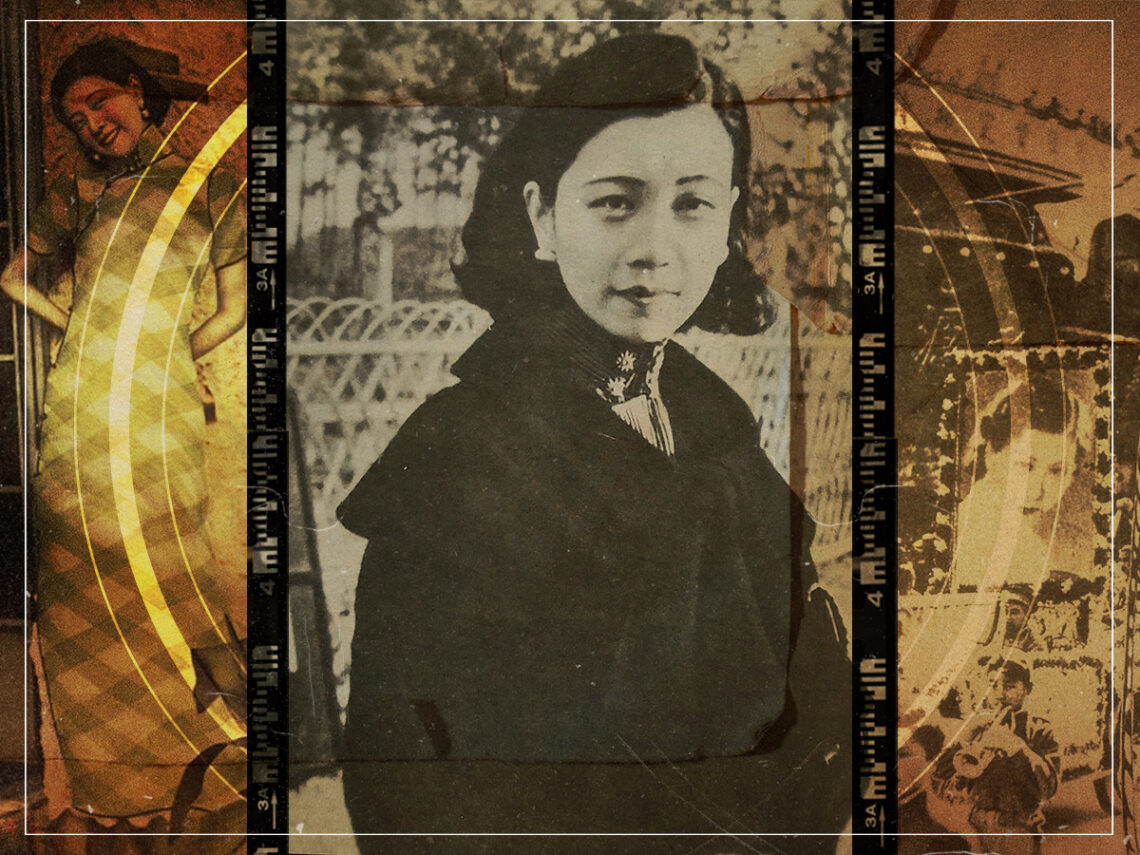
Ruan Lingyu: the tragic story of Chinese cinema’s immortal icon

Even though her life ended far too early in tragic circumstances almost a century ago, Ruan Lingyu continues to be celebrated as one of the most iconic figures in the history of Chinese cinema, with her death only heightening the mythology that had already built up around the superstar actor.
From working-class roots and raised in a single-parent household after her father died when she was young, Ruan was set on the path towards the silver screen in 1926 at the age of only 16 when she inked a deal with the Mingxing Film Company, one of China’s largest and most prolific production companies.
After making her on-screen debut in A Married Couple in Name Only, Ruan quickly ascended the ladder by making six films with the Da Zhonghua Baihe Company. However, it was only after she’d changed her representation and signed on with the newly formed Lianhua Studio in 1930 that she scored her mainstream breakthrough in Spring Dream of an Old Capital, which strapped the proverbial rocket to her back.
Positioned as one of its biggest and most marketable assets, she played two characters in Bu Wancang’s Love and Duty. Ruan quickly reunited with the filmmaker to loosely adapt William Shakespeare’s The Two Gentlemen of Verona for A Spray of Plum Blossoms, where she co-starred opposite fellow rising star Jin Yang.
The combination proved so alluring that they were cast in the lead roles of The Peach Girl and shared the screen in Three Modern Women and Night in the City as well, earning them the reputation and regular comparison of being the Greta Garbo and Rudolph Valentino of Shanghai cinema.
Ruan’s effortless grace, screen presence, and emotive acting style made her one of China’s most beloved silent-era performers, but the final role of her career prior to her death turned out to be fitting in the worst possible circumstances. Cai Chusheng’s New Women was inspired by the life of Ai Xia, who had committed suicide at only 21 in 1934.

In the film, Ruan played an intelligent and educated woman driven to take her own life after becoming increasingly ostracised from society due to her past, and life would soon begin to imitate art when media intrusion began pushing the star further and further away from the spotlight.
Having separated from Zhang Damin in 1933 due to his gambling addiction, her former flame filed a lawsuit two years later demanding financial compensation. Ruan, who was living with tea magnate Tang Jishan at the time, found herself and her private affairs being placed under intense scrutiny by the tabloids, which was in part a vendetta against New Women for the way the movie had painted them in such an unflattering light.
With the legal action from Zhang Damin looming over a new relationship with Tang Jishan that was already beginning to falter, the blitzkrieg of media coverage surrounding her proved too much for Ruan to handle. On March 8th, 1935, she took an overdose of barbiturates and passed away at the age of only 24. New Women followed the trials and tribulations of an artist who took their own life after being the subject of widespread rumour-mongering, and the parallels can’t have been lost on anyone.
Ruan’s funeral was equivalent to national mourning, with the service lasting for three days and drawing visits from many of Chinese cinema’s foremost figures, while the procession through the streets spanned for three miles and proved to be so unbearable that three women committed suicide while it was ongoing.
It was a harrowing end to the life and career of Chinese silent cinema’s marquee attraction. Still, Ruan’s legacy has endured as one of the nation’s most iconic on-screen talents, who helped push the medium forward in front of the camera while everything away from it increasingly became too much to bear.
