


The tragic song key to understanding Morrissey’s downfall: “I am not naturally evil”

I’m sure it’s easy to forget the world of the working class when you’re sitting inside the walls of Chiltern Firehouse. With every invite there from Russell Brand, and with every pretentious sip on a Negroni, Morrissey‘s genuine understanding of the real world seemed to erode away.
Morrissey was always somewhat troubled as an artist, and in the early days of The Smiths, it made him compelling. A subtle air of tragedy laced every syllable that left his mouth, and the desolate underbelly of modern life was so acutely observed by him that he roused thousands of fans in the darkness of his outlook.
Listening to him sing was like pressing a bruise. You know it was bad for you, and you know it wouldn’t expedite any healing, but ultimately there is some masochistic enjoyment to it, making you better understand pain in its most truthful form. Morrissey’s unflinching honesty was the trade-off for that and we couldn’t ask him to taper that down, for we understood it was necessary to the music we held dear.
But somewhere along the line, that honesty became warped. It no longer aligned with the truthfulness of his everyday fans and instead fanned the flames of deeply inflammatory views. Be it racism, xenophobia or the truly bizarre protection of troubling entertainment elite like Harvey Weinstein and Kevin Spacey, Morrissey’s artistic outlook no longer feels like a two-way street, recycling the energy of his devoted fans. Instead, it felt autocratic and unilateral.
His deeply troubling views seem unapproachable, and that’s perhaps where so much of the disappointment lies. Here is one of music’s most captivating linguists, losing a grip on any conversational nuance and instead opting for pure outrage as a means of communication.
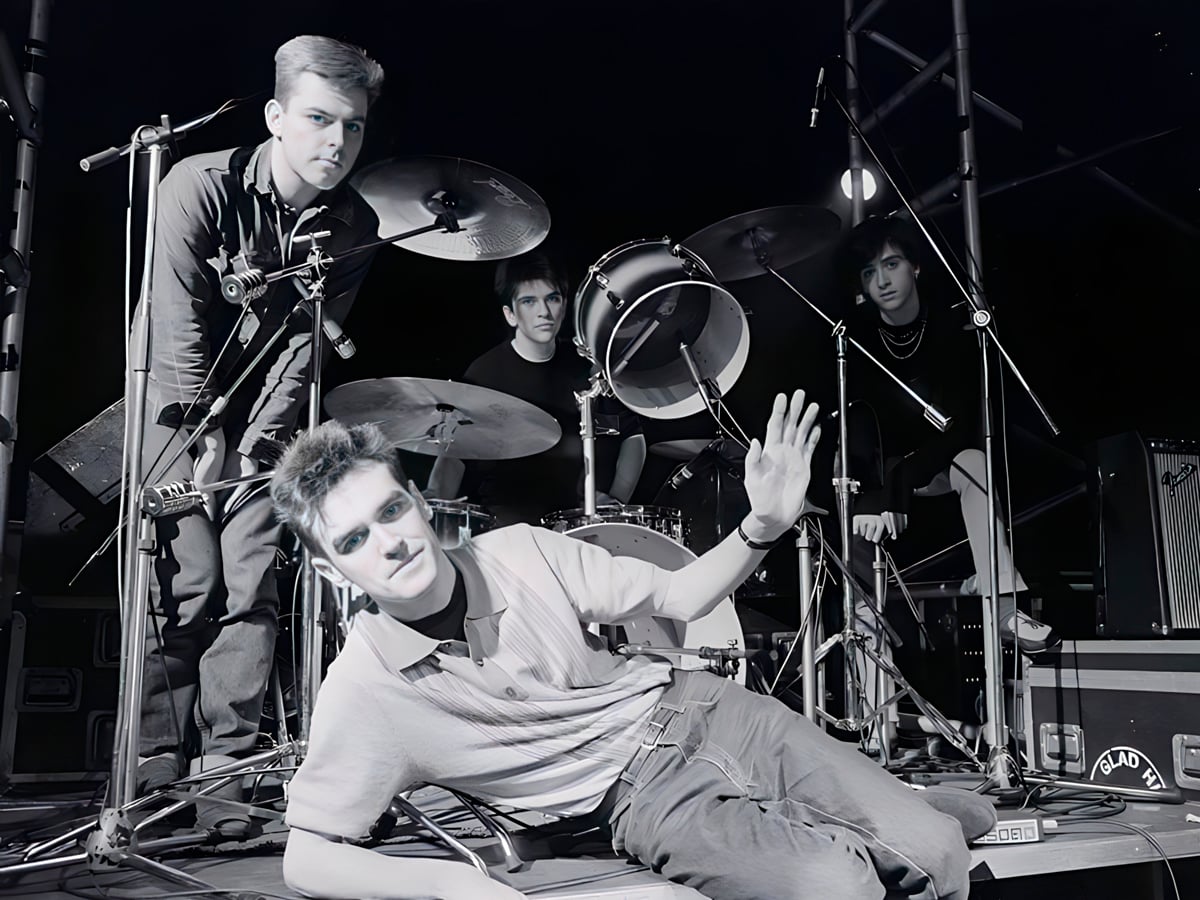
But it has all felt so contemporary. Morrissey’s evolution into a right-leaning moron has coincided with society’s plummet into political dystopia, and so it’s somewhat easy to label him another boomer lost as collateral damage in the fight against fascism. But really, the signs of Morrissey’s twisted outlook predate the millennium.
His 1989 song ‘The Last of the Famous International Playboys’ showcases his rather bizarre obsession with the Kray twins, using the lyrical narrative to adopt the perspective of the brutally deranged. Weirdly glamourising the stardom of gang life, Morrissey blurs the line between abhorrence and adoration. He sings, “I never wanted to kill / I am not naturally evil / Such things I do / Just to make myself / More attractive to you”.
This all comes after verses that criticise the media’s role in turning violence into infamy, as well as drawing upon the isolation of entrenched masculinity. But it’s a song that illuminates that fine line between Morrissey’s curiosity and toxicity, and the tangled web his pursuit of understanding weaves. In using the Kray’s to humanise violent murderers, Morrissey opens doors into worlds inspecting why violent machismo is somewhat admired.
Fast forward three decades, and we find ourselves in a world where the kernel of that idea has grown into something darker and larger. Morrissey’s thoughts have developed into genuinely harmful ideas, and if they were to be traced back to this song, could influence vulnerable and impressionable minds.
At the beginning was always an anger towards the world that made Morrissey’s music compelling and inspiring. Slowly, with this song and everything that has followed, that anger is being wildly pointed in the direction of vulnerable communities.
