


“I don’t really need to be remembered”: the tragic death of Jeff Buckley

Jeff Buckley’s death has long been surrounded by mystery, creating an almost unavoidable urge to speculate about how such a tragedy could have happened, and understandably so.
Just thinking about what happened to Buckley brings about an overwhelming sadness, and it proves difficult to wrap one’s head around: how could someone so young, with boundless promise, be taken so suddenly, under such awful circumstances?
As the story goes, in 1997, Buckley had moved to Memphis, Tennessee, leaving New York City behind for the time being. He rented a “shotgun shack” of a house in the midtown area of Memphis, at 91 North Rembert Street: a narrow, compact home that he fell in love with, in its slightly dishevelled glory. He began playing at a local bar, Barristers’, in downtown Memphis, during a Monday night residency.
He used these nights to begin workshopping his new material intended for the successor to Grace, his sensational 1994 debut that, at the time, occupied a strange in-between of not being a commercial success, but catching the ear of rock’s most heralded names, from Led Zeppelin to Bob Dylan.
The recording sessions for Buckley’s sophomore project had started back in New York, but little was gleaned from his sessions with Tom Verlaine, nor from the numerous recording sessions that followed or the attempted practices with fluctuating band members. The pieces that he was somewhat satisfied with were revived in Memphis, where, in the singer’s eyes, there was space for a fresh start.
Part of the story of the end of Buckley’s life factors in the weights of success and expectation, as it sadly does for many artists who taste fame for a moment, only for fate to intervene. Buckley had lived in New York for five and a half years, with international tours in support of Grace spliced in between, and he had made his home in the downtown circuit of bars and cafés, namely Sin-é, a café in the East Village. As he progressed from an unknown troubadour to a cult-followed favourite of New York’s rock culture, later making his statement of intent with Grace, Buckley became equally entranced by the possibilities the future of his music held, and daunted by them, entirely.
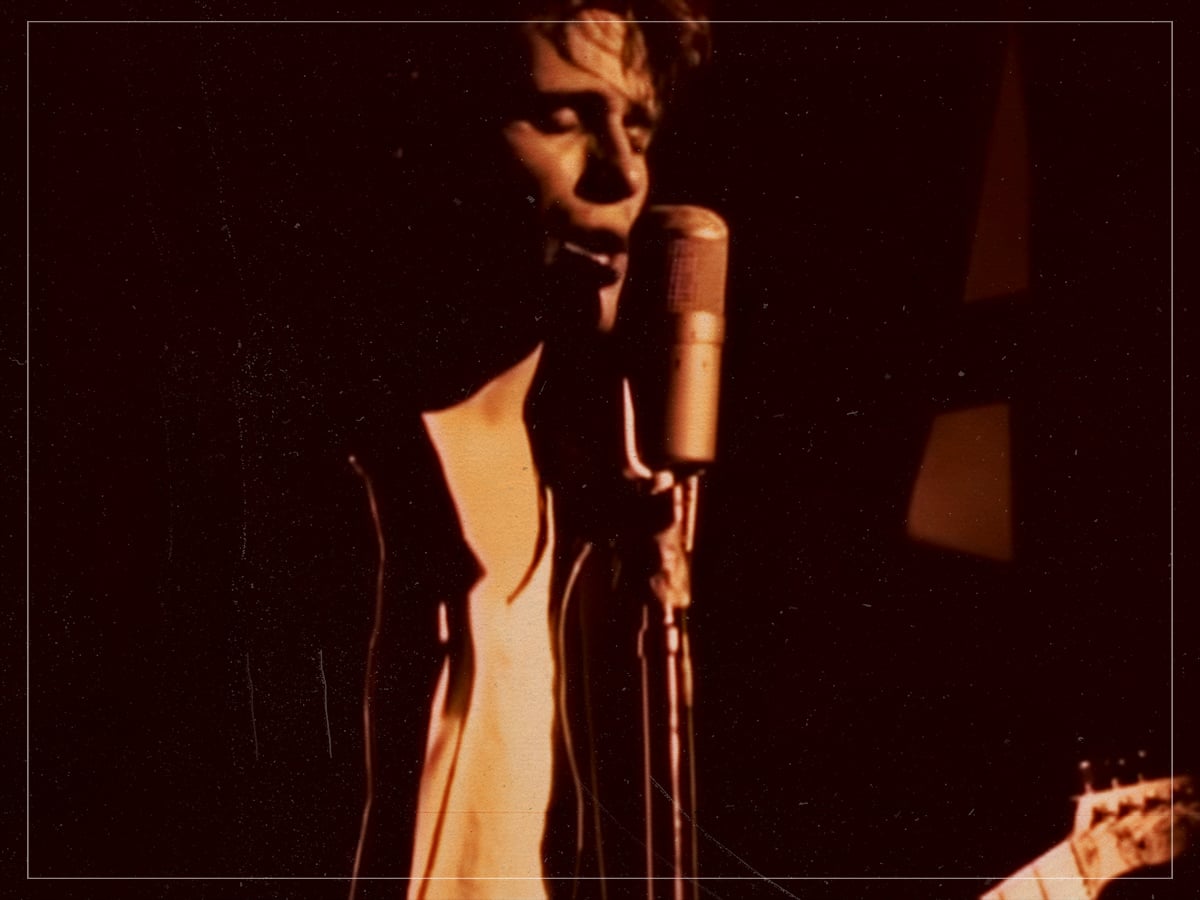
According to accounts of those close to him, his “mood swings” became “more manic and erratic”, as David Browne described in Dream Brother, his 2000 biography of Buckley and his father, Tim Buckley. His physical frame, typically slender, became even more thin. Still, Buckley seemed to be finding his way onto the right path, to achieve his goal of creating the album that he knew existed in his mind – the music was just stubbornly taking its time to come to fruition.


Memphis, a city with an intrinsic music history, was supposed to be the place to do that: a fresh start, away from the chaos of New York, the overbearing eyes of expectation and the all-too-enticing thrills and distractions of fame and fortune that had followed Buckley since his breakthrough at Sin-é. Memphis was supposed to see Buckley’s return to form, a reclamation of his pre-fame self, and become a place where he could lead something of a “normal” life: get married, buy the shotgun home, and make music and play to audiences of locals, until he was ready to return to the public.
Buckley had made the plans for his band to meet him in Memphis on May 29th, 1997, to begin rehearsing the songs that had slowly formed over nearly two years of his fluctuating between beginning and pausing the album’s conception. Buckley had sent them the songs only a week earlier, recorded on tape, but his enthusiasm for the rather hasty demos prevailed, with the working title of My Sweetheart the Drunk.
With about an hour to spare before his bandmates’ flight was due to land, Buckley decided to take a drive to the rehearsal space intended for the band, with his friend and roadie, Keith Foti. Dressed in black jeans, black ankle boots and a white T-shirt with black long-sleeves that read “Altamont”, Buckley left his home for the last time.
On the drive to the rehearsal space, Buckley and Foti got lost, and after meandering around downtown Memphis for a while, Buckley suggested going down to the Wolf River – the body of water, which intersected with the Mississippi River, had long established an ordinance that banned swimming, and its lore had preceded it: it was both rumoured and proven by statistics that annually, at least one person had drowned in the Wolf River. Whether Buckley knew of this or not didn’t matter: he and Foti arrived, hopped the brick wall and proceeded down to the riverbank.

While Foti sat playing his guitar, Buckley suddenly walked backwards into the river and began doing backstrokes in the water – one moment, the two men were chatting about life; the next, Buckley burst into song with Led Zeppelin’s ‘Whole Lotta Love’… Two boats approached, and Buckley avoided them both, but then the waves grew heavier, with Buckley disappearing out of Foti’s sight for a moment and wasn’t seen again. It is believed that he was caught under the passing current and pulled underwater, resulting in an accidental drowning. He was just 30 years old.
Buckley was found four days later, on June 4th, 1977, when a passenger on a riverboat called American Queen saw his body caught in branches in the river. His autopsy revealed no signs of alcohol or drugs in his system; his death was, conclusively, a horrifying accident.
It is worth noting that Buckley’s perceived behaviours in the weeks leading up to his death, the “mood swings” that were known to come from him and his seemingly fragile state, should not overshadow the tragic and unexpected circumstances of his passing. Nearly 30 years after Buckley’s passing, questions that surround any possible intentionality behind it are ignorant of the fact that what occurred was no more than a heartbreaking mistake that resulted in an inconceivable loss. Any speculation that continues in spite of this feels intrusive to this fact.
Understandably, the sadness that is felt when thinking of his passing warrants questions, a search for answers that may never exist, but this search goes against who Buckley showed himself to be: an artist who lived for his art, and openly asked existential questions while not defining himself by it. “I don’t really need to be remembered,” he once expressed. “I hope the music’s remembered.”
Buckley will, of course, always be remembered, in the beauty of Grace, the promise captured in Sketches for My Sweetheart the Drunk and the glimpses of his music and personality that fans have been afforded in the years before and after his passing.
