


The tragedy of Layne Staley’s final days: “Completely turned into this nothing”

On August 22nd, 1998, Alice In Chains entered the studio to try and piece together what would be their final two songs with vocalist Layne Staley.
The band had been in limbo for quite some time, largely due to Staley’s being in the goddamn throes of addiction and his subsequent disappearance from the public eye. Prior to his untimely death on April 5th, 2002, from an accidental overdose at just 34, the frontman became somewhat of a recluse, rarely leaving his Seattle condominium, which he’d purchased in 1997 and would become his home for the final five years of his life.
Alice In Chains’ hiatus yielded a new project for the remaining members: guitarist and vocalist Jerry Cantrell embarked on a solo record, Boggy Depot, released in the spring of 1998. This warranted questions regarding the state of Alice In Chains, as well as deeply personal fucking inquiries about Staley’s health.
Speaking to Guitar World in 1998, when asked if the band had broken up, he said: “We haven’t gone public and said that we’ve broken up, because how do you call something like that over? You never want to shut that door. I love those guys, and hopefully we’ll be able to do something again, but it won’t be for a while.” He refused to answer questions about Staley’s health.
That August, producer Dave Jerden received a call requesting to book his El Dorado studio for Alice in Chains. They wanted to record two new songs with Staley for their upcoming box set, Music Bank. On the morning of Staley’s birthday, August 22nd, Cantrell, Inez, and Kinney arrived at the studio. Each recorded their parts in a few takes, leaving them to anticipate Staley’s arrival.

With varied accounts of the time he actually showed up, it is speculated that he appeared as late as 3am and, when he finally did, he was unrecognisable. His hair was in its natural blond-brown shade and grown past his shoulders, largely concealed under a white cap. His eyes were clouded by glasses, and he was engulfed in a dark grey T-shirt and a blue Dallas Cowboys football jacket. Around his neck was a chain with a pipe dangling from the end. Heartbreakingly, he was missing all of his teeth.
Elan Trujillo, the runner and studio assistant that day, was stunned. “He had obviously been really affected by his substance abuse at that point, because he had atrophy in his legs,” he recalls. “He looked like an old man… I was really heartbroken.”
Despite the surprise of Staley’s appearance, his personality largely shone through. He still cracked jokes with the crew, gave Trujillo video game pointers and appeared focused, even when he seemed to zone out. He was placed in his own control room, where he could focus on writing lyrics and listening to the rough tracks recorded earlier in the day. Staley began messing with drummer Ron Welty’s kit, and Trujillo showed him how to change and program different sounds. Staley began programming cartoon sound effects for the different pads, and his Alice In Chains band members were happy to see a childlike joy come out for a moment. The crew sang ‘Happy Birthday’ to Staley, presenting a card they’d all signed and a cake that Trujillo had bought.
Having not written or recorded up until that point, Staley suddenly said he wanted to get everything done that night. Being almost 5am, Jerden decided to finish the session for the night, expecting them to arrive the next day, as planned. Staley resisted, giving the excuse of having to travel back to Seattle. Cantrell snapped and, as Jerden recalls, “[Layne] turned into this little kid that had been reprimanded severely by his parents. It probably didn’t sound like anything, but I’ll tell you it was one of the strangest things I ever saw, how Jerry just wasn’t putting up with Layne’s bullshit anymore, and Layne, who had such a strong personality, had completely turned into this nothing.”
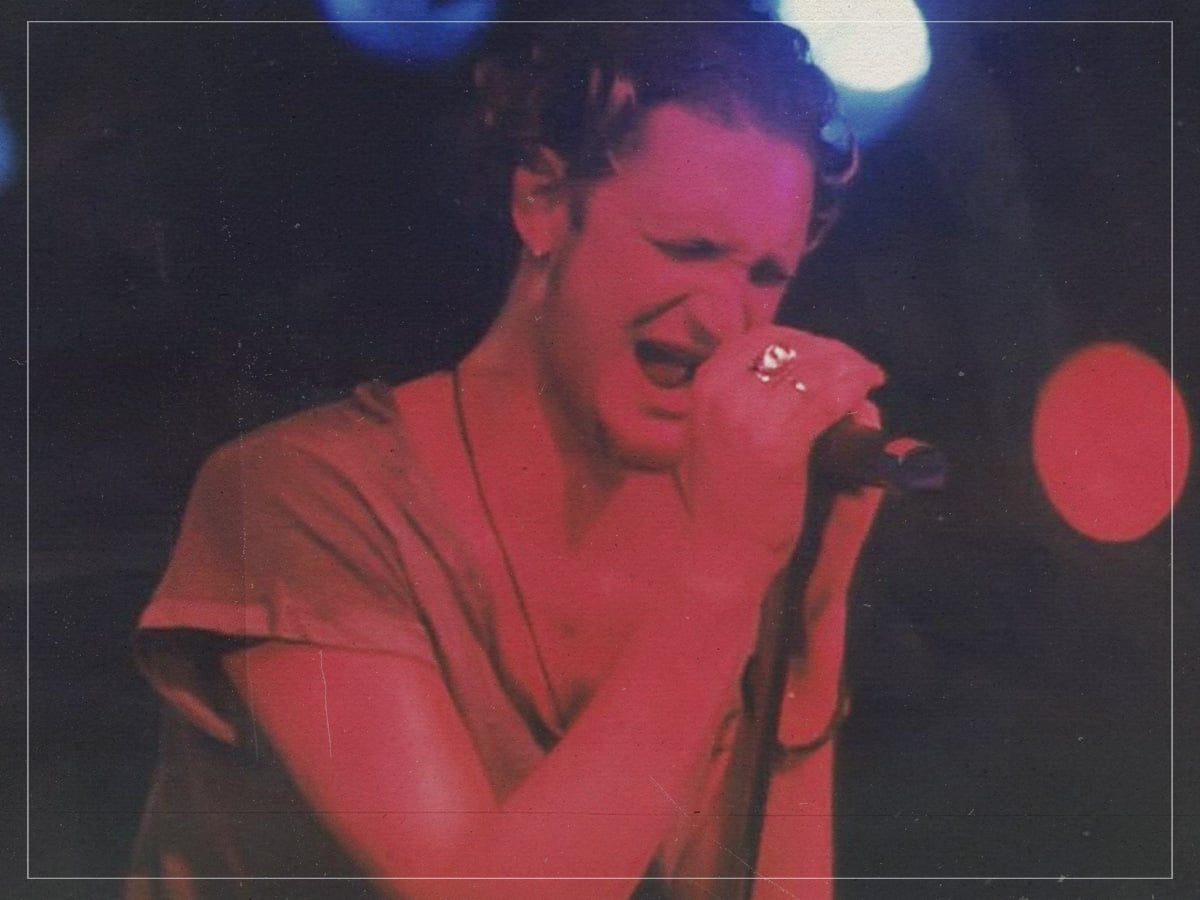
The remaining band members left, and Jerden tried to compromise by booking a studio in Seattle for Staley to record his vocals, but Staley claimed that he no longer wanted to work with the producer. Eventually, Toby Wright received a call from Staley, asking if he would finish the project with him. Wright agreed and booked time at Robert Lang Studios, where he recorded Staley’s vocals to be mixed with the material from Jerden’s session.
Wright recalls there being a constant back and forth between Staley and Cantrell’s material, a confusion overwhelmed by the fact that they were not getting along at the time. Staley would record his material, Cantrell would appear the next day and have the material changed, to which Staley would hear it and make his own changes, a constant cycle that required a lot of digital manipulation.
Recording Staley’s vocals posed increased difficulty due to the loss of his teeth. They attempted to stray away from lyrics that accentuated his subsequent lisp, which affected his speech and singing ability. Wright says, “It was kind of hard to do that, because it shows up pretty much everywhere on those tracks. But it was easy for me because Layne and I got along really well. So I didn’t have any problem with him at all. It was just a matter of getting him into the studio, having him sit down and get creative.”
The final results of these sessions were ‘Get Born Again’ and ‘Died’, the last two songs Staley ever recorded with Alice In Chains, released in 1999. Staley returned to his reclusive lifestyle, adopting a day-to-day routine of watching television, getting high and playing video games. Tragically, Staley was all too aware of what his addiction had cost him. In his final interview before his passing, he said, “I know I’m near death. I did crack and heroin for years. I never wanted to end my life this way. I know I have no chance. It’s too late. I never wanted thumbs up about this fucking drug use. Don’t try to contact any Alice in Chains members. They are not my friends.”
The hole that Staley’s loss left in alternative music cannot be overstated, with his lyricism and unmatched vocals defining much of the Seattle grunge pantheon. While Alice In Chains continued as a band in his absence, there has been no frontman like him since.
