


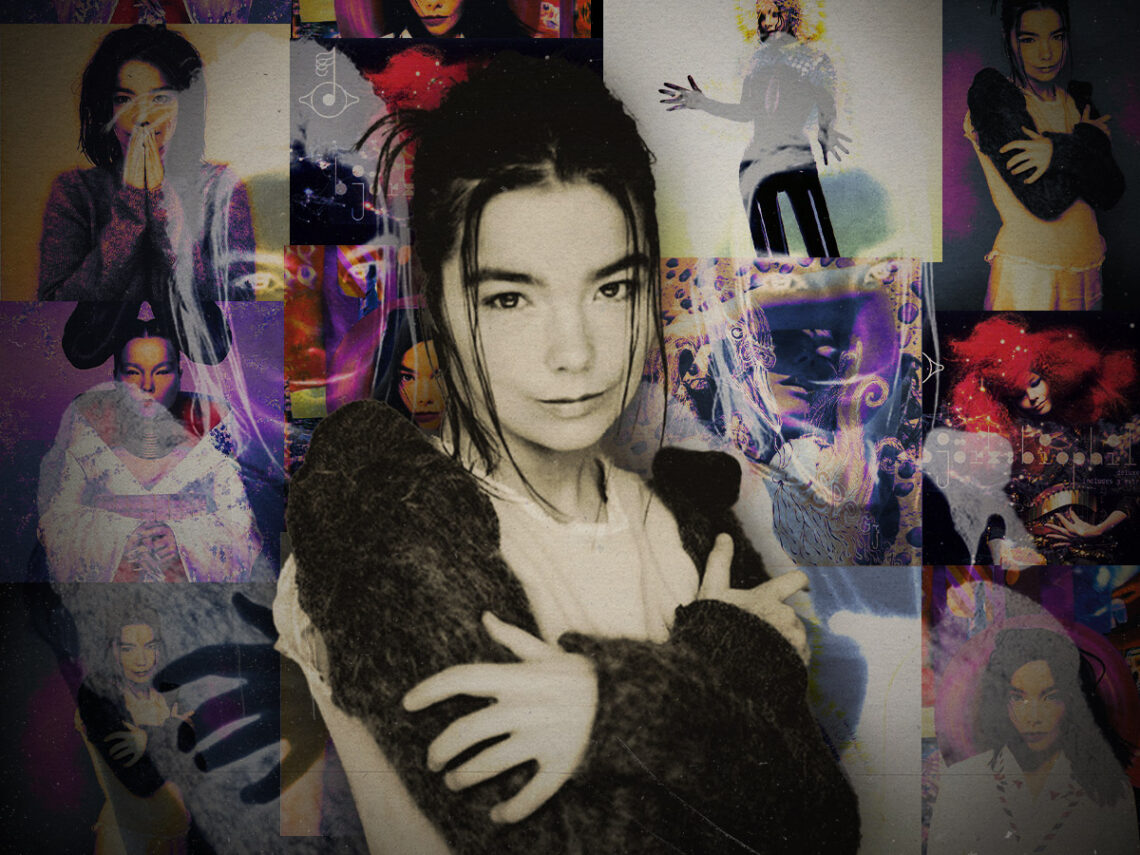
The evolution of Björk: From punk in Reykjavík to an eletronic future

Growing up, Björk’s home was a hippie commune in Reykjavík, Iceland, where she and her mother, Hildur Rúna Hauksdóttir, were surrounded by an eccentric rotation of artists and musicians. The quirky utopia exposed her to a wide variety of cultures and artistic mediums, allowing a young Björk to absorb all that was to offer in her insular home.
At the age of six, she studied her early instruments of choice, which were the classical piano and flute. She was no doubt inspired not only by her bohemian upbringing, but also by her stepfather, Sævar Árnason, a guitarist who had played in the band Pops. He was a keen activist, too.
But in his love for guitar rock, Björk saw an opportunity for change. Speaking with i-D in 1993, she admits that she could never stand traditional rock music. “When I was seven,” she proclaims, “I was convinced that this music was ancient history, that I would do something new.”
Honing her talents in various school recitals, she tried her hand at singing, choosing Tina Charles’ 1976 hit ‘I Love to Love’, which caught the attention of her teachers, who sent a recording to Iceland’s only radio station, where it was broadcast nationally and reached the airwaves of the Fálkinn record label. Björk, then 11 years old, found herself with a recording contract, plucked from obscurity and placed in a studio. Her eponymous debut album followed shortly afterwards, released in December 1977.
Her child prodigy beginnings sound mythical, but also perfectly suited for an artist as gloriously difficult to pinpoint as she, and when taking your pick of a Björk record, any one over her near half-century-long career, you never know what you are going to get, nor what facet of her character will jump out and captivate you next.
You could hear a nod to her early punk roots, when the genre’s emergence in Iceland spurred her to play in numerous bands that blended punk with jazz fusion and goth rock, or choose the shoegaze-goth hybrid of the Sugarcubes, which gave Björk her first taste of international stardom, all melded into her literal Debut, the 1993 album that marked her solo career. For years, the singer had been hinting that the burdens of genre and expectation were no limit to her visionary approach, and the early 1990s would see this elevated to the next level.
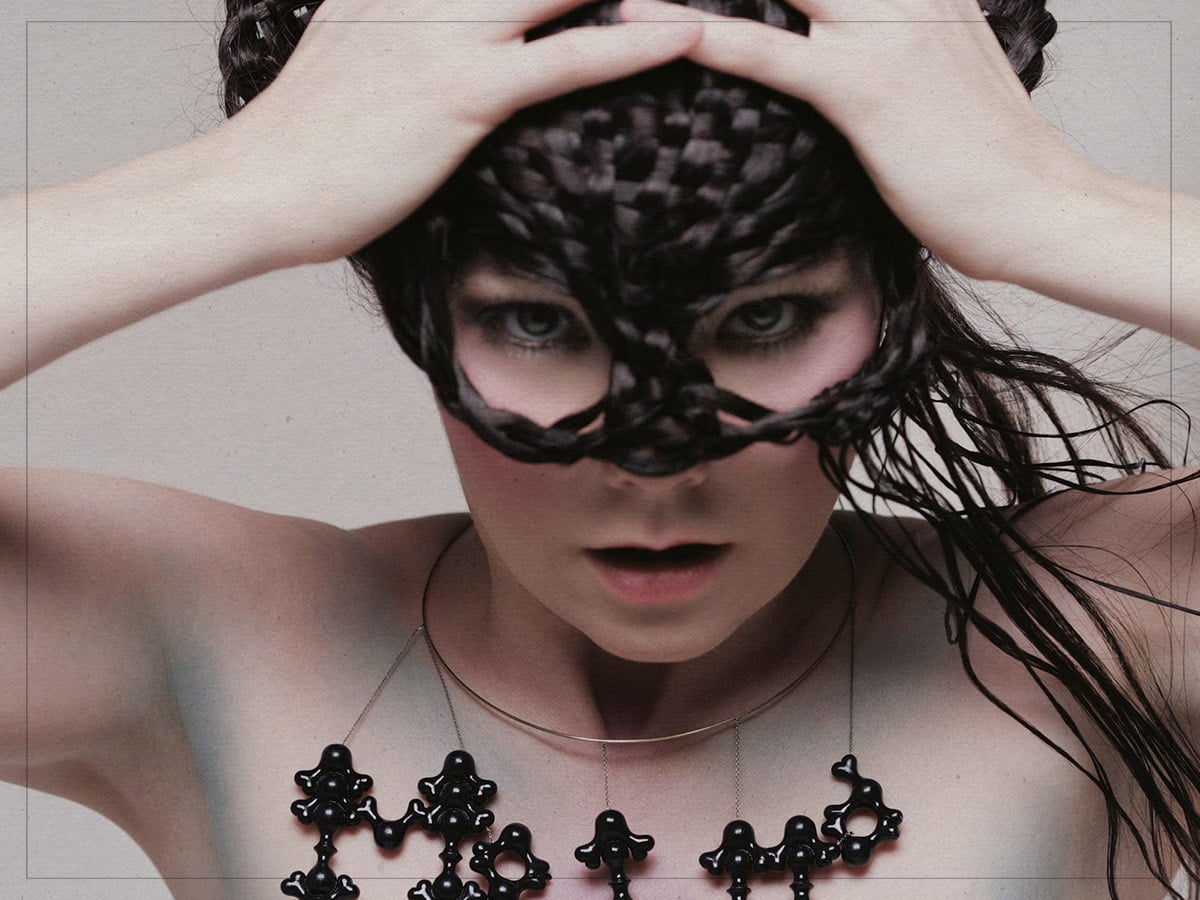
With the Sugarcubes on hiatus, Björk’s artistry grew from its shadow and strengthened with her move to London, where she was immersed in the collaborative and inventive worlds of dance and trip-hop, and became acquainted with the underground club scenes.
Her first single, ‘Human Behaviour,’ was her reintroduction, attributed to her club kid roots, making for a buoyant track resting on a layer of mystery. This enticing balance is found in much of her music, resulting in all of her work sounding cinematic in its widening of a musical spectrum. More than anything, Debut spawned from a restless desire to make music that was challenging in a world of mundanity.
“I think pop music has betrayed us,” Björk told i-D, continuing, “I want this album to be pop music that everybody can listen to. I think not sticking to any particular musical style makes this album real. Life isn’t always the same. You don’t live in the same style from day-to-day; unexpected things happen that are beyond your control. That’s this record.”
Her sophomore album, 1995’s Post, continued this manipulative push and rebellion, gaining resonance with a wider audience as she made room for the ‘strange’ in pop music. Her signature shrieking vocals were personified in her music videos, which garnered equal attention for their polarising, controversial visions of dreams and dystopia.
Post was a “once-in-a-lifetime kind of thing,” the Icelandic singer described on the Björk: Sonic Symbolism podcast in 2022. The album encapsulated her life in the city: extroverted, wild and exciting, but with its reservations, knowing that the party would eventually end. As she carved a wider path to accommodate her experimentation, her music reflected this ambition, where 1997’s Homogenic saw her move to Spain and reconnect with nature and craft a fusion of electronica and classical instrumentation that sought relative normalcy in the midst of fame.
“I’m really seeking after something that’s Icelandic. And I want it to be more me, this album,” she told Jam!, elaborating, “[Debut and Post have] all these different flavours, me sort of trying all these different things on, which is very exciting, but now I think it’s a bit more Björk goes home.”
2001’s Vespertine hones a similar vulnerability, with an orchestral tone that leaned into collaboration, wherein she leaned into the literal manipulation of reality, creating microbeats out of the unconventional, such as a deck of cards or the cracking of ice cubes. Vespertine was rooted in Björk’s new relationship with artist Matthew Barney, resulting in an unprecedented intimacy in her lyrics and sound.

Sonically, she wanted to mirror chamber music with an electronic twist and her vision, as she told Q Magazine, was to emulate the home, which she calls “the most ideal music situation… where people would play harps for each other”. Her “return to self” planted its roots in everyday romanticism, finding the beauty in the seemingly mundane.
After a period of being in-between record deals, losing her voice and needing to adapt to new recording techniques, Björk felt like she was at a crossroads. Spurred by her longstanding advocacy for Iceland’s environmental safety, the 2010s saw the artist shift into the technological realm, where themes of the natural world were juxtaposed with advanced instruments custom-built for the recording of Biophilia. She began to envision her next project as a literal house, with each room signifying an element: a crystal room, a lightning room, a water-drop moon room. But as the frustration of bringing her vision to life was mounting, she found a solution: the iPad.
She saw “my chance to be the frustrated music teacher,” as she tells Stereogum, shifting her focus from a mere album to an immersive experience that would give children access to opportunities and technologies that she did not have as a young artist. She wrote most of Biophilia’s songs on a Nintendo game controller, then an iPad, once it was released. Working closely with app developers, inventors, writers and scientists, Björk tackled the relationship between the technological and natural worlds. The album, released in 2011, was the first-ever to be released as a series of interactive iPad apps, one for each of the ten songs.
The ‘It’s Oh So Quiet’ singer’s worlds grew out from music television to the palms of our hands, bringing a new level of instant gratification to her listening experience as she ventured into virtual reality for 2015’s Vulnicura, transforming her album into a virtual museum, Björk Digital, that travelled worldwide. Her fascination with technologies like the iPad continued into her Vulnicura era, where she carried over the same instruments.
“I happen to know some of the best app programmers in the world,” Björk told The Independent, “and I have the instruments I can just plug straight into the iPad and play whatever I had.” Today, artists’ embrace of the internet’s wide reach and immersive possibilities is commonplace, but Björk pioneered a way for her music to be immortalised.
To ‘expect’ anything from Björk feels impossible, considering her ability to be aeons away from other artists’ frames of thinking. Her distinct electronic-operatic hybrid remains intimidatingly brilliant in scope, yet her allure rests in the unknown. Whether Björk’s next venture sees a new technological innovation or her refinement to an acoustic guitar, there is an assurance that whichever sound she produces will be unlike anything heard before.
