


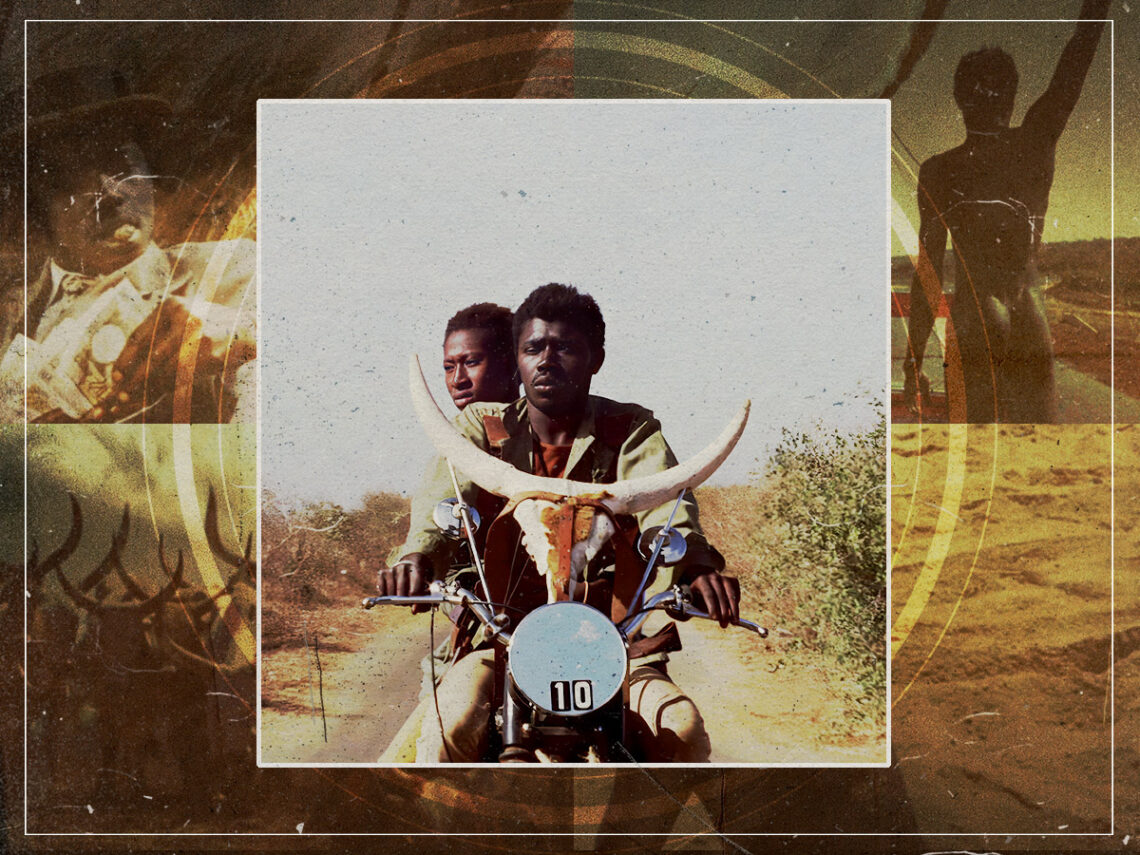
‘Touki Bouki’: the forgotten legacy of Senegal’s first cinematic masterpiece

“Touki Bouki was conceived at the time of a very violent crisis in my life,” says Djibril Diop Mambéty, “I wanted to make a lot of things explode.” Crafting a fragmented depiction of disillusionment in post-independence Senegal during the early 1970s was Mambéty’s forte. Touki Bouki bursts forth, unravelling one visual tableau after another.
Even though Touki Bouki hasn’t permeated mainstream conversations as widely as it deserves, those acquainted with the film cherish it dearly. Martin Scorsese, for instance, treasures Mambéty’s masterpiece, contemplating its beauty in his reflections. “It’s something else,” he gushes, adding, “It’s a cinematic poem made with a raw, wild energy.”
Released in 1973 with a budget of $30,000, Touki Bouki is truly a hidden cinematic gem, a bold and revolutionary work demonstrating world-class artistic brilliance and socio-political commentary. Mambéty, recognised for his innovative storytelling and visual prowess, intricately weaves a narrative that delves into the yearning for change among the youth in a newly independent nation.
The film follows the lives of lovers Mory, a cowherd with dreams of leaving Senegal, and Anta, a university student disillusioned with the current state of affairs, who attempt to escape to Paris, drawn in by the allure of a better life in the West. Driven by their aspirations, the pair embark on a journey fraught with unconventional means to procure the funds needed for their passage to France.
Their actions challenge societal norms and traditions, stirring tensions within their community. As they navigate the complexities of their society, the film unveils the palpable cultural and generational divide between the older, more traditional ways and the youthful desire for change and progress.
Although influenced by French New Wave cinema, Mambéty – who became a filmmaker without any prior knowledge of directing or camera work – revolutionised his own style of artistic excellence, oscillating between vivid imagery and symbolic sequences that immerse the audience in the characters’ emotions and desires.
Mambéty’s fragmented storytelling and visual metaphors, such as the recurring imagery of motorcycles and cattle, serve as potent symbols that reflect the characters’ struggles, hopes, and the dichotomy between tradition and modernity. As Mory and Anta navigate their quest for liberation, the film presents an ambiguous portrayal of their journey, questioning the perceived paradise awaiting them in Paris and hints at the realisation that the pursuit of their dreams might not necessarily bring the fulfilment they seek.
Simultaneously, Mambéty intentionally allows space for diverse interpretations, encouraging reflection on the genuine essence of liberty and the cost of aspirations. Upon its initial release in 1973, audiences grappled with the film’s meaning, unable to fully understand its sentiment, but this later highlighted its avant-garde approach and Mambéty’s departure from the conventional narrative styles prevalent in mainstream African cinema.
His unconventional technique surprised audiences, yet it garnered Mambéty acclaim as the era’s most skilled and daring filmmaker. Much like his predecessors, Mambéty’s handling of Touki Bouki received praise for its fusion of poetry, enchantment, and authenticity. Often grouped in discussions alongside luminaries like Louis Lumière and Georges Méliès, Mambéty showcased his mastery by meticulously placing significance in every sound and infusing purpose into every scene.
The film’s ending, a theme Mambéty would revisit two decades later in his film Hyènes, mirrors the opening scene: Mory tending to his zebus. Throughout the film, scenes unfold detached from conventional notions of time and space, generating an overall sense of unease. Nevertheless, this discordance serves as an ideal prompt for contemplation on the characters’ drives, the essence of their aspirations, and the outcomes of their quest for freedom.
“Touki Bouki is the one African movie that will survive the test of time and forever be relevant,” Mauritanian filmmaker Abderrahmane Sissako tells thee BBC. “It is a unique film, as unique as Mambéty himself.”
