


Tony Iommi’s unlikely favourite guitarist ever: ‘My idol’

“It’s a way of expressing your inner self,” Tony Iommi said of playing guitar, “It has always meant something very special to me, and it brought out parts of me that you couldn’t bring out normally from within.”
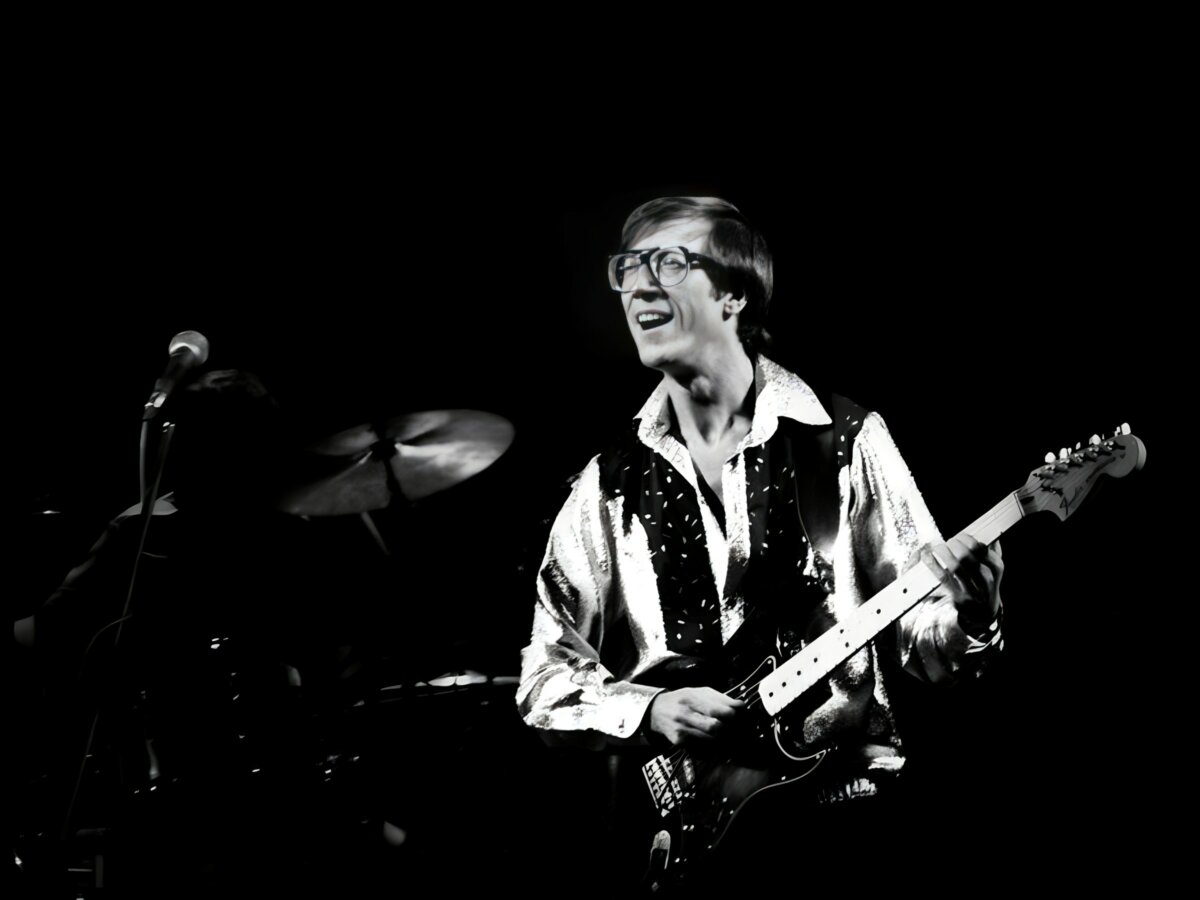
With this in mind, it seems that he has never been able to get over his first six-string love affair. Hank Marvin was the two-stepping cookie-cutter lead guitarist behind The Shadows, whereas, with Black Sabbath, Tony Iommi routinely played a tritone so dark, it was dubbed the devil’s interval.
While they don’t seem a natural pair, the more you interrogate their guitar styles, the more you can see similar influences and philosophies. Both were disciples of legendary jazz musician Django Reinhardt, both used music as a form of escape, and each has cited Buddy Holly as a major figure in their careers.
Throughout his career, Iommi has repeatedly cited Marvin as having a hand in his sound and the top spot on his list of favourite guitarists.
When Iommi was growing up, he was set on playing in a rock band. Any spare money went on records, and one of them happened to be a compilation of The Shadows’ best numbers. “The energy they unleashed in their tracks without vocals was transferred directly into me,” he said, emphatic about Marvin’s sound.
Recalling its influence during a feature with Vinyl Writers, he confessed that while the Greatest Hits LP had two of his favourite songs on it, ‘Wonderful Land’ and ‘Apache’, commenting: “If you could accuse the Shadows of anything, it was that their albums, like the albums of the early 60s, consisted of a few hits and a lot of filler material.”
That said, he considered Marvin’s unique twang worth listening to a few filler songs. “But I tell it how it is,” he said. “Without The Shadows and their guitarist Hank Marvin as idol, my playing might have developed into a completely other direction, and Black Sabbath would not have been the band it became.”
Iommi was drawn to the power of Marvin’s instrumentals, and as recently as 2021’s ‘Scent of the Dark’, he has continued producing his own.
Iommi connected so much to Marvin’s sound that he appeared on the 1996 tribute album, Twang!: A Tribute to Hank Marvin & The Shadows. Paying homage to Marvin saw him cover ‘Wonderful Land’, and he was nestled next to fellow Marvin fan Brian May, who covered ‘FBI’, a classic originally released back in 1961.
Reflecting on the work, he said: “Me and Brian May both loved Hank,” Iommi recalled. Joking about the difference in their sound compared to his trademark rattle, he said: “We’re not widdly diddlies. Brian and I have done a few things, played together on albums. We were in the studio together once and we started playing Shadows stuff.”
While the difference between Marvin’s sound and his was vast, Iommi picked up on something strange in the surf-style instrumentals. “They had a real sort of demonic sound in some ways – ‘Frightened City’ and stuff like that had an eerie feeling to it,” he said. In the early days of Sabbath, back when they were still called Earth and struggling to find their sound, Iommi found The Shadows were the only band that appealed to him.
“There was rock ‘n’ roll, but I liked the idea of an instrumental band,” he told Total Guitar.
So he and drummer Bill Ward initially set about recreating Shadows’ songs, and it had the unlikely effect of pushing them towards a more “raw, basic sound” that borrowed from jazz and blues. As Iommi admits, it was Marvin who had a vital hand in guiding them towards their signature sonic doom: “It went into what we are playing now”.
While other guitarists like Chuck Berry, Jimi Hendrix, and Eric Clapton might have also entered the mix, it has always been Marvin’s moody sense of atmosphere that remains at the top of the tree for the unique Iommi, the father of the metal riff.
